
Welcome to Modern Agriculture!

Mixing houseplants of different heights can turn your space into a lush indoor sanctuary. But here’s the problem: most arrangements end up looking cluttered rather than curated. One too many plants in the wrong spot, and suddenly your serene plant corner feels chaotic.
The good news? Creating balance between your towering monsteras and petite succulents isn’t rocket science. After digging through the research and consulting with plant stylists, these techniques will help you achieve displays that look intentional, not accidental.
Common Mistake:
Lining up plants by height like a school photo. This creates visual stiffness instead of the natural flow you’re after.
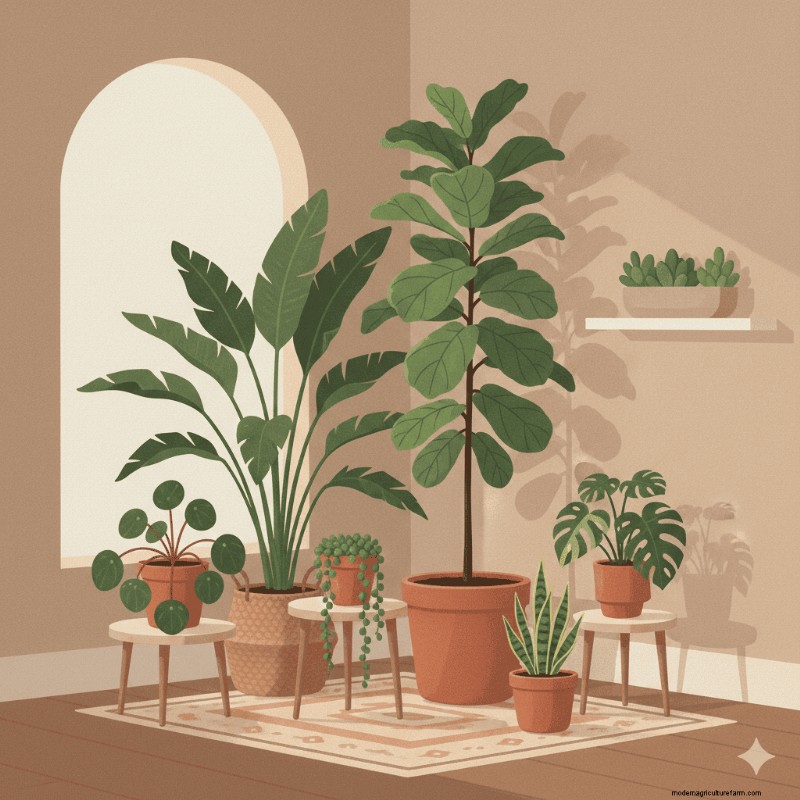
Every great plant arrangement needs a star. Pick one or two tall specimens like a Fiddle Leaf Fig or Bird of Paradise to anchor your display. These statement plants draw the eye and create structure for everything else.
Place these focal points in corners or areas with breathing room. The rest of your collection should connect to these anchors visually. Think of it like a solar system where planets orbit around the sun.
Your tallest plants function as living architecture. A Monstera deliciosa or Kentia Palm defines a space without extra furniture.
Height naturally pulls eyes upward, making even cramped rooms feel larger. Position these showstoppers where they can be seen from multiple angles. Give them space so their silhouettes remain distinct and they don’t compete with neighbors.
Read more: 22 Creative Ways to Use Plants as Bold Statement Decor in Your Home
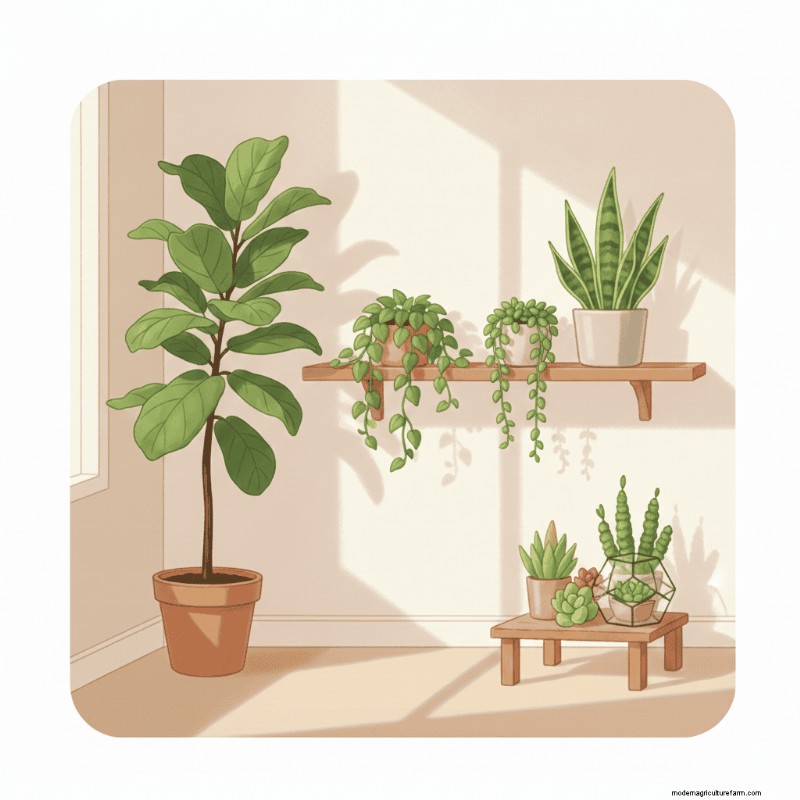
Photographers swear by the rule of thirds, and it works beautifully for plant displays too. Imagine dividing your space into a grid of three sections horizontally and vertically. Place your most important plants where these lines intersect.
This creates natural flow and prevents the rookie mistake of lining everything in rows.
Your tallest plants might occupy the back third, medium plants in the middle, and smaller specimens up front. The result? Depth that makes your arrangement feel three-dimensional.
Visual weight refers to how much attention a plant commands. A small, brightly colored croton can grab more attention than a larger plant with subdued coloring. Balance these elements throughout your space.
If you place a visually heavy plant on one side, balance it with something of similar impact on the opposite side. Not identical plants, just comparable attention-grabbing power.
Pro Tip:
Dark foliage reads as heavier than light-colored leaves, even in smaller plants. Use this to your advantage when balancing arrangements.
We'll email it to you so you can read it later!
By saving, you agree to receive occasional emails. Unsubscribe anytime.
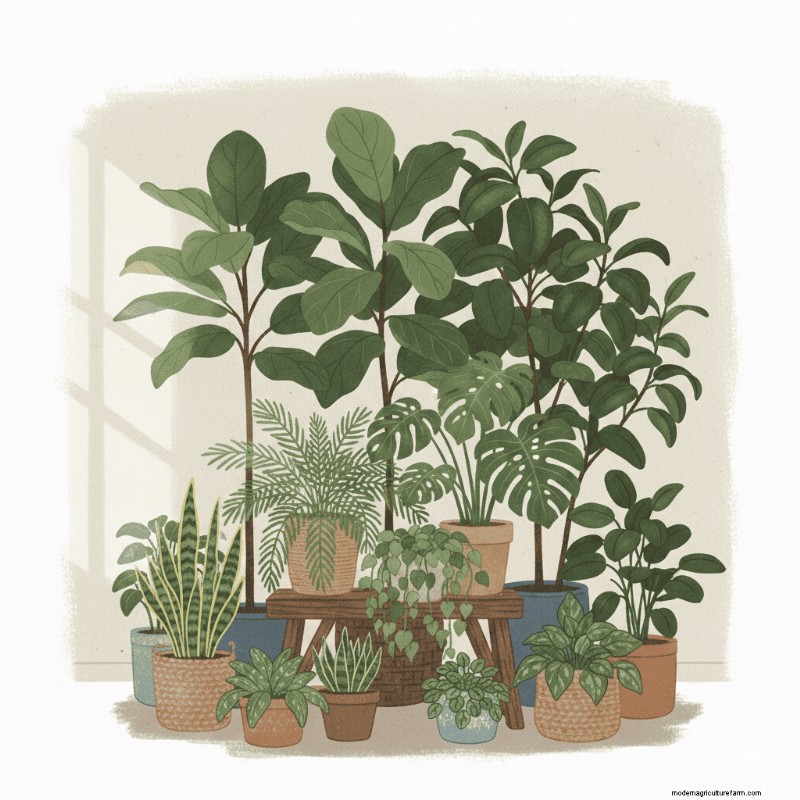
Think of your arrangement like a forest with distinct canopy layers. Start with floor plants and trees at the back, medium-sized plants in the middle, smaller specimens in front.
This graduation creates depth and prevents smaller plants from disappearing.
Mix leaf textures within each layer. Pair smooth rubber plant leaves with feathery ferns or spiky snake plants. These contrasting textures keep the eye moving through your arrangement rather than stopping at one focal point.
Professional plant stylists use foreground, midground, and background techniques to create dimensional displays. Place small trailing plants like string of pearls in the foreground where delicate details shine.
Use mid-sized plants with interesting leaf patterns for the midground. Reserve your tallest specimens for the background. This mimics natural landscapes and creates a more immersive experience.
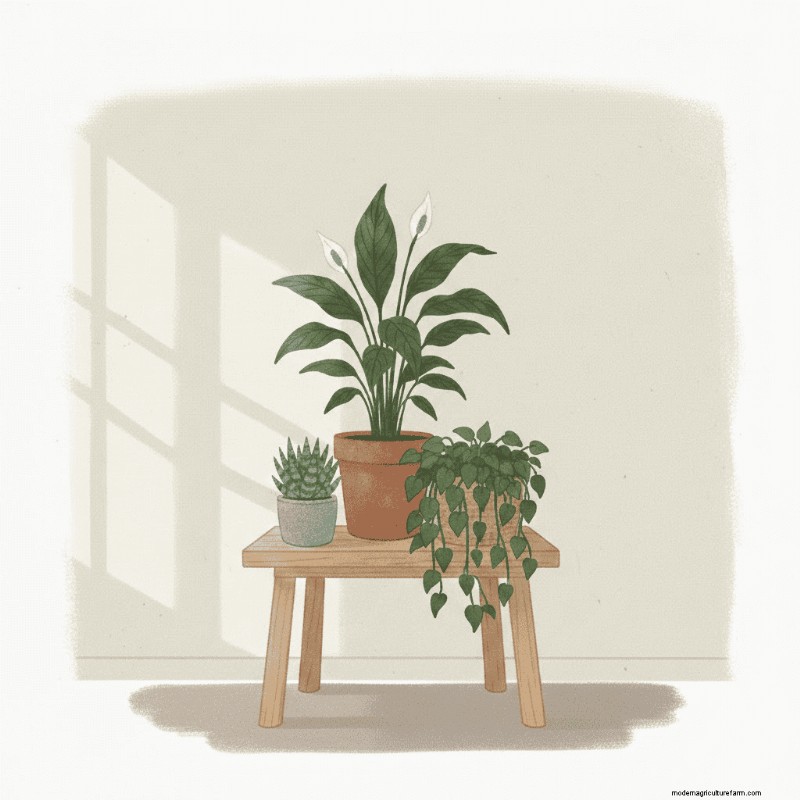
There’s something inherently pleasing about groupings of 3, 5, or 7 plants. Odd numbers create asymmetry that looks natural rather than rigid.
Try clustering three plants of varying heights but similar care needs together on a side table. These small vignettes become mini compositions within your larger display. Each grouping should have its own internal hierarchy with a tall plant accompanied by medium and smaller companions.
When working with odd-numbered groups, vary height and width for balance. A tall, skinny plant pairs well with a medium bushy plant and a small trailing specimen.
Resist the urge to space plants evenly. Place them at varying distances from each other. Some can touch while others have space between them, creating a more organic appearance.
Fun Fact:
The human brain processes odd-numbered groupings more easily than even numbers, which is why they feel more naturally balanced.
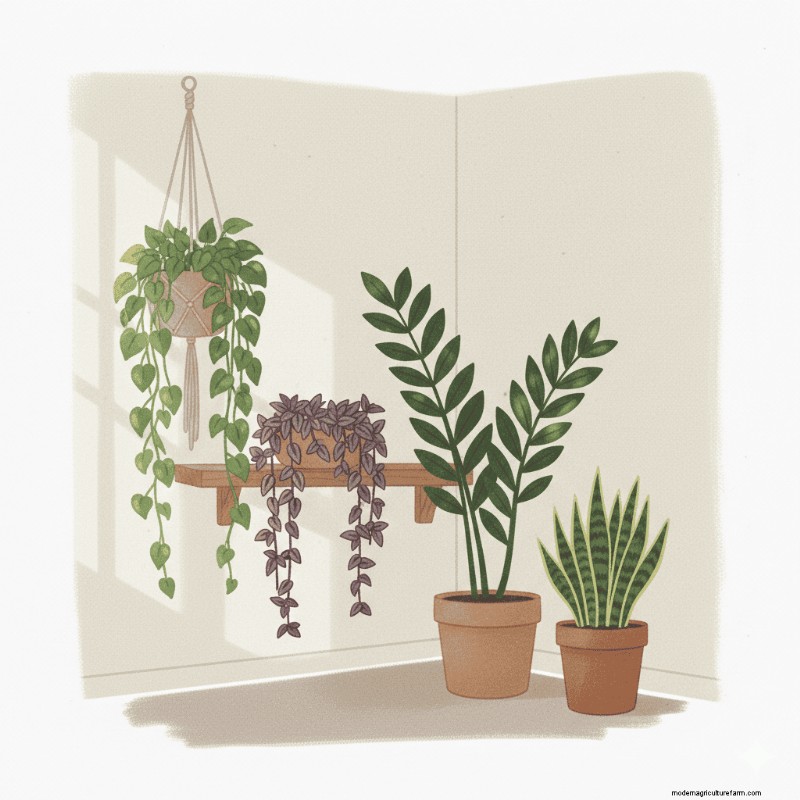
Not all plants grow at the same rate. Fast growers can quickly overshadow slower species if not managed.
Research growth rates before combining plants to ensure your arrangement stays balanced over time. Rapid growers like pothos and tradescantia need frequent trimming. Slower growing plants like ZZ plants and sansevierias hold their position for months without becoming unruly.
Strategic pairing of different growth rates creates displays that evolve beautifully. The quick-spreading purple foliage of tradescantia (Tradescantia zebrina) provides immediate fullness, while the upright structure of snake plants (Sansevieria trifasciata) offers lasting height and stability.
Monitor these pairings regularly and trim back faster growers. This ongoing maintenance preserves the intended visual relationship and prevents the arrangement from looking neglected.
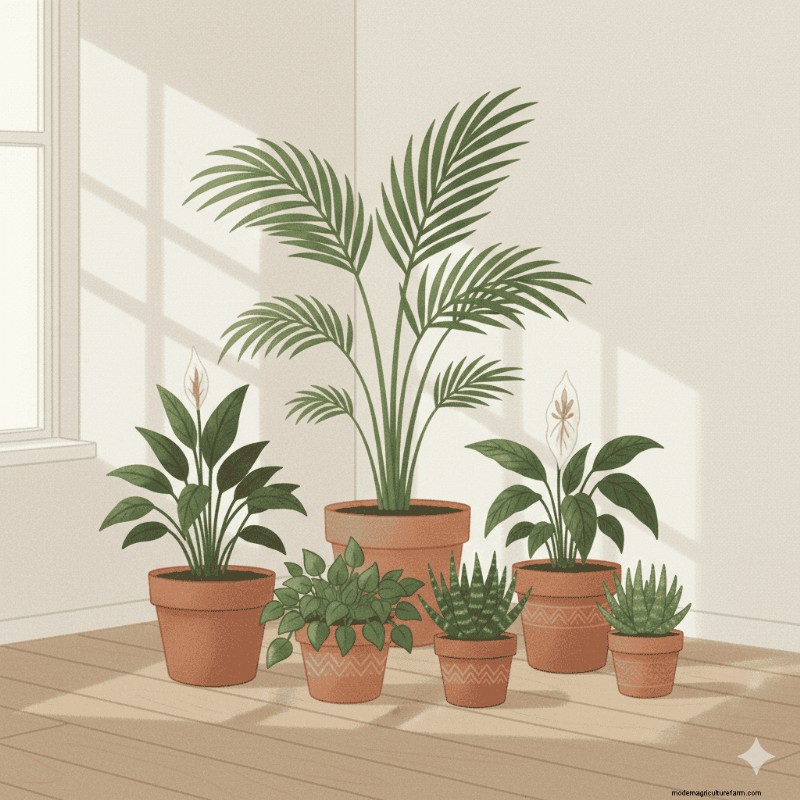
Containers play a huge role in how cohesive your plant display looks. Choose pots that share at least one common element: material, color palette, or style. This creates unity while allowing variety in your plant collection.
Terra cotta pots in different sizes offer a classic look that works with any decor. For modern spaces, try white ceramic pots in various shapes, or woven baskets in similar tones but different patterns.
Scale your containers appropriately. Tall plants need substantial pots for both physical stability and visual weight. Smaller plants look best in proportionally sized containers that don’t overwhelm their delicate structure.
Create rhythm by repeating certain container styles throughout your space. This repetition ties together plants in different areas, making the entire collection feel intentional rather than randomly accumulated.
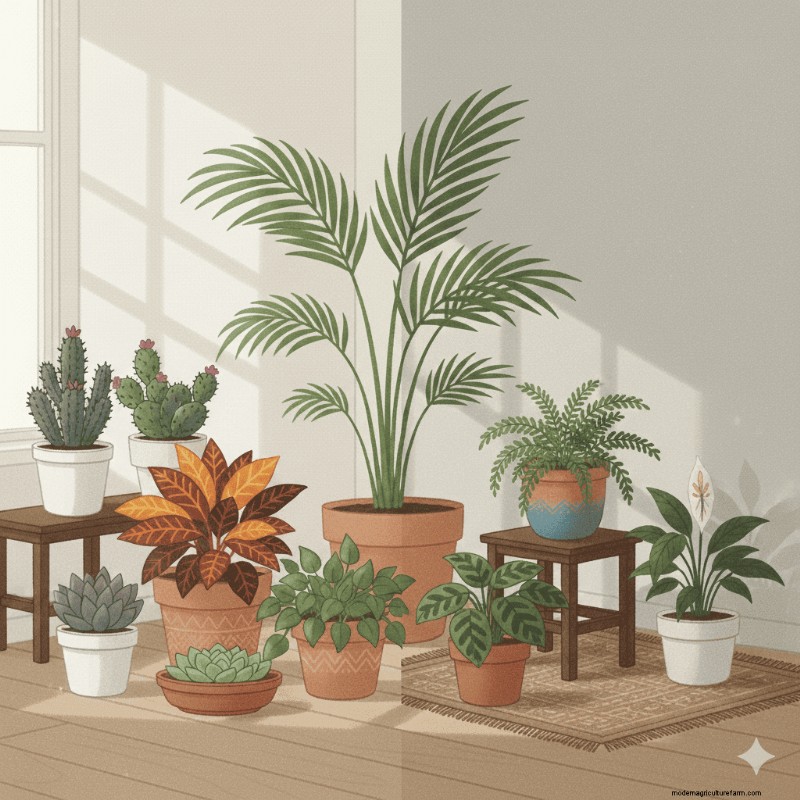
Group plants with similar light needs together. This ensures they all thrive while creating natural vignettes based on different light conditions in your home.
Your bright south-facing window might showcase sun-loving cacti, succulents, and crotons. A north-facing corner could become home to shade-tolerant ferns, calatheas, and peace lilies.
These light-based groupings make care simpler while creating visually cohesive displays.
The Takeaway:
Light requirements create natural boundaries. Succulents with compact forms contrast beautifully while sharing care needs. Peace lilies (Spathiphyllum wallisii) and shade lovers form distinct groupings away from direct sun, their lush leaves creating a different aesthetic altogether.
Read more: 21 Houseplants That Love Direct Sunlight
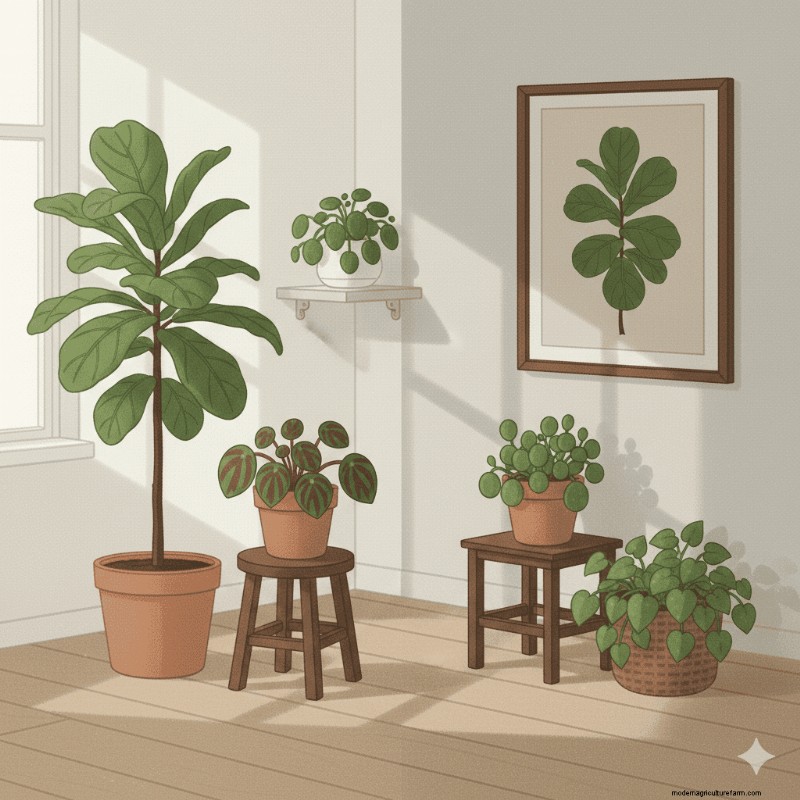
Repetition creates harmony in any design. Identify a few distinctive leaf shapes in your collection and repeat them throughout your space at different scales.
The rounded leaves of a large fiddle leaf fig can be echoed in a medium-sized peperomia and a small pilea.
This repetition of forms creates subconscious connections between plants in different locations. Your brain recognizes similar shapes, making the collection feel organized despite varying plant sizes.
Leaf shapes fall into basic categories: round, oval, heart-shaped, sword-like, or feathery. Find plants of different sizes that share similar leaf shapes to create subtle connections. A large monstera’s split leaves can be mirrored by a smaller rhaphidophora tetrasperma.
This technique works particularly well when unifying plants of dramatically different heights. The shared leaf characteristic creates family resemblance despite size differences.
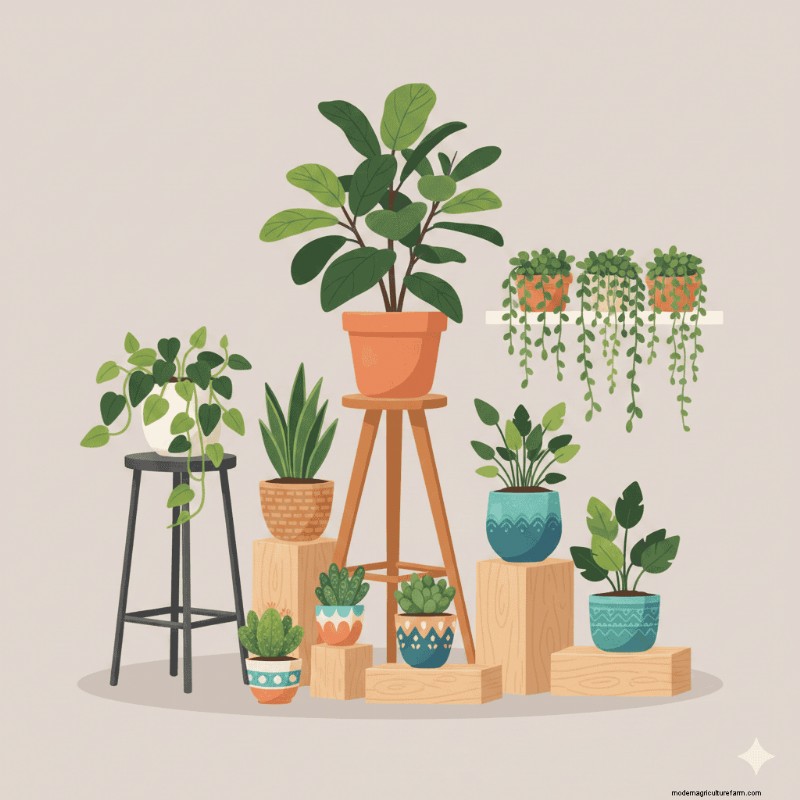
Not all height has to come from the plants themselves. Plant stands, stools, shelves, and risers add vertical interest and create multiple levels for displaying your collection. These platforms make it easier to arrange similar-sized plants in ways that still create visual hierarchy.
Mix materials and heights. A tall wooden stand might hold a medium-sized plant, while a shorter metal stool elevates a smaller specimen to similar prominence.
Small plants often get lost in collections dominated by larger specimens. By elevating them on stands or shelves, you give petite treasures the prominence they deserve.
A small trailing pothos on a tall stand can have as much visual impact as a floor-standing palm. Look for unexpected platforms like stacked books, decorative boxes, or vintage suitcases to add personality while serving a practical purpose.
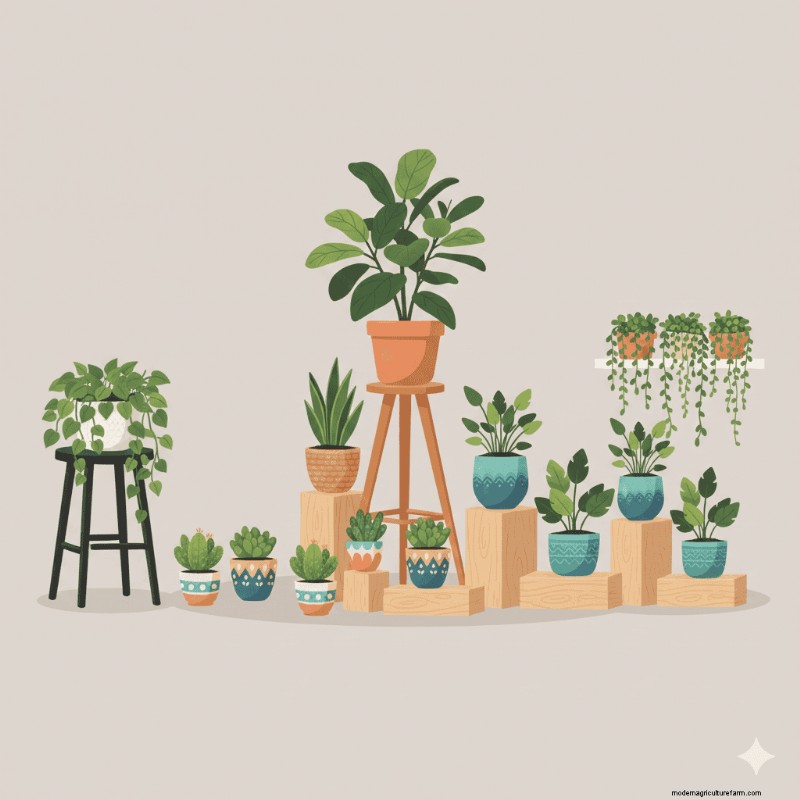
One of the biggest differences between professional and amateur displays is the use of negative space. Resist the urge to fill every inch with foliage.
Create distinct plant groupings with empty space between them. This breathing room allows each arrangement to be appreciated individually before the eye moves to the next grouping. The empty spaces become as important as the plants themselves.
Overcrowded plants not only look messy but also compete for light and air circulation. Give each plant enough space to display its natural form. This separation improves both aesthetics and health.
Step back regularly and assess your arrangement from different angles.
If it feels cluttered or chaotic, remove a few plants or increase spacing. Sometimes less truly is more when creating impact.
Pro Tip:
Take a photo of your arrangement. Your phone camera sees things your eye might miss, making it easier to spot balance issues.
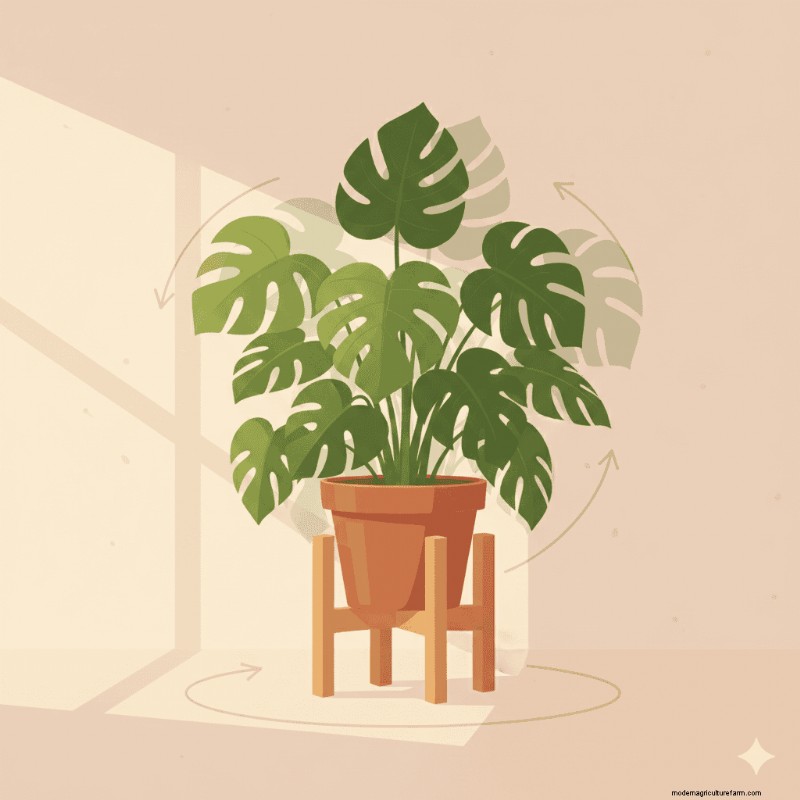
Plants naturally grow toward light, which creates lopsided growth over time. Establish a rotation schedule to turn your plants regularly. This simple habit ensures even growth and maintains the intended silhouette of each plant.
Make rotation part of your watering routine. A quarter turn each week keeps growth balanced and helps you spot potential issues like pests or diseases early.
Uneven growth quickly undermines even the most carefully planned arrangement. A monstera stretching awkwardly toward a window or a pothos trailing predominantly to one side creates visual imbalance that makes the entire display look haphazard.
For particularly stubborn plants, consider staking or training growth in specific directions. This gentle guidance helps maintain the desired shape while allowing healthy growth.
Combining plants of different heights creates living artwork that brings energy to any room. The key is thoughtful arrangement rather than random accumulation. By treating your plants as elements in a larger composition, you create displays that look professionally designed.
Take time to rearrange your plants seasonally as they grow and change. This ongoing curation keeps your space looking fresh and allows you to perfect your styling skills.
Soon you’ll develop an intuitive sense for balancing tall and small plants in harmonious arrangements. The consensus among experienced plant stylists? Start with fewer plants than you think you need, then add gradually until the balance feels right.


