Welcome to Modern Agriculture!

You’ve got houseplants everywhere. Maybe too many. And honestly? They’re starting to look a little chaotic instead of chic. Here’s the thing nobody mentions: random placement makes even the prettiest plants look like an afterthought.
Getting your plant arrangement right does more than make your space Instagram-worthy. Smart grouping actually helps your plants grow better by simplifying your care routine and creating micro-environments where they can thrive. Let’s talk about 13 ways to arrange your houseplants so they look intentional, not accidental.
Quick Answer: The secret to purposeful plant displays? Group by shared traits like height, water needs, or color. Layer tall plants behind shorter ones, cluster species with similar care requirements, and use matching pots to unify different plants. Think curated collections, not random scatter.
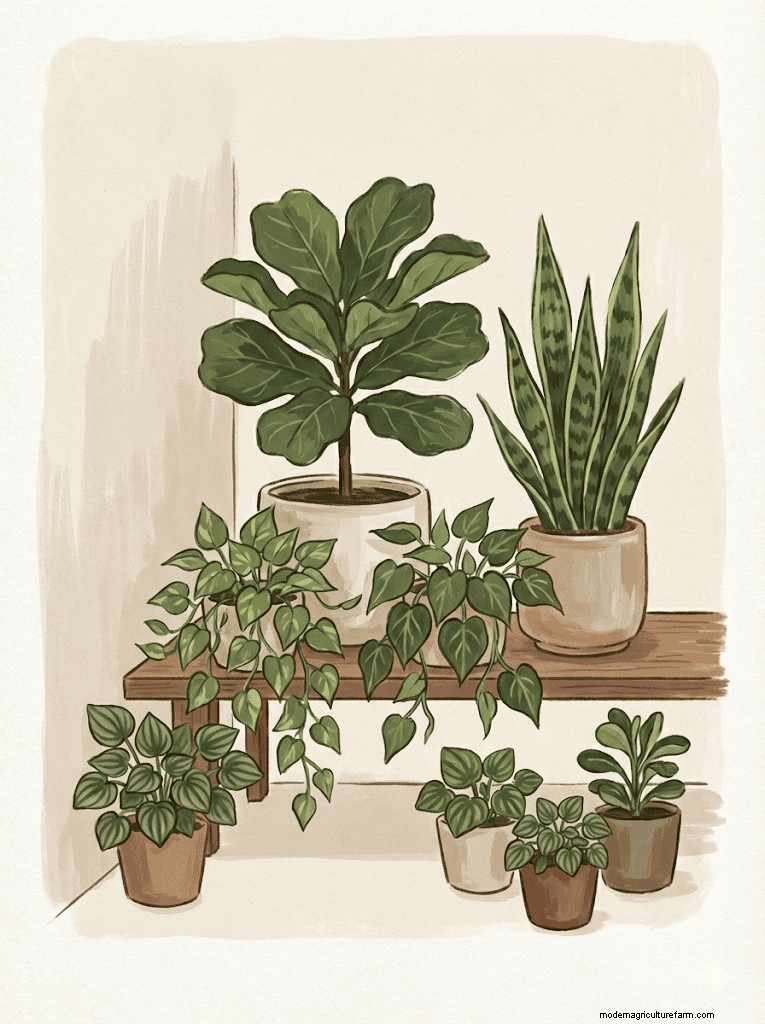
Layering plants by height pulls your eye upward and creates visual depth. It’s basic design, but it works every time.
Put your tall plants like fiddle leaf figs or snake plants in back. Medium growers like pothos or philodendrons go in the middle tier. Then tuck smaller plants like peperomias up front where they won’t get lost.
Corners and walls are perfect for this layered look. Just watch that your short plants still catch enough light when positioned in front of taller ones. Leave a few inches between each plant so you can actually see and appreciate what you’ve got. Nobody should be completely hidden.
Read more: 11 Tips for a Houseplant Display That Mixes Tall and Small Plants
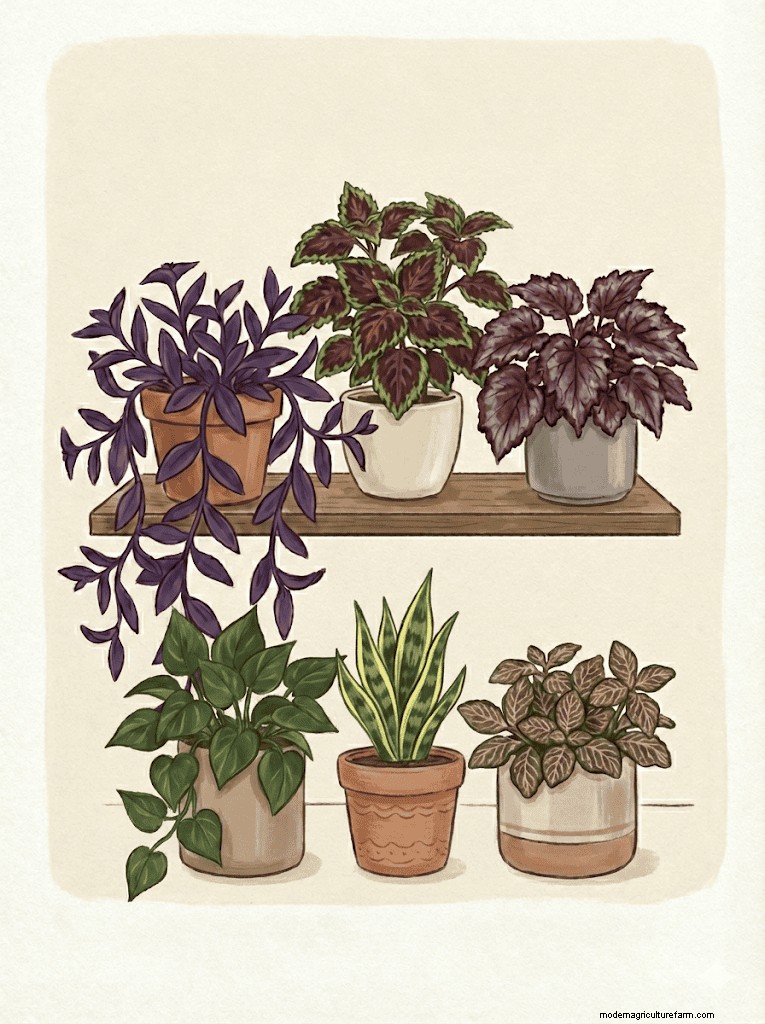
Plants with harmonizing colors instantly look like they belong together. Group purple-leaved beauties like purple heart, coleus, and begonias for a moody vibe. Or try pairing deep green pothos with pink-tinged fittonia for contrast that still feels cohesive.
You can go monochromatic with different shades of the same color. Try analogous colors that sit next to each other on the color wheel. Or get bold with complementary opposites.
⚠️ Common Mistake
Grouping plants solely by color while ignoring their care needs. That gorgeous purple oxalis and deep burgundy rubber tree might look amazing together, but if one needs constant moisture and the other prefers dry soil, your display won’t last long.
Even subtle green variations create sophisticated palettes when you’re thoughtful about placement.
Read more: 15 Gorgeous Foliage Houseplants to Add Texture to Your Decor
We'll email it to you so you can read it later!
By saving, you agree to receive occasional emails. Unsubscribe anytime.
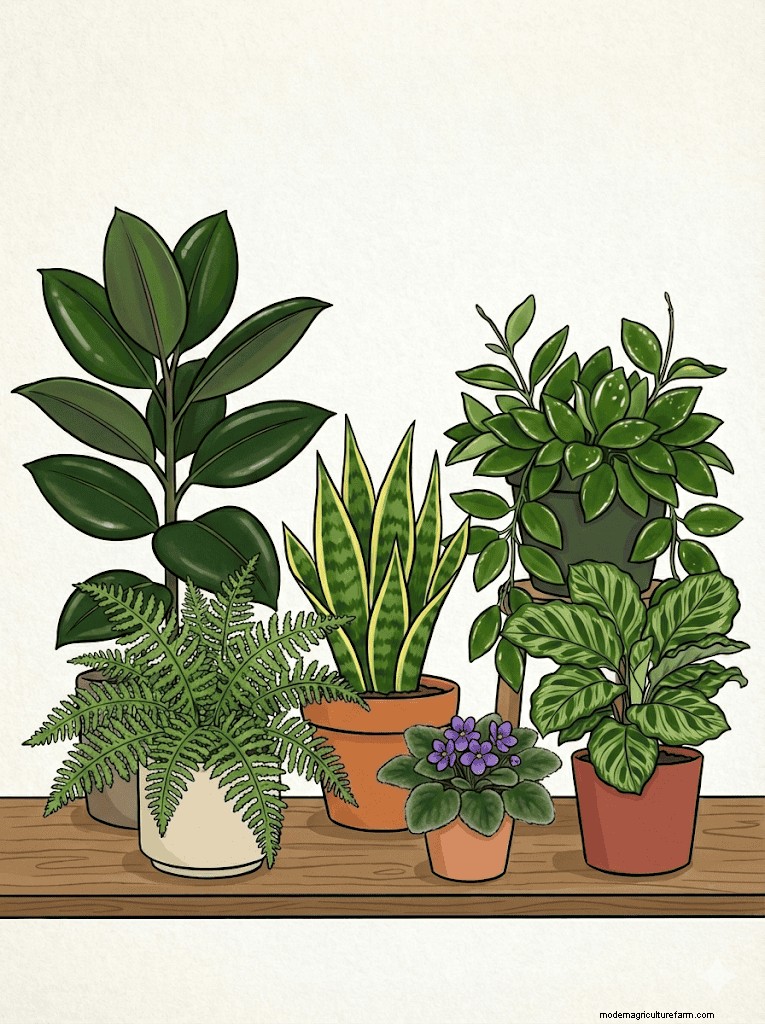
Different leaf textures create visual drama even when everything’s green. Place smooth rubber trees near lacy ferns. Put spiky snake plants next to velvety African violets.
The contrast makes each plant pop while keeping the group cohesive. Aim for at least three distinct textures in one display for maximum impact.
Think about combining glossy hoyas, ruffled calatheas, and fuzzy begonias. The variety invites people to look closer, touch (gently), and actually notice what you’ve created. Flat displays bore the eye. Textural variety keeps things interesting.
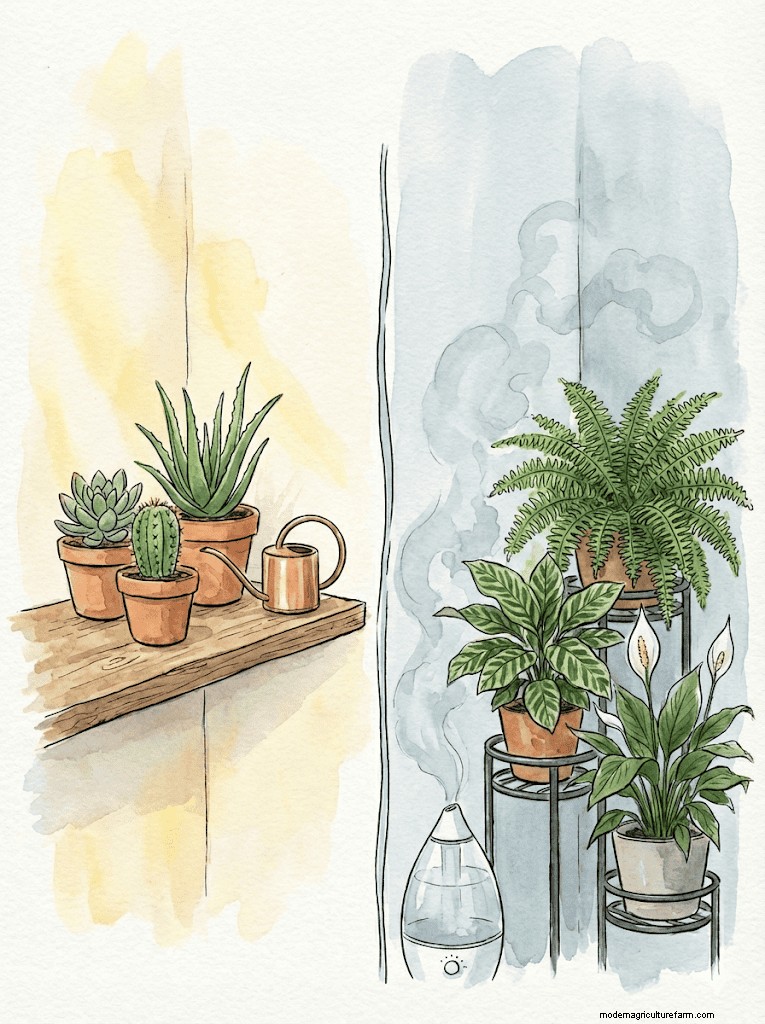
Organizing plants by watering needs simplifies your life and looks intentional. Win-win.
Drought-tolerant plants like succulents and cacti naturally look good together and need the same infrequent watering. Moisture-loving ferns, calatheas, and peace lilies create lush tropical displays and can share the same generous watering schedule.
This practical approach prevents the classic mistake of overwatering some plants while underwatering others. Plus, it creates natural visual themes. Put your functional groupings where light conditions match their needs, and you’ve got displays that are beautiful and low-maintenance.
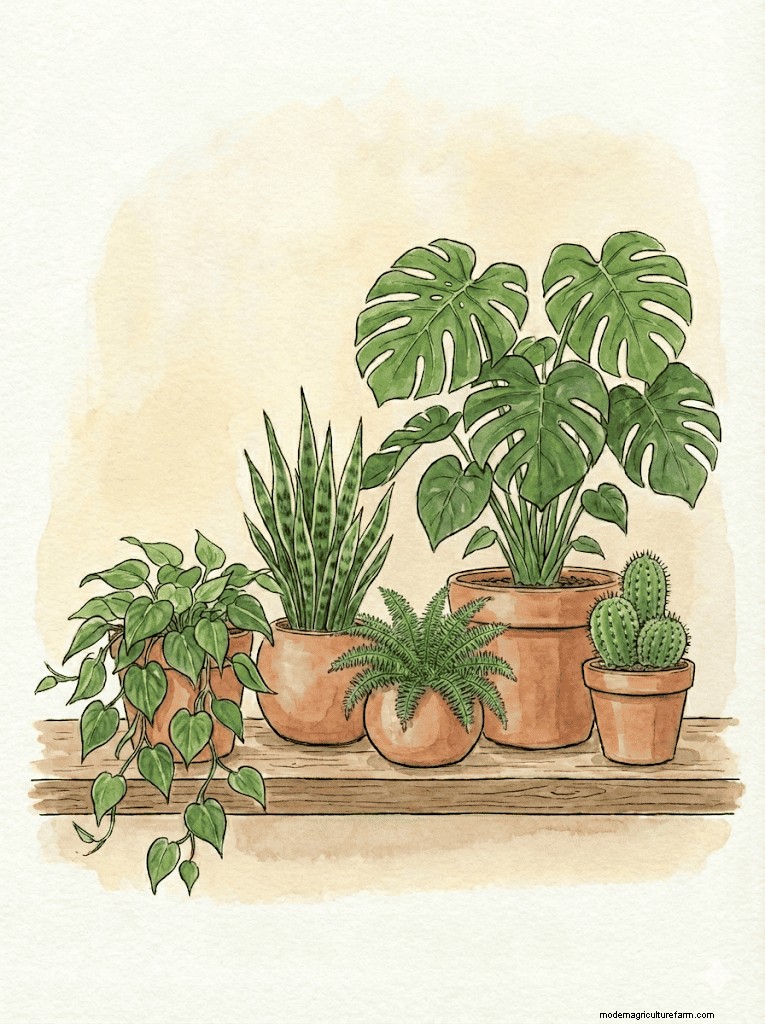
Matching containers instantly transform random plants into a curated collection. All white ceramic pots give you that clean, modern look. Terracotta creates warm, organic vibes. The pots become the thread tying everything together.
You can also mix pot styles while keeping a consistent element. Try different sizes and shapes of blue and white patterned pots. Or combine various metallic containers in similar finishes. The variation adds interest while the common theme maintains cohesion.
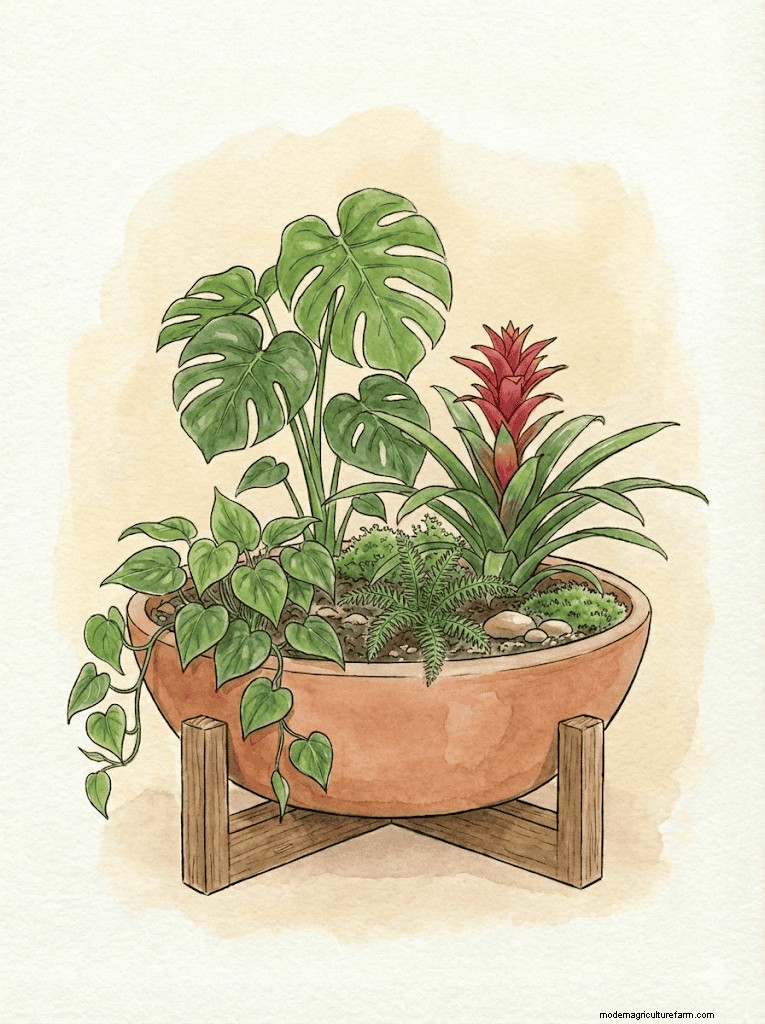
Plants that grow together in nature often look right together in your home. Create a desert vignette with various cacti, succulents, and maybe an agave. Or go tropical with philodendrons, monsteras, and bromeliads.
These natural pairings feel cohesive because they evolved side by side. The look is effortlessly harmonious.
The ecosystem approach shines in larger containers or on plant stands where multiple species can mingle. Plants that enjoy similar humidity levels actually help maintain the right microclimate for each other. Nature knows what she’s doing.
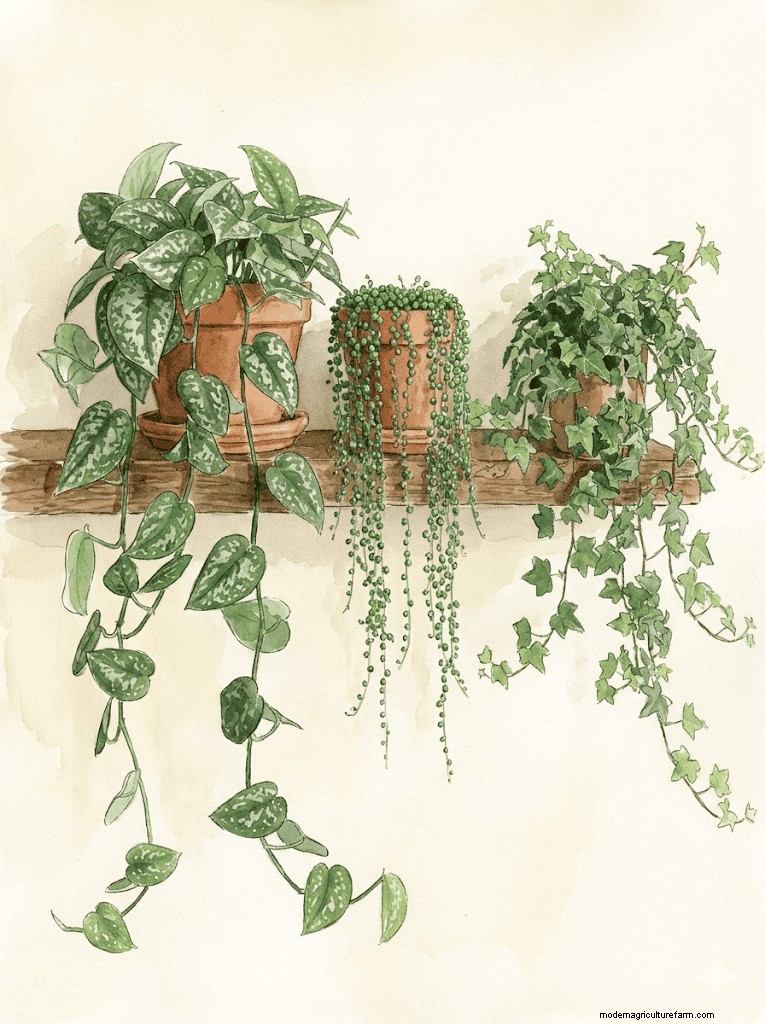
Plants with similar growth habits create natural-looking groupings. Put upright, architectural plants like sansevierias together. Or group trailing plants like pothos, string of pearls, and ivy on a shelf where they can cascade down dramatically.
💰 Time & Cost Estimate
Time to rearrange: 30-60 minutes
Cost for new matching pots: $20-$80 (depending on quantity and style)
Difficulty: Easy (just requires planning and patience)
This works especially well for unusual growth patterns. A collection of climbing plants on trellises makes a striking vertical garden. Rosette-forming plants like echeverias and air plants form beautiful geometric displays when grouped. The shared growth direction becomes your theme.
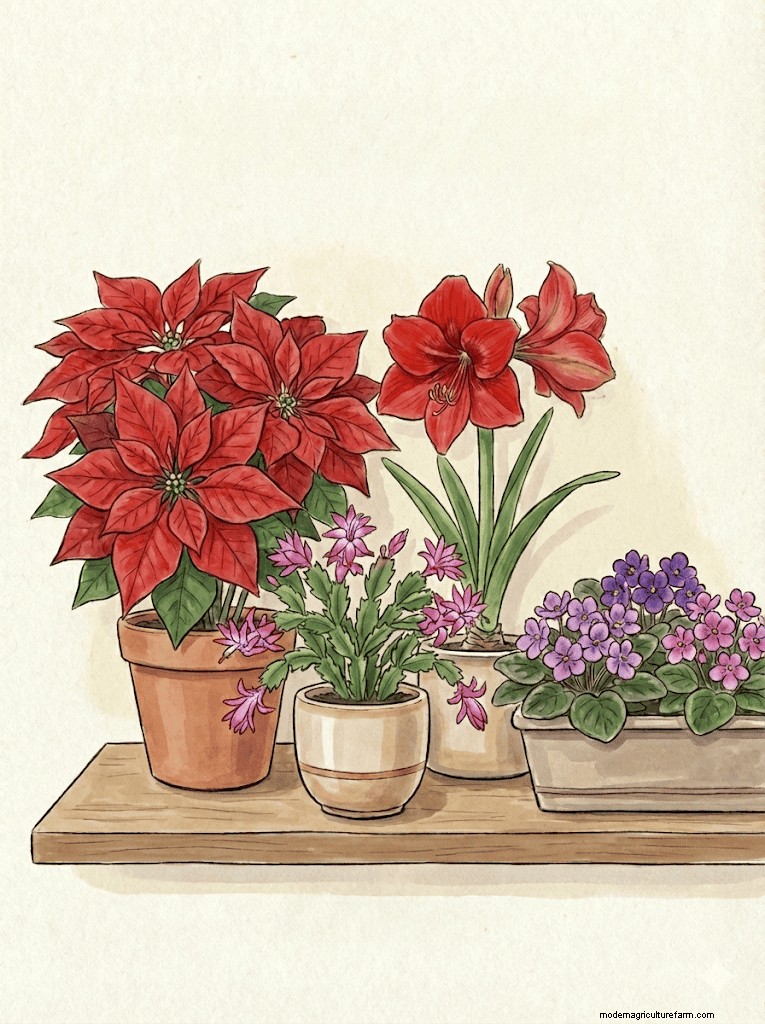
Some houseplants have distinct seasonal moments. Blooming cycles, color changes, or active growth periods.
Group holiday cacti, amaryllis, and poinsettias for a festive winter display. Place spring-blooming African violets, peace lilies, and orchids together for a flowering showcase when outside gardens are still sleeping.
This seasonal approach keeps your indoor displays feeling fresh all year. Move these groupings to prominent spots during their peak periods, then rotate them with other collections when they’re resting. Your home always features plants at their best.
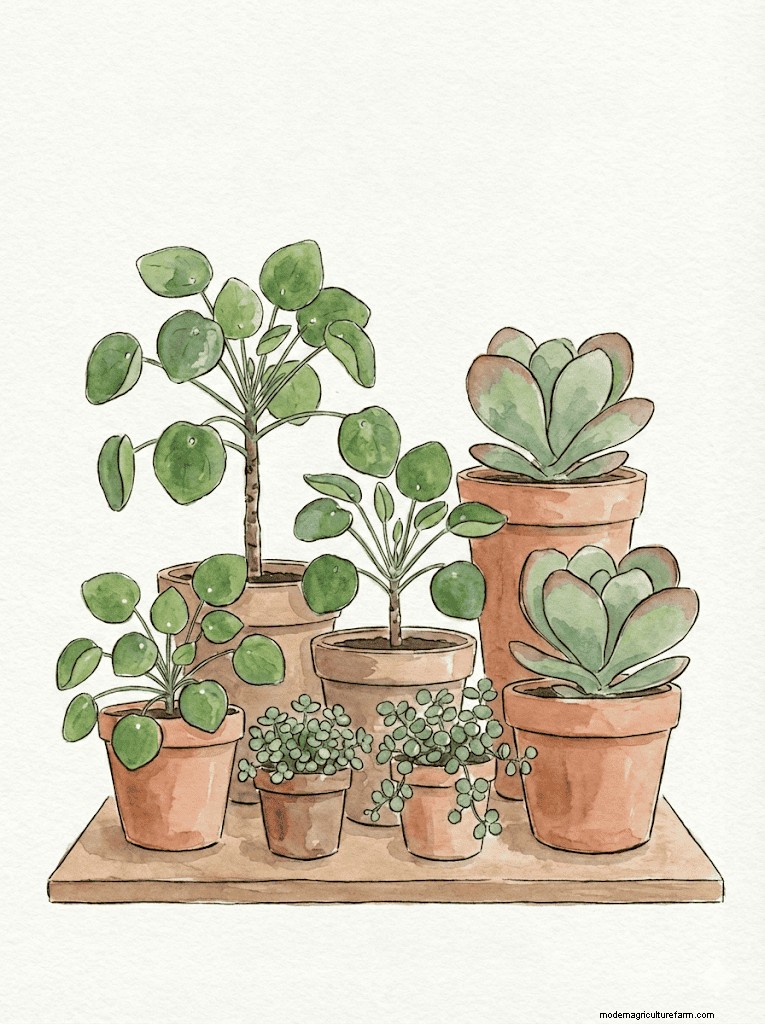
Repeating similar plant forms creates rhythm that’s pleasing to the eye. Group several varieties of upright, columnar plants like dracaenas in different heights. Or collect various round-leaved plants like Chinese money plants, pileas, and paddle plants.
The repetition works particularly well in formal settings or when you want obvious order. Botanical gardens use this technique constantly, and there’s a reason. Repeated shapes create visually pleasing patterns that feel deliberate and sophisticated, not accidentally assembled.
💡 Pro Tip
Use the rule of three when arranging plants. Three different heights, three different textures, or three of the same plant in varying sizes. Our brains find odd-numbered groupings more dynamic and interesting than even numbers.
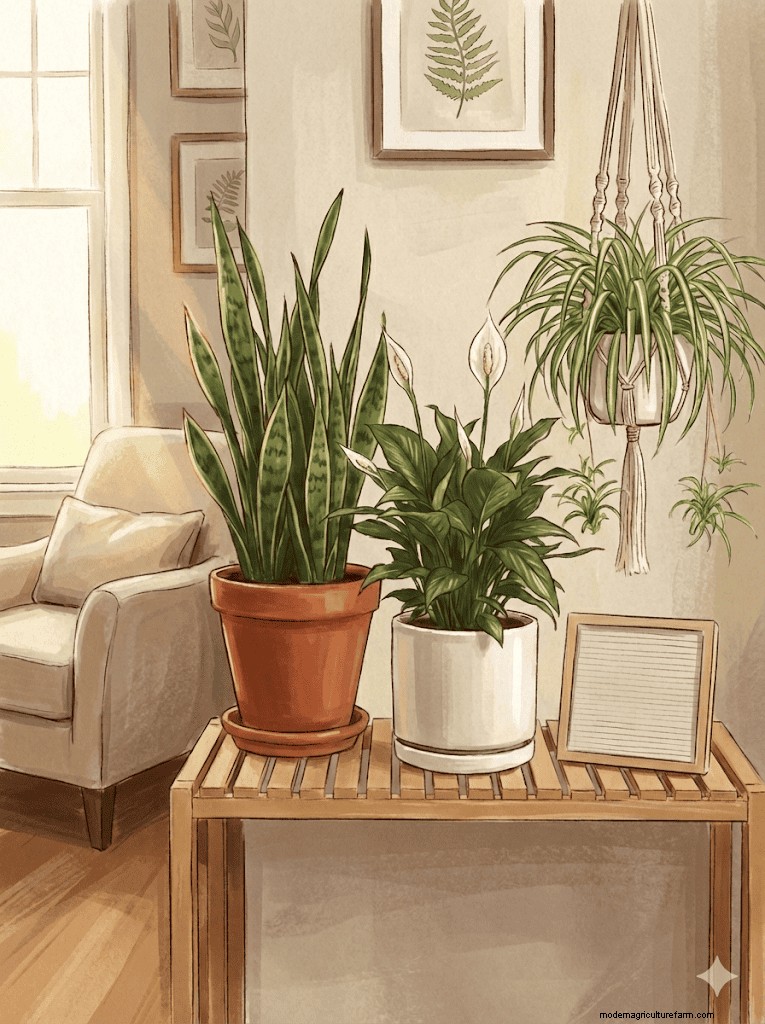
Plants grouped by theme look purposeful because they are. Create an air-purifying collection with spider plants, peace lilies, and snake plants. Assemble a pet-safe display featuring calatheas, Boston ferns, and parlor palms.
Other themes? Plants from a specific region. Plants with mythological names. Plants with food-related names like string of beans, string of bananas, and chocolate mint.
The theme provides context that transforms random assortment into thoughtful collection. It gives you (and your guests) something to talk about beyond “nice plants.”
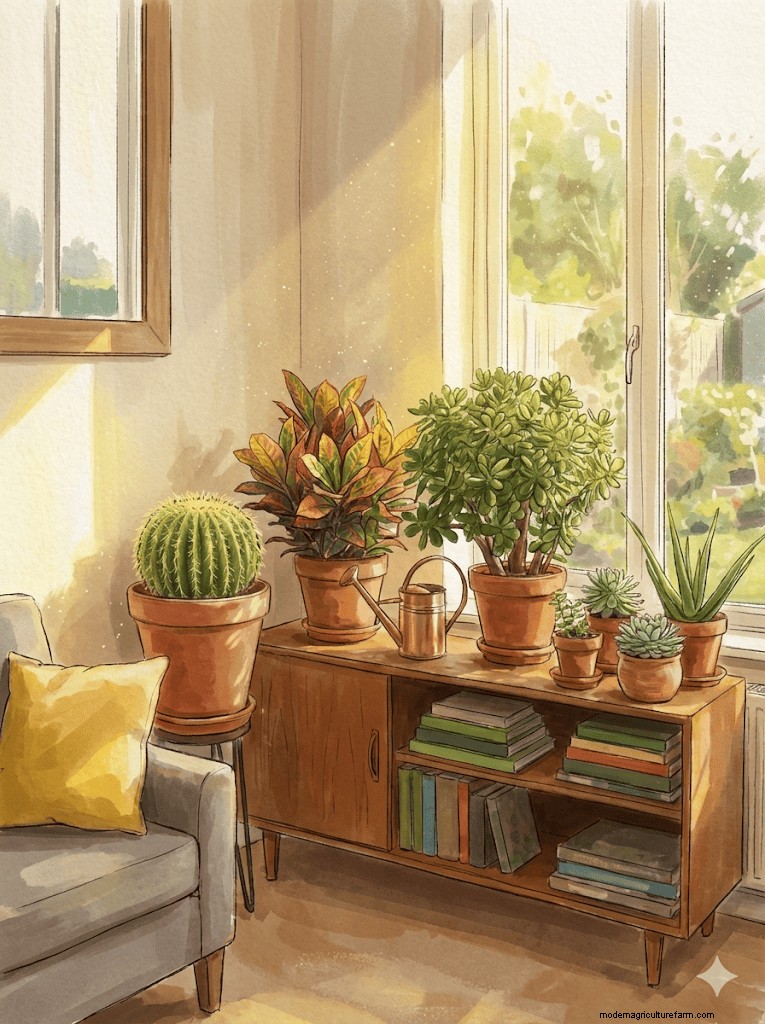
Plants with similar light requirements naturally thrive in the same location and often look good together. Group sun-loving plants like cacti, jade plants, and crotons near your brightest windows. Collect shade-tolerant species like ZZ plants, pothos, and peace lilies in darker corners.
This ensures all plants in a grouping will actually grow well where you put them. Similar light needs often translate to complementary appearances too.
Low-light plants typically have deeper green, broader leaves that harmonize beautifully. High-light plants often share compact growth habits and sometimes show reddish or yellow leaf tints. Nature’s already done the design work for you.
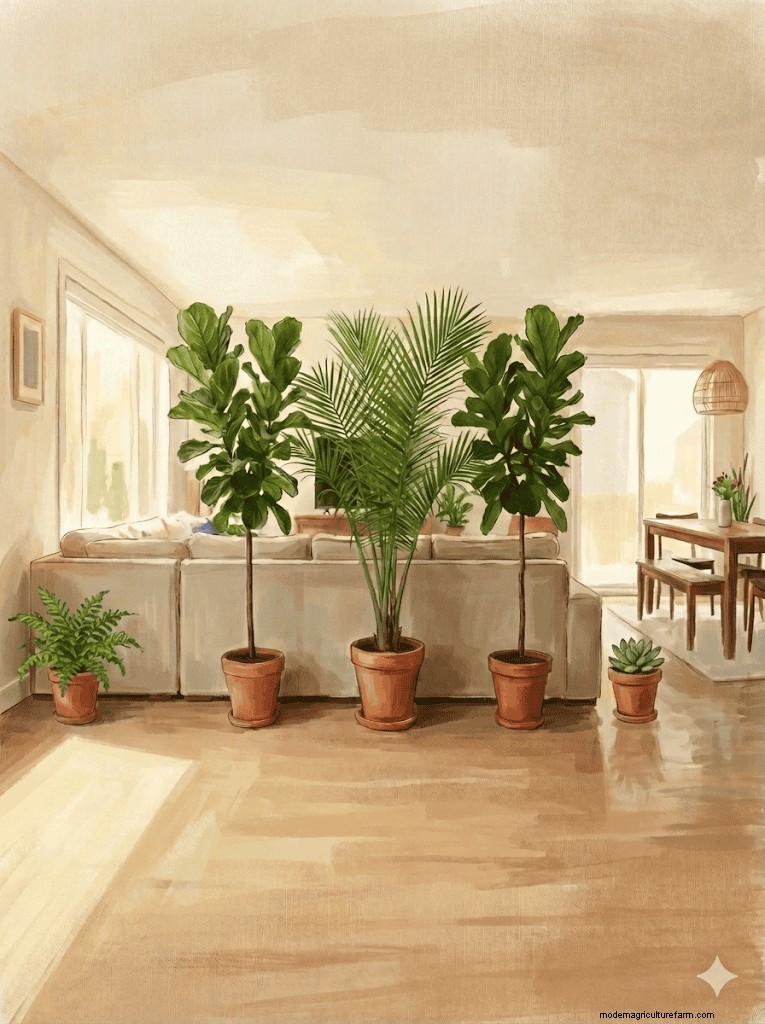
Plants arranged in a line create natural room dividers that look intentional and serve a real purpose.
Place larger plants like fiddle leaf figs, palms, or bird of paradise in the center, with medium and smaller plants tapering down on either side. You get a green privacy screen that defines different areas without blocking precious light.
This approach shines in open floor plans or studio apartments where you need to define spaces without actual walls. The grouping looks deliberate because it has a clear function beyond decoration. Use matching pots or a long planter to enhance the cohesive look.
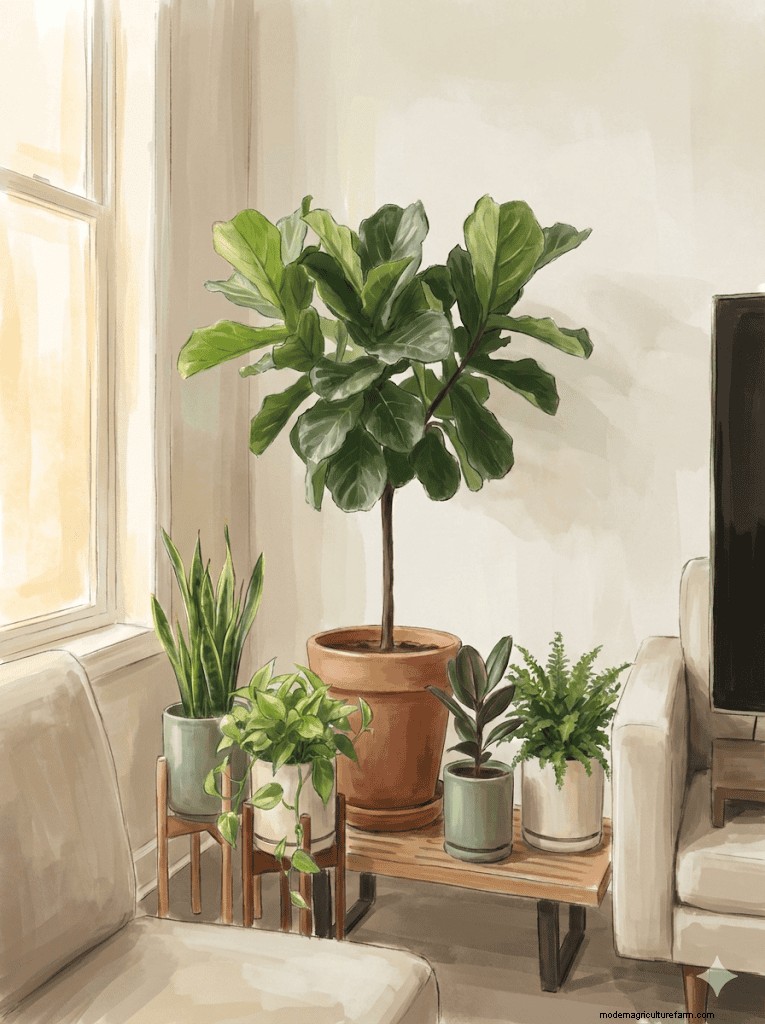
A dramatic centerpiece plant surrounded by smaller companions creates a focal point that anchors your entire space. Place a showstopping monstera, bird of paradise, or mature fiddle leaf fig as your star, then arrange smaller plants around it that enhance rather than compete.
This hierarchy creates natural visual flow. It mimics how plants grow in nature, with dominant species surrounded by understory plants.
The arrangement looks intentional because it follows this natural pattern. Use plants with similar care needs but contrasting forms to add interest while keeping focus on your statement piece. Let your star shine.
You don’t need a design degree to transform your plant collection into intentional displays. These strategies work because they’re based on real connections between plants. Similar needs, complementary appearances, or shared themes.
Start with just one grouping technique and see how it changes your space. As your collection grows, mix and match these strategies to create something uniquely yours yet always thoughtfully arranged.
The best part? When you group plants by their actual needs, they don’t just look better. They grow better too, because you’re finally giving them what they’ve been asking for all along.