Welcome to Modern Agriculture!

Most gardening advice assumes you have steady energy, consistent motivation, and a body that cooperates on demand. If your brain or body doesn’t work that way, that advice isn’t just unhelpful. It’s discouraging.
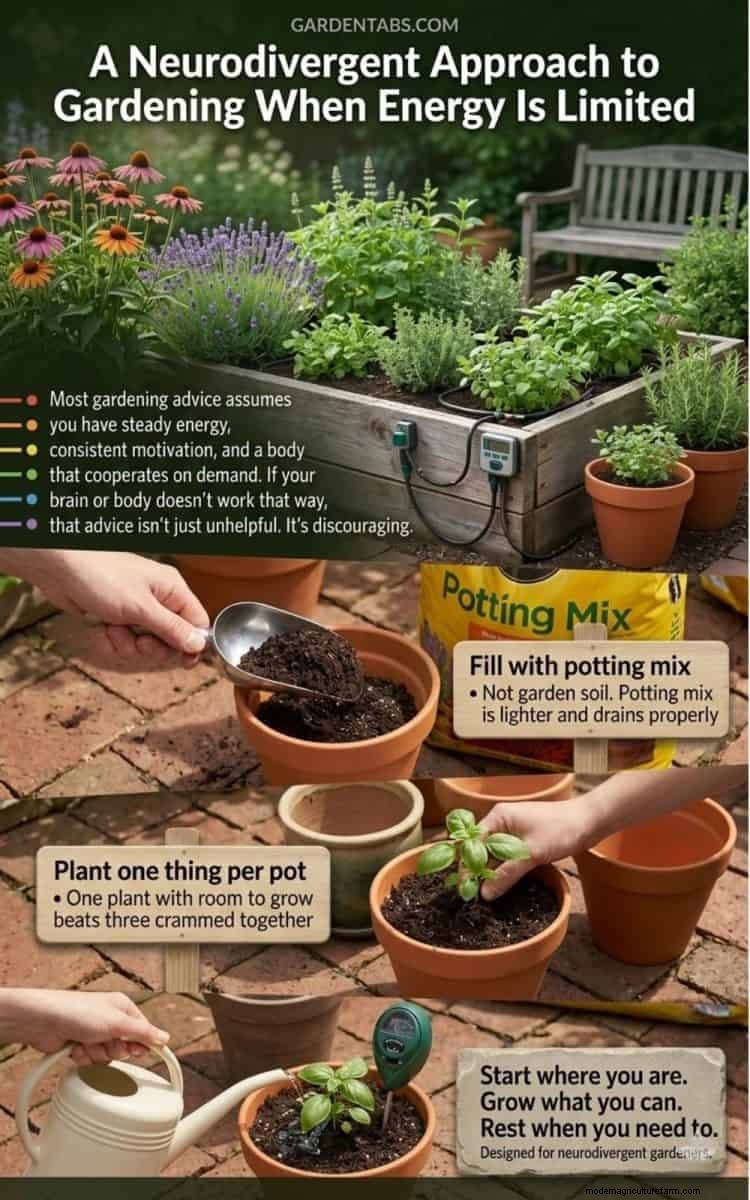
This guide is for neurodivergent gardeners, people with chronic illness, depression, fatigue, or anyone whose energy is unpredictable. You can absolutely grow things. You just need strategies designed for how you actually function, not how gardening magazines assume you do.
Every strategy here is built to reduce effort, protect your energy, and meet you where you are, even on the days when “where you are” is the couch. No pushing through. No guilt. Just nine practical steps that work with limited energy instead of against it.
Energy cost: Low | Setup time: 20 minutes | Payoff: A garden you can reach from a chair
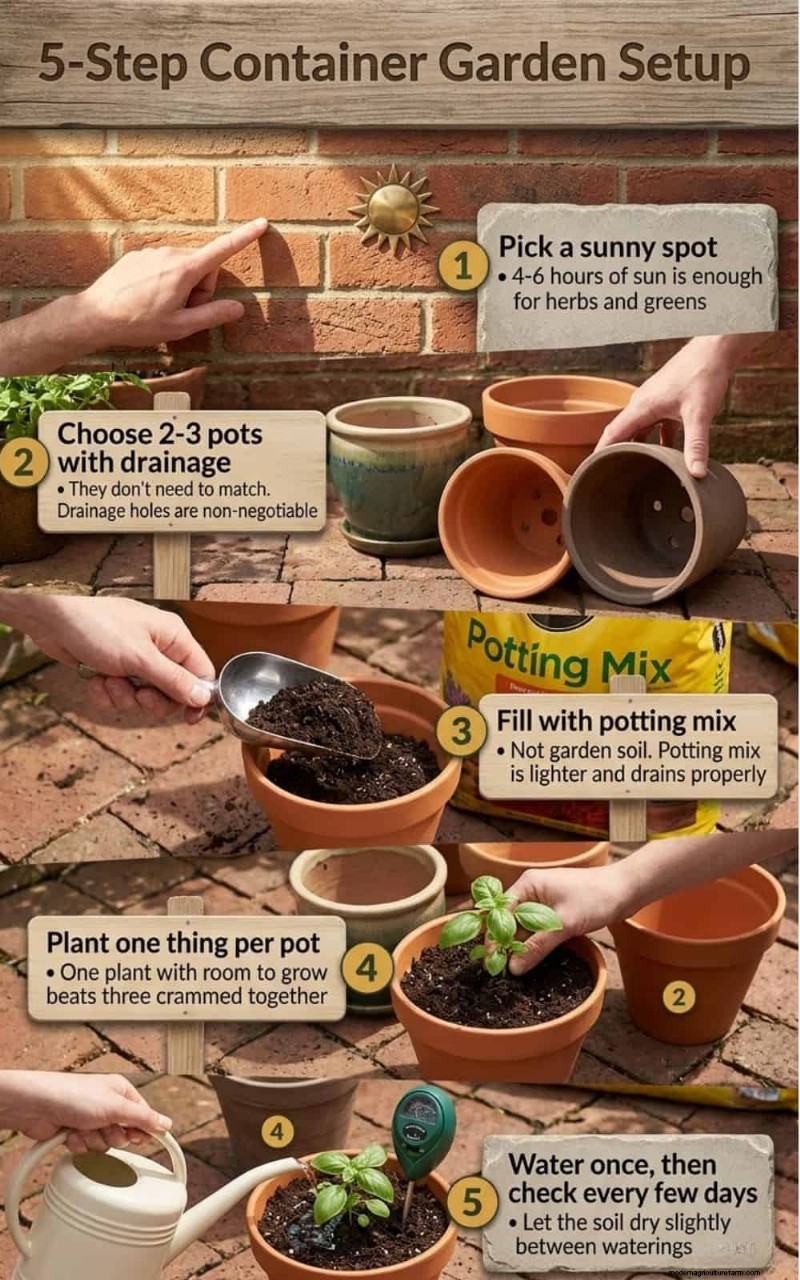
Containers are the single best entry point for low-energy gardening. You don’t need to dig, you don’t need to prep soil, and you can place them at whatever height works for your body. A few pots on a table, a railing planter on a balcony, or a single large pot by your door is a garden. Full stop.
Choose pots with drainage holes (non-negotiable), fill them with bagged potting mix (not garden soil), and plant one thing per pot. Herbs like basil, mint, or rosemary are forgiving and grow quickly. You’ll see results within a week or two, which matters when your brain needs proof that effort leads somewhere.
If even that feels like a lot, start with a single pot of mint. Mint is almost impossible to kill. It grows aggressively, smells good when you brush it, and gives you something to put in your water glass. That counts.
Energy cost: Medium (one-time setup) | Setup time: 1-2 hours | Payoff: Years of no-bend, no-dig gardening
Raised beds are the most impactful upgrade you can make for low-energy gardening. They bring the soil up to you. No crouching, no kneeling, no fighting compacted ground with a shovel. A bed that’s 18-24 inches tall lets you sit on the edge and garden comfortably.
You don’t need to build one from scratch. Pre-made raised bed kits bolt together in under an hour, and many are designed specifically for accessible gardening. Fill with a mix of bagged topsoil and compost, and you have a ready-to-plant bed with zero digging required.
If you have a partner, a friend, or a good-energy day you can bank on, use that day for the setup. Then you’re coasting for the rest of the season. Consider a raised garden bed kit if you want something that arrives ready to assemble.
We'll email it to you so you can read it later!
By saving, you agree to receive occasional emails. Unsubscribe anytime.
Energy cost: Low | Setup time: 10 minutes | Payoff: Plants that survive your worst weeks
The right plant selection changes everything. You need plants that tolerate inconsistent watering, bounce back from neglect, and don’t require daily attention. Perennials come back every year without replanting. Drought-tolerant varieties survive when you forget to water for a week. Self-seeding plants literally do the work of planting themselves.
Herbs that thrive on neglect: Rosemary, thyme, oregano, and mint actually prefer drier conditions. Water them occasionally and they’ll reward you all season.
Vegetables that keep producing: Zucchini, pole beans, and Swiss chard give you a long harvest from a single planting. One zucchini plant will produce more than you can eat.
Flowers that come back every year: Coneflowers, black-eyed Susans, and sedums are perennial, drought-tolerant, and attract pollinators. Plant them once and they return each spring without your help.
Related: For more ideas, check out 26 Beginner Houseplants That Practically Thrive on Neglect. Many of these work outdoors in containers too.
Energy cost: Medium (one afternoon) | Setup time: 1-2 hours | Payoff: 50% less weekly maintenance
Mulch is the closest thing to free energy in gardening. A 3-4 inch layer of wood chips or straw around your plants does three jobs at once: it suppresses weeds (less pulling), retains moisture (less watering), and feeds the soil as it breaks down (less fertilizing).
One afternoon of spreading mulch in spring can cut your weekly maintenance in half for the rest of the season. That math matters when your energy budget is tight. Spread it, walk away, and let it work for you all summer.
Energy cost: Medium (one-time setup) | Setup time: 30-60 minutes | Payoff: Never hand-water again
Hand-watering with a watering can is peaceful in theory and exhausting in practice, especially on hot days when plants need water most and you have the least energy to give. A drip irrigation system or soaker hose on a timer solves this completely.
A basic drip kit connects to any outdoor faucet. Add a battery-powered timer and your garden waters itself every morning before you’re even awake.
This one upgrade removes the single most time-consuming garden task from your plate entirely.
For containers, self-watering pots are another excellent option. They have a built-in reservoir that the plant draws from as needed. You fill it once every week or two and the pot handles the rest.
Energy cost: None (this is a planning strategy) | Setup time: 5 minutes | Payoff: You stop burning out on garden days
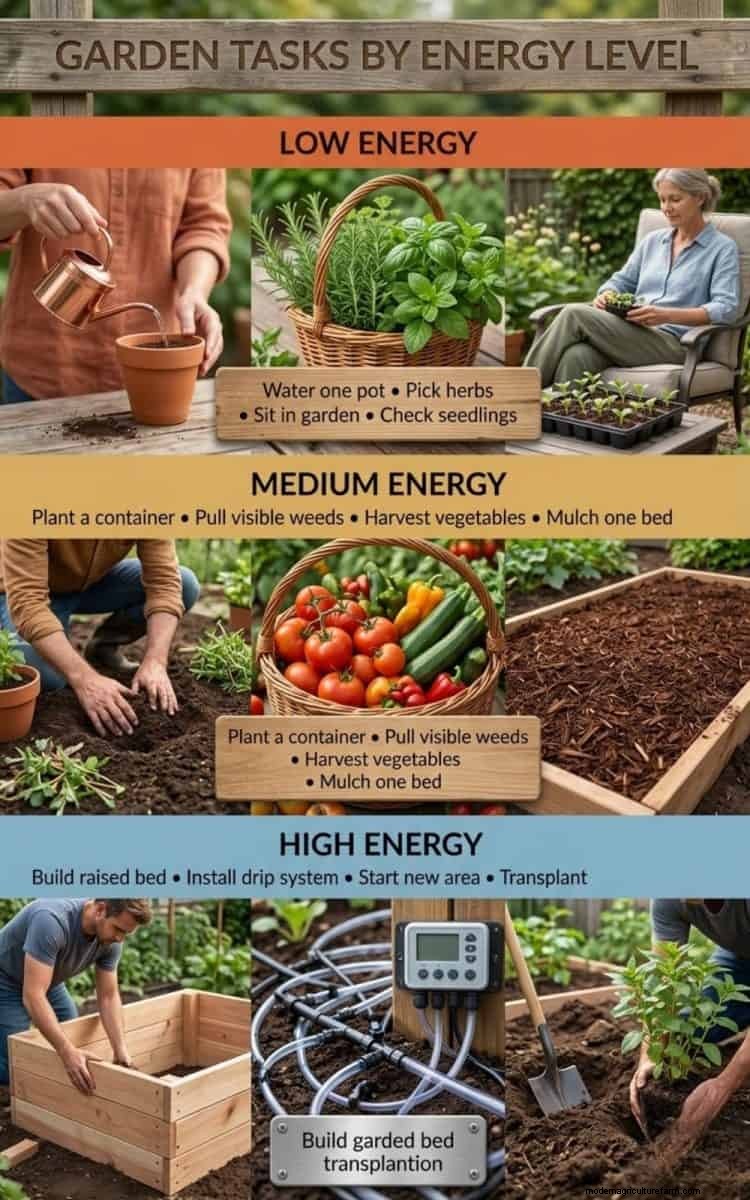
The biggest mistake tired gardeners make is trying to do everything on one good day, then crashing for a week. Instead, sort your garden tasks by energy level and do what matches where you are today.
Low energy days: Water one pot. Pick a few herbs. Walk through the garden and just look. Check on your seedlings. Pull one weed if you feel like it. Sit in a chair near your plants and call it a garden day.
Medium energy days: Plant a new container. Pull the visible weeds in one bed. Harvest whatever is ready. Spread mulch in a small area. Deadhead spent flowers.
High energy days: Build or fill a raised bed. Install drip irrigation. Start a new garden section. Transplant or repot larger plants.
The key is that low-energy days still count. Sitting near your plants and noticing what’s growing is gardening. Picking three cherry tomatoes is a harvest. You don’t have to earn your garden by sweating.
Want a full system for energy-matched gardening? The Neurodivergent Gardener is an 89-page guide built specifically for brains and bodies that don’t fit the standard gardening advice. Learn more about The Neurodivergent Gardener
Energy cost: Low to Medium | Setup time: 15-30 minutes | Payoff: Plants at arm height, no crouching
Vertical growing brings plants up to you. Wall planters, trellises, hanging baskets, and tower gardens all mean less bending, less crouching, and easier harvesting. Pole beans climb a trellis with minimal effort. Strawberries grow beautifully in tower planters at waist height. Herbs cascade from wall-mounted pockets.
Even a simple lean-to trellis against a fence gives you vertical growing space without any building skill. You get more growing area in less floor space, and everything is within arm’s reach.
Energy cost: Low (shopping) | Setup time: None | Payoff: Every garden session hurts less
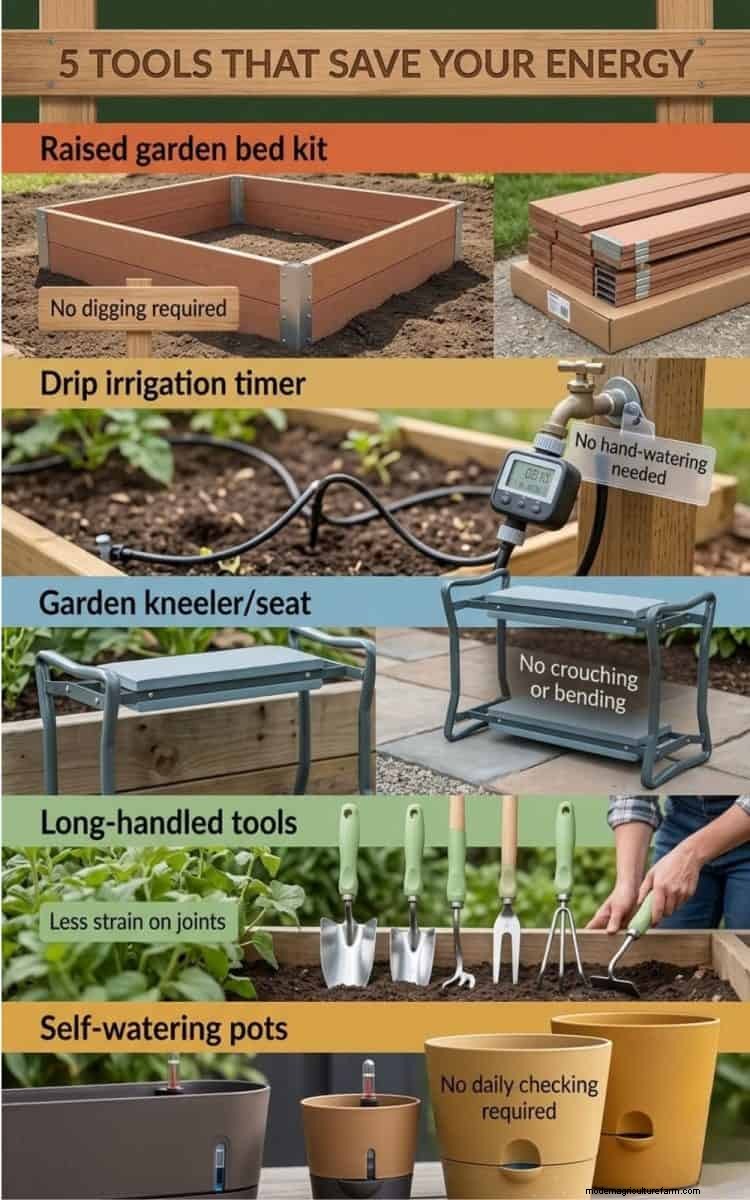
The right tools reduce the physical cost of every garden task. These five make the biggest difference for low-energy gardeners:
Your garden does not need to look like a magazine spread. Weeds will grow. Some plants will die. There will be weeks where you don’t go outside at all. None of that means you failed.
A garden with weeds in it is still a garden. A pot of basil with some yellowing leaves is still producing food. A raised bed that only has three things growing in it is still feeding you. The bar for success here is “something is alive and I didn’t run myself into the ground maintaining it.” That’s it.
Perfectionism kills more gardens than any pest or drought ever could. If you can let go of what your garden should look like and focus on what it actually gives you, you’ll keep going. And keeping going is the whole game.
Related: If you’re also working with indoor plants, see 25 Indoor Plants That Actually Survive in Windowless Rooms for low-light options that need almost zero attention.
You don’t need to do all nine steps today. You don’t even need to do two of them. Pick the one that sounds most doable with the energy you have right now and start there.
One pot of mint on your porch. One raised bed you assemble on a good day. One timer that means you never hand-water again.
A neurodivergent garden doesn’t look like the ones in magazines. It looks like yours.
It matches your energy, forgives your off weeks, and still gives you something growing when you’re ready to come back to it. Start where you are. Grow what you can. Rest when you need to. The garden will wait for you.