Welcome to Modern Agriculture!

Wheat in Pakistan grown under different agro-ecological zones. In irrigated areas, wheat is planted after cotton, rice and sugarcane. In rainfed areas wheat is grown in sequence with maize, sorghum, pearl millet and after fallow especially in low rainfall zone.
In the Punjab region of India and Pakistan, as well as North China, irrigation has been a major contributor to increased grain output. Use of fertilizer and semi-dwarf varieties in developing countries has increased yields per hectare. Fertilizer and breeding technique improve its yield. Rotation cropping boost yield by 25%, rotation with canola crop
Globally wheat is a leading source of vegetable protein in human food, having a higher protein content than other major cereals, maize (corn) or rice.Wheat grain is staple food used to make flour for leavened, flat and streamed bread, biscuit, cookies, cake, breakfast, cereals, pasta, noodles, couscous and for fermentation make beer and alcoholic beverage or biofuel ( 7,8,9,10). Wheat is used in a secondary capacity in some markets as a feed or livestock. It is also used in thatching material for huts and sod barns.
The first identifiable bread wheat ( Triticum aestivum ) identified using DNA analysis in sample form a granary dating to approximately 1350 BCE at Assiros in Greek Macedonia (11). The whole grain can be milled to leave just the endosperm for white flour, the by-product of this is bran and germ. The whole grain is a concentrated source of protein which is 12.1% of whole wheat flour, fibre is 01.9%, Iron is 11.5mg/100g, Phosphorus is 355mg/100g, calcium is 48mg/100g and its caloric value is 341, while the refined grain is mostly starch. (12).In rapidly a developing country of Asia, westernization of diets associated with increasing prosperity is leading to growth in per capita demand for wheat at the expense of the other food staples.
With the country anticipating record production of 25.4 million tonnes of wheat this year, the UN’s Food and Agriculture Organization (FAO) has express satisfactions over rising cereal production in Pakistan in 2014. This increase is due to expansion in area under cultivation, favourable weather conditions during Rabi season in the main wheat producing provinces of Punjab and Sindh and ample supply of fertilizers and water (13). The FAO expects the total cereal production to four percent this year as compared to last year. The total production of cereal crops ( wheat, rice, maize and others) is estimated to be 40.63m tonnes as compared to 39.17m tonnes in 2013 (13).
According to the State Bank of Pakistan’s annual report for 2012-2013, the country produced 24.21 million tons of wheat from and area of 8.66 million hectares in the previous fiscal year of 2013, grew 23.47 million tons of wheat from 8.65 million hectares in 2012 and cultivated 25.21(14).
Total 76% of wheat produced in Punjab, while Sindh produces 16%, KP-5% and Baluchistan produce 3% of total wheat produced across the country. The average what production per acre in Sindh is close to 26Mnn, while in Punjab it is around 23 Mnn per acre. In Sindh only 14 million acre land is under wheat cultivation and only 1.8 million acres having two crops per year. There is approximately 3.2 million acres land in Sindh, which can be bought under cultivation through improvement and planning. In Sindh, we have low crop yield is related to poor management. This includes later planting of wheat due to later maturity and harvest of previous crops like cotton, rice and sugarcane, low soil fertility due to continuous exhaustive cropping system and lack of legumes in the rotation and weed infestation. Crop yields also reduced due to low and imbalance use of fertilizer.
It consists of following stages of a wheat plant.
Sowing of what in Sindh take place between October and December.Farmers in Sindh have completed an estimated 97% of sowing target of 1.1 million hectares of wheat by end December (20). The share of Rabi crop (winter/spring crop) from wheat comes 73% as compared to 7% from pulses and 20% from other crops.Rabi crop season started from October and continues till March for sowing different crops including wheat.
In Pakistan, the wheat areas are divided into Irrigated & Rain fed.
NARC 2011, Galaxy 2013, AARI 2011,Punjab 2011, Millat 2011, Aas 2011, Pasban 90, Pasban 93, seher 2006, Seher 2008, Ufaq 99, Inqalab 91, Rodi
Dharabi 2011, Chakwal 50, NARC 2009, Pakistan 2013
NARC11, Pirsabak-2004, Pirsabak-2008, Hashim-2008, Pirsabak-2013
Dharabi, Pirsabak-2005, Tatara, NIFA, Shahkar-2013, Lalma-2013
Planting precision is one of the most critical steps in producing successful wheat crop. Proper planting procedure includes time of planting (15-30 Nov), depth of planting (1-1.5 inches) and seeding rate (50Kg seeds/acre). The objective is to establish a crop that will have 30-35 plants/ft2 that are well developed (1.5 tillers/plant) by winter dormancy.
Proper stand establishment requires that seedling in term of number of seeds per unit area (per square feet or linear row foot) rather than a pound or bushels per acre. Seed size will vary among varieties and even among seed lot of same variety. Seeds size or the number of seeds per pound can vary from 10,000 seeds per pound to 20.000 seeds per pound. The linear length of row needed to drill 35 seeds/ft2 is calculated by dividing 144 square inches in an ft2 by the drill row width. For example using a drill with 7 inches row width, dividing 144 by 7=20.6 inches of row length 35 seeds at 90% greater germination.
Harvesting of the crop began in Sindh and South Punjab in late March and expected to continue till mid-June in North Punjab. Harvesting of wheat and other Rabi crop in a rain-fed area will begin after May 15. At harvesting time, what stalks begin to bend over from the weight of their kernels, and the entire plant has become golden in colour. After wheat is harvested form the field, machinery separates the stalks and chaff away from the kernels. The stalks and chaff often are used in applications ranging from mulch to animal bedding.
The germination of seeds is affected by temperature, water availability, oxygen, light, and substrate, maturity of seed and physiological age of the seed. Various plants require different variable for successful seed germination. This also linked with individual seed variety and ecological conditions of plant natural habitat. The minimum water content required to wheat germination is 35% to 45% by weight. Air is composed of 20% oxygen, 0.03% Carbon di oxide and 80% Nitrogen and seeds of most plant species germinate well in and environment providing this mixture of gases. The optimum temperature for germination is 12 to 250C .Specific seed often have a temperature range within which it will germinate. Winter wheat requires exposure to cold temperature to enable flowering. This process is termed vernalisation. This is the acquisition of a plant ability to flower in the spring by exposure to the prolonged cold of winter .
Precipitation prior to harvest can result in to pre-harvest germination. It is also result in to attack of fungi Cladosporium and Alternaria. Immature seed harvesting having lot of moisture develop microflora grown in the seed lot. If mechanical damage occurs during cleaning, dressing with chemicals, seed treatment,bagging, transportation of seed result in to lost the seed quality. 12% is the ideal moisture for harvesting of wheat. The correct chemical and doses are used when seeds are treated with fungicides and insecticides. Other wise seed may show symptoms of psytotoxicity.
1st irrigation, 20-25 days after sowing, 2nd irrigation, 80-90 days after sowing, 3rd irrigation, 120-125 days after sowing.
The main wheat diseases are categorized are:
Seed borne disease- These include seed borne scab, seed borne Stagonospora (previously known as Septoria) Common bunt (Stinking Smut) and loose Smut. These are managed with fungicides.
Loose Smut is a seed born disease comely find in the Punjab & KPK Province of Pakistan. Loose Smut is also cured by sowing the recommended and resistant verities.
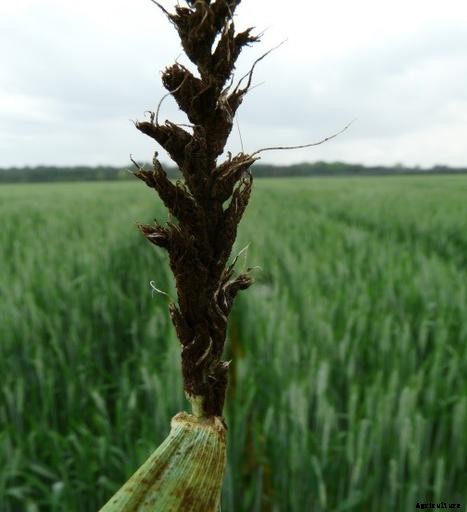
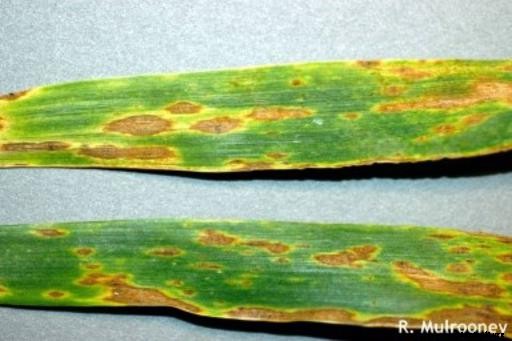
Wheat Rust is a common wheat disease in Pakistan can be controlled by planting the resistant verities.
Wheat rust is a fungal disease that affects wheat, barley and rye stems, leaves and grains. In temperate zones it is destructive on winter wheat because the pathogen overwinters. Infections can lead up to 20% yield loss exacerbated by dying leaves which fertilize the fungus.
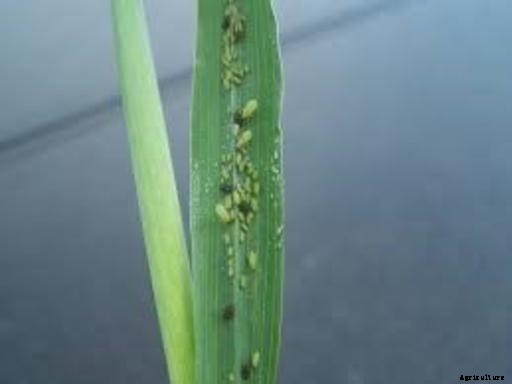
Aphids attack on wheat a little before the maturity stages of wheat and directly start eating the grains. Due to the recent change in pattern of Rainfall in Pakistan aphids get back to the wheat crop and causes approximately 17-20% damage to the wheat yield.
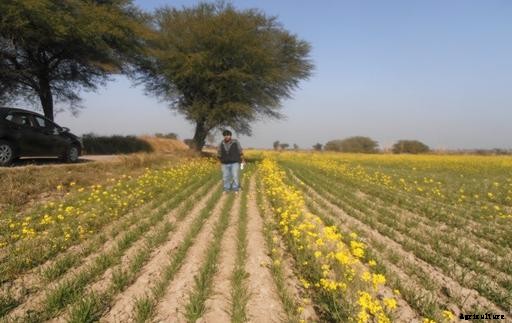
Aphids can be easily controlled by using the biological control method rather than the chemical method at that stage of the crop. The easiest method to control the aphids by relay cropping of wheat with canola crop. Canola crop will attract the lady birds beetles, these beetles start attacking the aphids. Scientists have reported that one lady bird beetle will eat 800 aphids a day on regular bases.
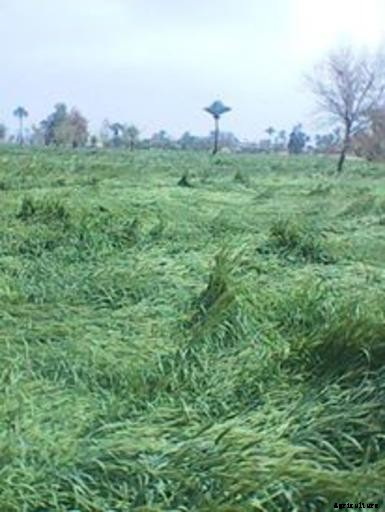
During last 2-3 years, the climate change in Pakistan has diversely affected the agricultural sector in Pakistan. Out of the weather problems the Feb-March winds and rainfalls causing wind lodging in wheat in Punjab, KPK and Sindh province of Pakistan. Wind lodging causes a huge damage to the farmers and they even can’t get the input amount in their field.
This is very important to look on the above-mentioned issue as Pakistani population is growing day by day so in upcoming few decades, it is very difficult to meet the food requirements of the growing Pakistani population. By keeping in view this issue Ba Khabar Kissan will inform the farming community to adopt the mitigation strategies to fight with the wind lodging problem in wheat i.e. to introduce Ridge planting in wheat.