
Welcome to Modern Agriculture!

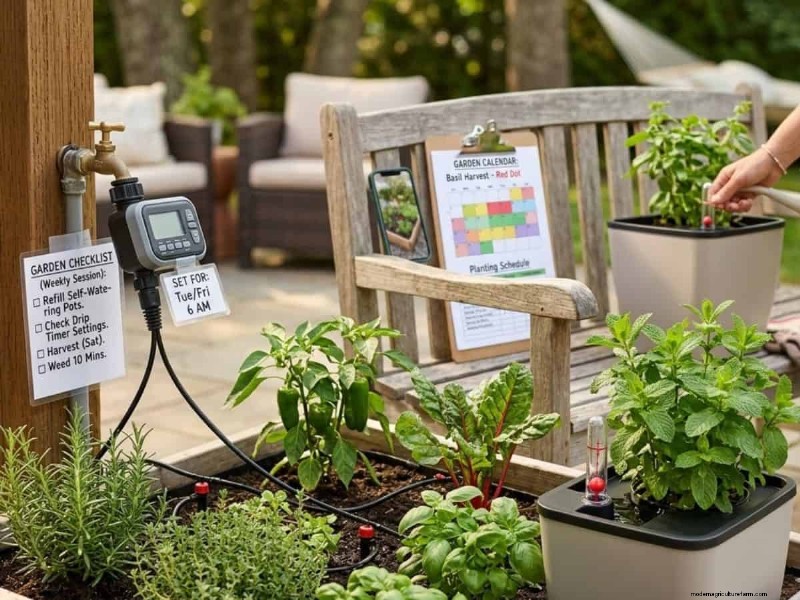
Most gardening advice is built for brains that don’t exist.
You know the type: remember to water every morning, track your planting calendar, check soil moisture daily, follow seasonal schedules. That’s not advice for people with executive dysfunction. That’s a recipe for dead plants and guilt.
The problem isn’t you. The problem is a system designed around consistent working memory and unlimited decision-making capacity. When your brain struggles with initiation, time blindness, and working memory, traditional gardening asks you to fail in slow motion.
Here’s what actually works: systems that eliminate decisions before they happen. Automation that runs whether you remember or not. Setups you configure once and forget about. Plants that forgive you when you inevitably forget they exist for two weeks.
This isn’t about trying harder. It’s about building a garden that works with your brain instead of demanding a different one.
Every gardening guide assumes you’ll just remember. Water on schedule. Track planting dates. Notice when something needs attention. For folks with executive dysfunction, that’s asking your brain to hold multiple variables while fighting through activation energy just to walk outside.
The answer is simple. Stop requiring yourself to remember anything.
Remove the daily decisions. Automate the repetitive tasks. Build external systems that carry the cognitive load. Your garden shouldn’t depend on your working memory having a good day.
Reality Check
If you’ve killed plants before, you’re not a bad gardener. You just haven’t found systems that match how your brain actually works. The plants don’t care about your intentions; they care about consistent conditions. Build those conditions into your environment, not your memory.
Drip irrigation delivers water directly to plant roots on a timer you set once. You don’t wake up wondering if you watered yesterday. You don’t check soil moisture. You don’t make a decision at all. The system runs automatically.
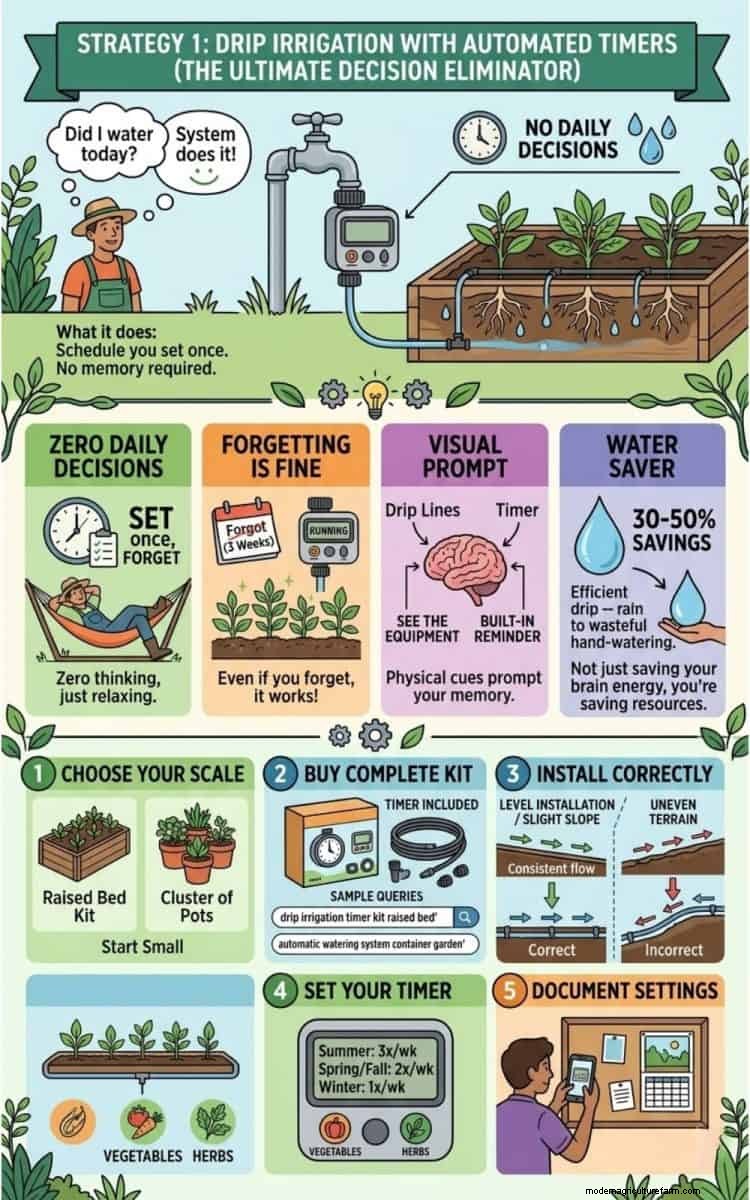
This works because it eliminates the initiation barrier. No daily activation energy required. No decision fatigue. No working memory load. Set it in May, and it’s still watering your plants in August even if you forgot you had a garden.
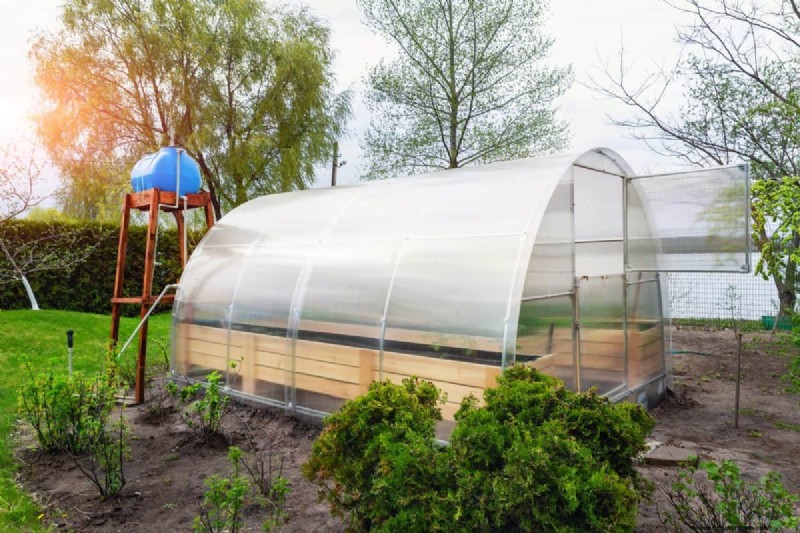
The setup takes maybe an hour. You buy a complete kit with timer included. Connect it to your outdoor faucet or rain barrel. Run the drip lines to your plants. Set the timer for your climate and season. Done.
Zero daily decisions. That’s the entire point. You configure it once when your executive function is cooperating, then the system carries the load for months.
Even better: forgetting doesn’t break anything. You can completely forget you have plants for three weeks straight, and they’ll still be alive. The visual reminder of seeing drip lines also prompts garden-related thoughts without requiring your brain to generate the memory from scratch.
Drip systems also use 30-50% less water than hand-watering. You’re conserving resources while reducing cognitive load. The efficiency is built into the physics, not your memory.
Start small. One raised bed or a cluster of containers. Don’t try to automate your entire yard on attempt one.
Buy a complete kit with timer included. Not separate components you have to figure out. The kit should include drip lines (or soaker hoses), a hose connector, an outdoor timer, and emitters. Search for “drip irrigation timer kit” plus your specific setup (raised bed, container garden, in-ground).
Install on flat or slightly sloped ground. Water flows downhill or stays level. Uneven terrain means some plants drown while others die of thirst.
Set your timer based on season and plant needs. Spring and summer: 2-3 times per week for most vegetables. Once or twice weekly for established herbs. Fall and winter: once per week unless you’re getting heavy rain. Adjust if your area goes through a dry spell or wet season.
Take a photo of your timer settings. Keep it somewhere visible. When you inevitably forget what you programmed three months ago, you have the answer without thinking through it again.
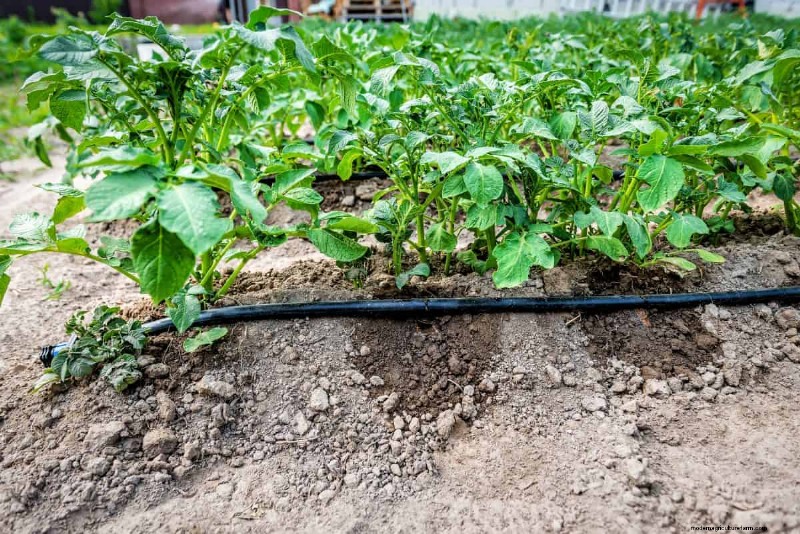
Look for kits that include soaker hoses, not sprinkler heads. Soakers deliver water directly to soil. Sprinklers waste water and create humidity that encourages fungal problems.
Get an outdoor timer. Battery-powered or solar. Don’t rely on smart timers that require app updates or WiFi connections. Those add friction. Simple mechanical timers work fine and don’t depend on technology cooperating.
Make sure the kit includes drip emitters. These control flow rate so every plant gets consistent water, not just the ones closest to the faucet.
We'll email it to you so you can read it later!
By saving, you agree to receive occasional emails. Unsubscribe anytime.
For balconies, patios, or situations where a full drip system feels like too much, self-watering containers work.
These pots have a hidden water reservoir at the base. Fill the reservoir once per week. The pot automatically wicks water up to the soil as the plant needs it. No checking. No guessing. The system self-regulates based on the plant’s actual water draw.
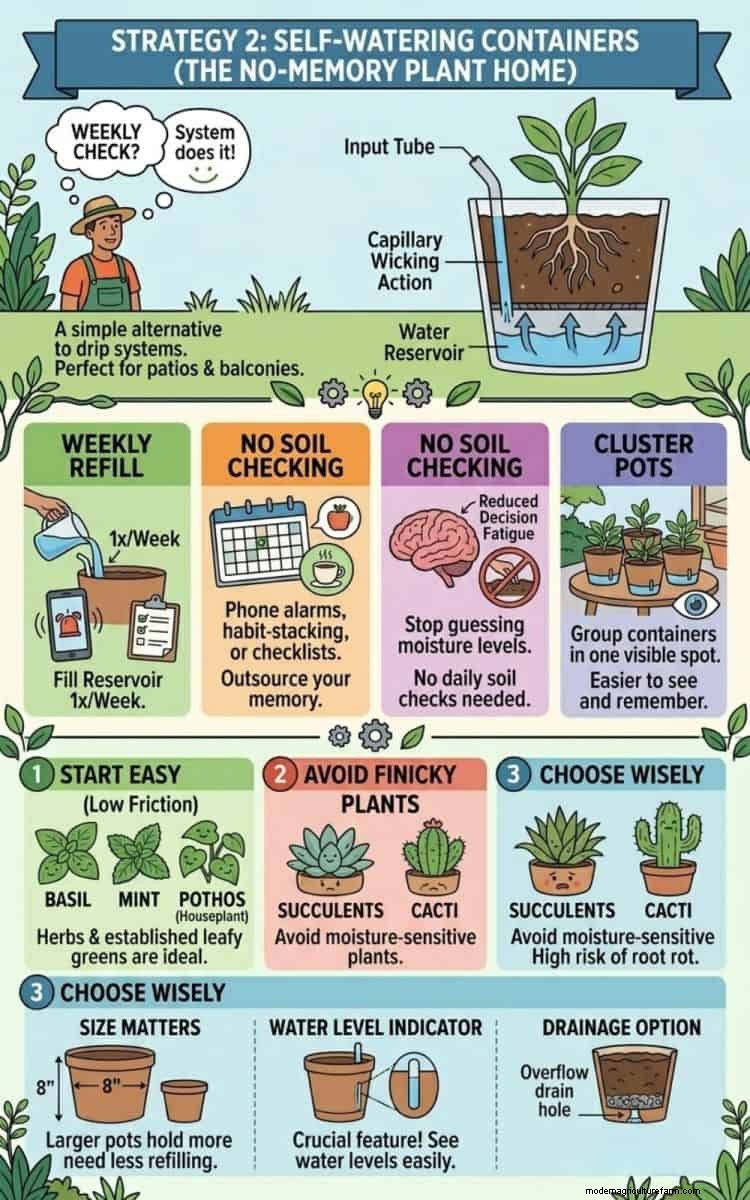
Fill the reservoir once per week. That’s your only recurring task.
Pick a specific day. Monday morning. Friday afternoon. Doesn’t matter which, but it has to be the same every week. Build it into an existing routine. Fill pots when you make coffee. Or right after you do laundry. Habit-stack it onto something you already do automatically.
Use a calendar reminder if you need one. Phone alarm. Physical checklist taped to the pot. Whatever external system works for your brain.
Start with easy plants. Herbs like basil, mint, oregano. Vegetable seedlings. Houseplants like pothos that tolerate inconsistent conditions. Avoid finicky plants. Succulents will rot in self-watering systems because they prefer dry soil. Ferns will die if you forget to refill for two weeks. Pick plants that forgive mistakes.
Cluster your pots together. A group of 4-5 pots in one visible location is easier to remember than scattered plants around the house. Visibility equals memory support.
“Your garden doesn’t need to look like anyone else’s. It needs to work for you.”Size matters here. Larger pots (8 inches diameter or bigger) hold more water and need less frequent refilling. Start with medium to large pots, not tiny decorative ones that dry out in three days.
Get pots with clear water level indicators. You want to see the reservoir level at a glance. Guessing is executive dysfunction in plant form.
Look for overflow drains. Some self-watering pots include a small hole that lets excess water escape. This is insurance against root rot if you accidentally overfill.
Popular options include Aqua Globes, Lechuza Planters, or generic self-watering containers from any garden center. You don’t need expensive designer pots. The mechanism is simple physics.
Want the full system? The Neurodivergent Gardener is an 89-page guide with task breakdowns, low-friction plant picks, and garden systems designed for executive dysfunction. Learn more here.
Most guides tell you to “plan your garden” without explaining what that actually means for a brain that doesn’t do planning well.
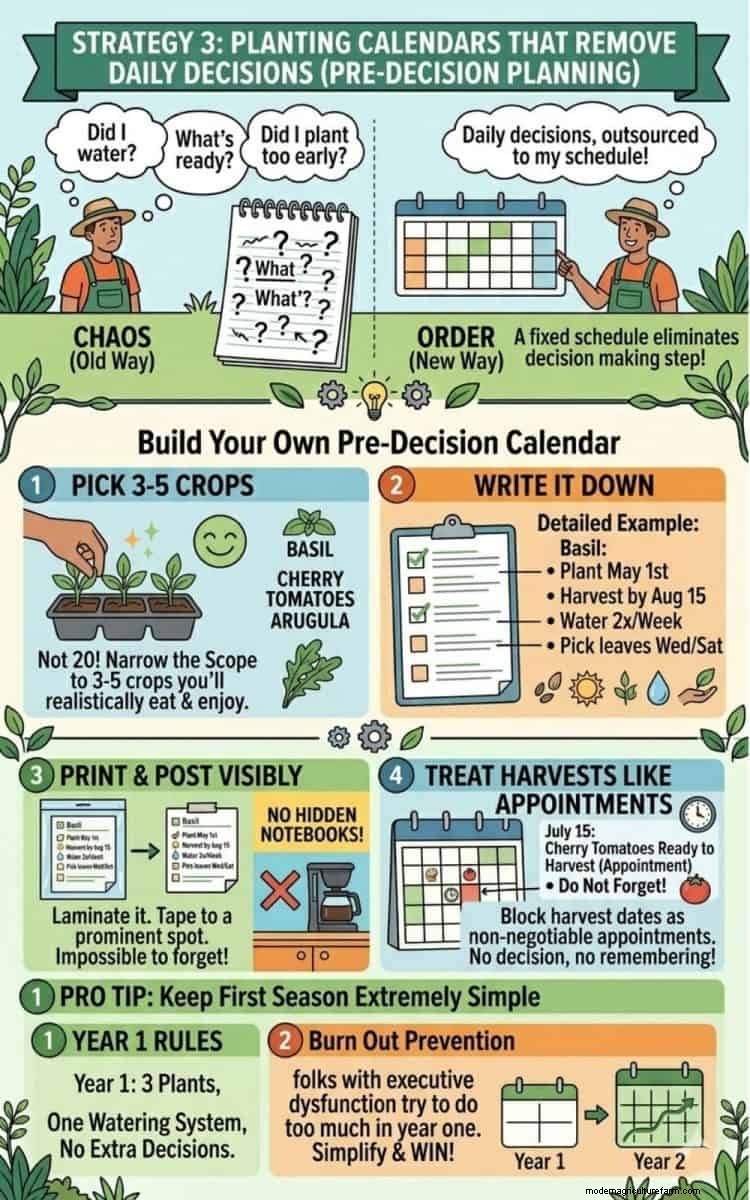
Here’s what works: a fixed planting schedule that removes daily decision-making entirely. You decide once per season, then follow the calendar like it’s a prescription.
Pick 3-5 crops you actually want to eat. Not 20. Not everything Pinterest says you should grow. What will you realistically eat and enjoy tending?
Write down four things for each crop: planting date, expected harvest date, watering frequency, harvest schedule.
Example: “Basil: plant May 1, harvest by August 15, water 2x/week via drip system, pick leaves Wednesdays and Saturdays.”
Print it. Laminate it if possible. Tape it somewhere you see every single day. Not in a notebook you’ll lose. Not saved on your phone in a file you’ll forget exists. Physical, visible, permanent.
Or take a photo and make it your phone background. Whatever keeps it in front of your eyes.
Treat harvest dates like medical appointments. Block them on your calendar. “July 15: basil ready to harvest.” No deciding. No remembering. Just a date that shows up and tells you what to do.
Keep it absurdly simple the first time. Three plants. One watering system. No extra decisions.
Most people with executive dysfunction try to do too much in year one, burn out by July, and quit forever. You’re playing a different game. You’re building sustainable habits, not Instagram content.
Start small. Win first. Expand in year two when you have proof the system works.
Most gardening advice assumes you’ll do a little bit every day. That’s the opposite of how executive dysfunction works.
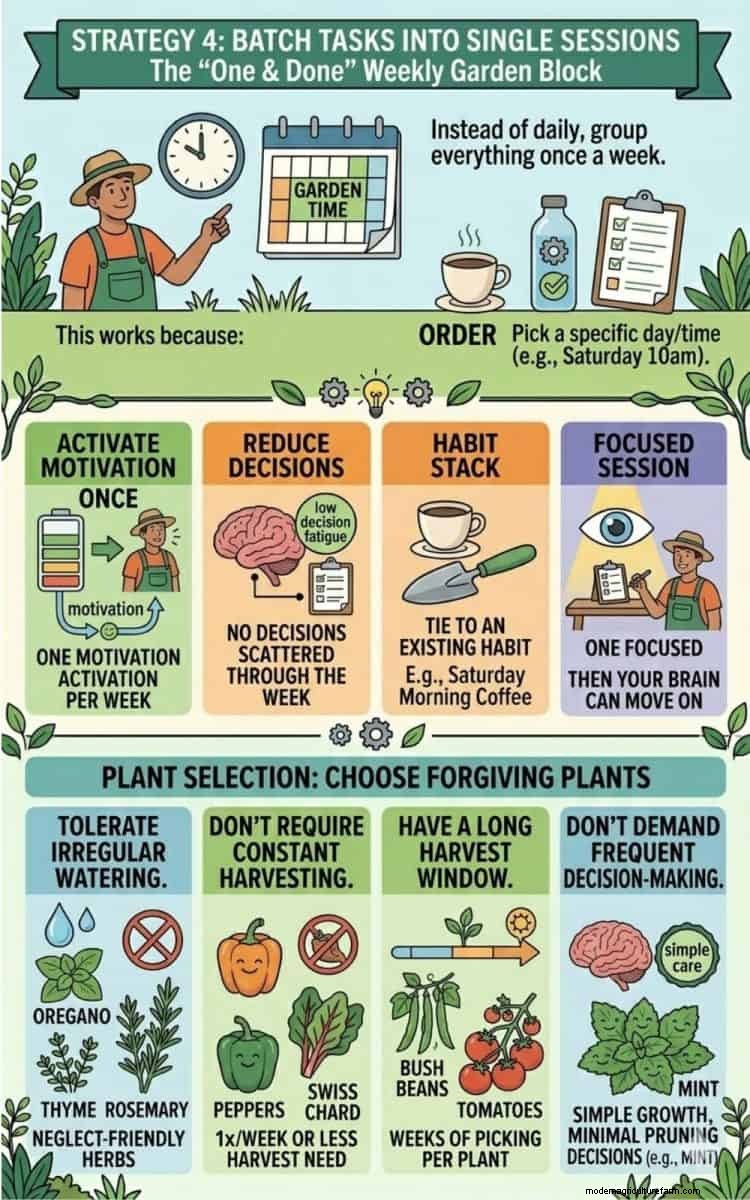
Do this instead: group everything into one weekly garden block.
Pick a specific day and time. Saturday 10am is garden time. Everything happens then. Check your drip timer. Refill self-watering pots. Harvest whatever’s ready. Pull obvious weeds. Look for dead leaves or pest damage.
This works because you only activate garden motivation once per week. You’re not making scattered decisions throughout seven days. You’re not fighting initiation barriers daily. One session. One focused block. Then your brain moves on.
Create a physical checklist for that session. Write it down. Print it. Laminate it.
Example list: Check drip timer settings. Refill reservoir pots. Harvest herbs. Remove dead leaves. Look for bugs or disease. Water any pots not on the drip system.
Run through the same list every week. No decisions. No remembering what you’re supposed to do. Just checking boxes.
Keep the list next to your garden tools or taped to your back door. Wherever you’ll see it during your scheduled garden time.
Pro Tip
Set a recurring alarm 15 minutes before your scheduled garden time. Not just a calendar notification. An actual alarm that interrupts whatever you’re doing. That buffer gives your brain time to shift gears without the panic of “oh no it’s garden time right now.”
Not all plants are created equal when it comes to forgiveness.
Some demand daily attention. Others practically thrive on neglect. For executive dysfunction, you want plants that tolerate mistakes.
Plants that tolerate irregular watering. Herbs like oregano, thyme, rosemary, and sage. Vegetables like peppers, Swiss chard, and established tomato plants. These can handle a few missed waterings without dying immediately.
Plants that don’t require constant harvesting. Once-per-week or every-two-weeks picking is sustainable. Daily harvesting is not. Bush beans give you weeks of picking windows. Tomatoes too. One-hit crops like asparagus are fine if the harvest is obvious (you can see the spears).
Long harvest windows. You want plants that tell you when they’re ready and stay ready for a while. Not crops that have a three-day perfect harvest window that you’ll inevitably miss.
Low decision-making needs. Avoid plants that require you to choose between multiple pruning options or decide when they’re “done.” If you need to think about it, it’s the wrong plant for your first season.
Herbs: mint (in containers only, it’s invasive), oregano, thyme, rosemary, chives.
Vegetables: cherry tomatoes (not heirloom beefsteaks), peppers, Swiss chard, kale, bush beans, radishes.
Flowers: marigolds, zinnias, cosmos. All three are nearly impossible to kill and bloom for months.
For indoor options that tolerate serious neglect, see 26 Beginner Houseplants That Practically Thrive on Neglect. Many of those work outdoors in containers during warm months.
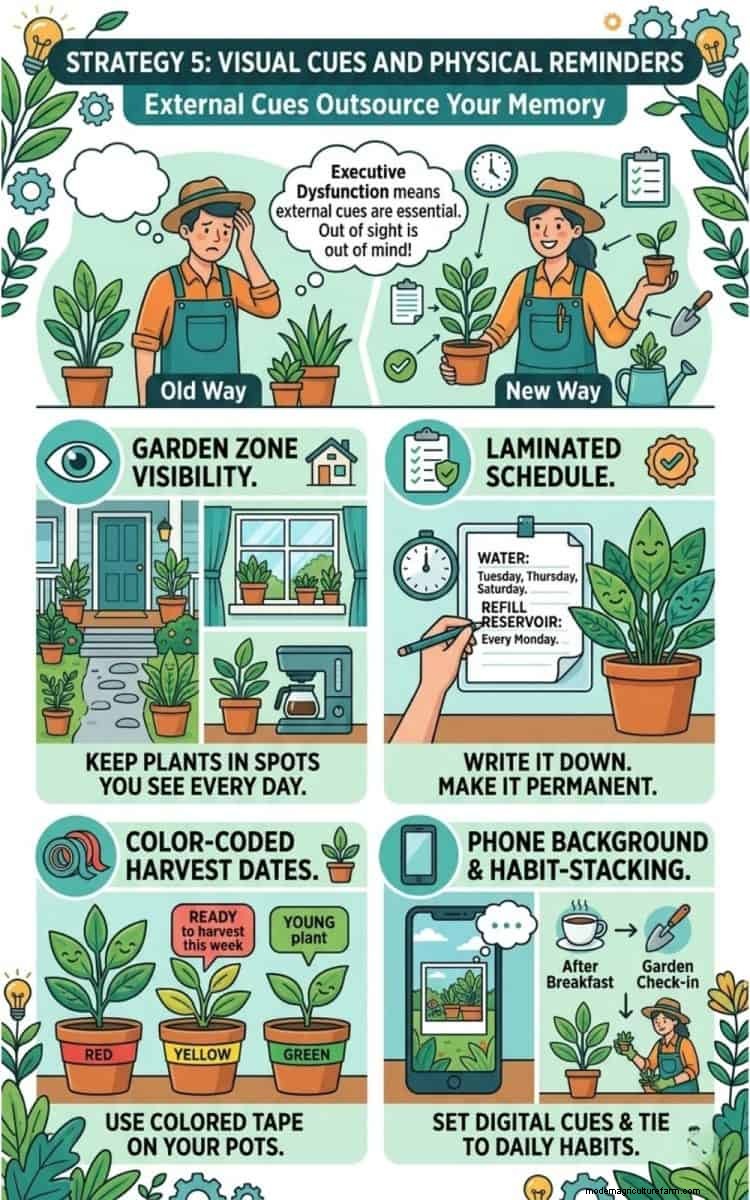
Executive dysfunction means your brain doesn’t spontaneously generate reminders. Build external cues into your physical environment.
Keep plants where you see them every single day. Front porch. Kitchen windowsill. Next to your coffee maker. Wherever you naturally look.
Out of sight actually is out of mind. This isn’t laziness. It’s how working memory functions when you have executive dysfunction.
Laminate a schedule and attach it to your timer or pot. “WATER: Tuesday, Thursday, Saturday. REFILL RESERVOIR: Every Monday.”
Write it. Make it permanent. Don’t rely on memory.
Use colored tape on pots to indicate status. Red = ready to harvest this week. Yellow = almost ready. Green = young plant, leave it alone.
Update colors during your weekly garden session. No daily decisions required.
Set your phone lock screen to a photo of your garden or your timer settings. Every time you check your phone (which is constant), you see the reminder.
Or habit-stack garden time onto something you do daily. After breakfast, check plants. After your morning coffee, refill one pot. Attach the new behavior to an existing automatic one.
These traps catch almost everyone with executive dysfunction. Knowing them in advance doesn’t always prevent them, but it helps.
“I’m going to have a gorgeous vegetable garden” is great intention, terrible execution.
Start with three plants. One season. Win small first. Expansion happens in year two after you’ve proven the system works.
“I’ll just water every morning” doesn’t work. You will forget. You will lose motivation. You will get sick or busy or depressed, and your plants will die.
Automation or bust. This isn’t optional.
Everything must be written down. Laminated. Photographed. Made permanently visible.
Your working memory is not a backup system. It’s unreliable by definition. External systems carry the load.
That delicate heirloom tomato looks beautiful in photos. It also demands constant pruning, staking, pest management, and fussing. You’ll abandon it by July.
Pick plants based on your actual capacity, not aspirational gardening content.
“I have to go outside to water” creates friction. Every step between you and the task is a decision point where executive dysfunction can derail everything.
“The automatic timer runs while I sleep” is zero friction. Structure matters more than motivation.
Don’t try to implement everything at once. Here’s a realistic timeline that won’t overwhelm your executive function.
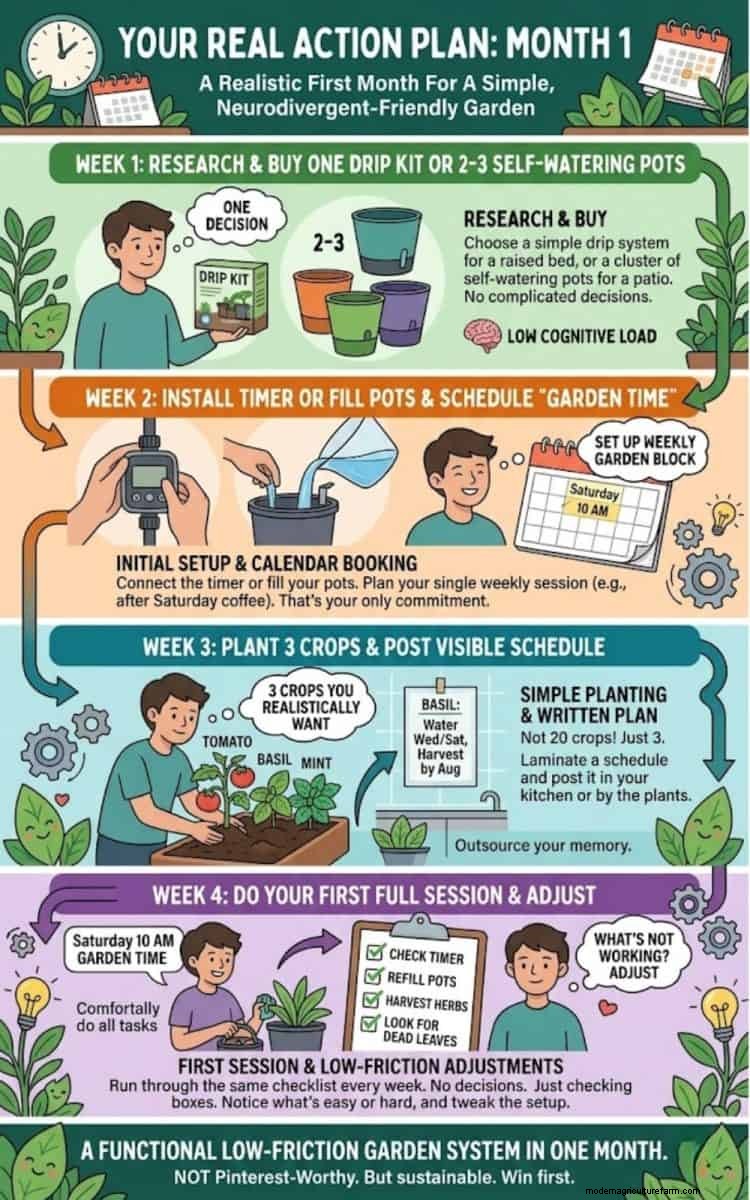
Research and buy ONE drip irrigation kit or 2-3 self-watering pots.
That’s the entire week. One decision. One purchase. Nothing else.
Install the timer or fill the pots for the first time.
Block out your weekly garden session on your calendar. Pick the day and time. Set a recurring reminder.
Plant three crops you actually want. Not five. Not ten. Three.
Write down the planting schedule. Laminate it. Post it somewhere visible.
Do your first full garden session. Work through the checklist. See what feels hard or confusing. Adjust anything that creates unnecessary friction.
One month. That’s it. Not a perfect garden. Not an Instagram-worthy setup. But a functional low-friction system your brain can actually maintain.
Gardening with executive dysfunction isn’t about willpower. It’s about eliminating decisions before they become barriers.
Every choice you make upfront instead of daily, every reminder you outsource to automation, every task you batch instead of spreading across seven days. That’s system design. That’s how you make gardening possible for your actual brain.
Your garden doesn’t need to match anyone else’s. It doesn’t need to produce massive harvests or look perfect. It needs to work for you without demanding executive function you don’t consistently have.
If that means 80% automation and 20% hands-in-soil time, that’s not failure. That’s understanding how your brain works and building systems that match.
For more low-friction plant options that tolerate serious neglect, see 25 Indoor Plants That Can Survive in Windowless Rooms.
Build the systems once. Let automation handle the daily grind. That’s the difference between gardening that works and gardening that becomes another thing you feel guilty about abandoning.


