In aquaponics, pH is the critical equilibrium that keeps the entire system functioning smoothly. It determines how effectively fish thrive, plants absorb nutrients, and beneficial bacteria process waste. When pH drifts outside the optimal range, you can see nutrient lock‑out, fish stress, or overall system instability.
Experts agree that the ideal pH window for most aquaponics systems is 6.8–7.2. Within this band, plants receive the nutrients they need, fish remain comfortable, and the biofilter bacteria stay active.
This guide walks you through testing and adjusting your system’s pH with straightforward tools and beginner‑friendly methods.
A Common Question in Aquaponics
New growers frequently ask, “Why does my pH keep changing?”
Fluctuations are normal because the nitrogen cycle, fish waste, and plant uptake all influence water chemistry. Regular monitoring and timely adjustments can keep the system stable.
Think of pH as the foundation of your aquaponics ecosystem. A shaky foundation means plants, fish, and bacteria all struggle. Mastering pH testing, adjusting, and maintenance lets your system thrive.
Tools You Need to Test and Adjust pH
To keep your system running smoothly, you’ll need reliable tools for testing, monitoring, and safely adjusting pH.
1. Digital pH Meter
- Provides the most accurate and consistent readings.
- Requires regular calibration to maintain precision.
- Fast measurements allow you to catch shifts before they become problematic.
2. pH Test Kit (Drops or Strips)
- Cost‑effective backup that’s easy to use.
- Less precise than a digital meter but suitable for quick checks.
- Ideal for verifying meter readings.
3. pH Up and pH Down Solutions
- Formulated specifically for aquaponics or hydroponics.
- Use sparingly; small, incremental changes are safer.
- Always dilute before adding to your system.
4. Buffering Agents
- Materials such as crushed coral, potassium carbonate, or calcium carbonate help stabilize pH.
- Essential for long‑term stability and preventing abrupt swings.
5. Clean Containers and Gloves
- Avoid contamination when sampling water.
- Gloves protect your hands and keep oils or soap from skewing results.
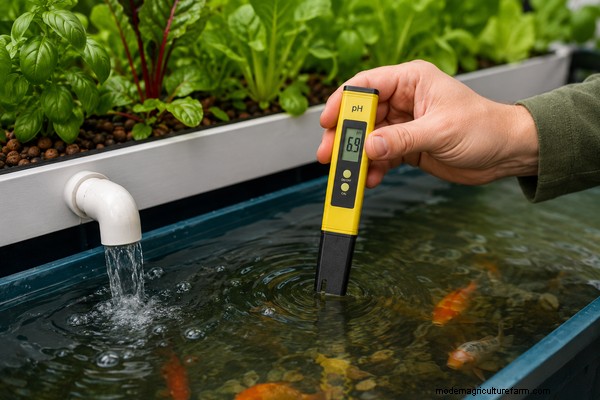
Testing your system’s pH is straightforward when you follow a consistent routine. Early detection keeps fish, plants, and bacteria healthy.
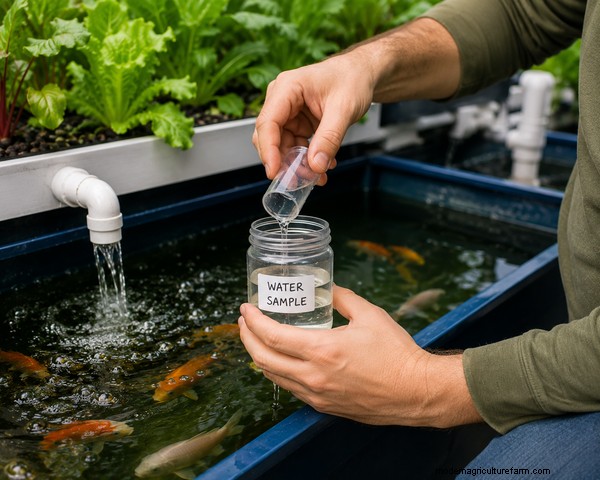
Step 1: Collect a Water Sample
- Use a clean container to draw water from the fish tank or sump.
- Avoid soap residue or dirty hands.
- Test each tank separately if you have multiple units.
Step 2: Use Your Digital pH Meter
- Rinse the probe with distilled water before use.
- Place it in the sample and wait for the reading to stabilize.
- Calibrate if the reading appears off.
Step 3: Cross‑Check With a Test Kit (Optional)
- Dip a strip or use test drops for a quick second opinion.
- Consistent results build confidence.
- If readings disagree, recalibrate and retest.
Step 4: Record Your Results
- Log the date, time, and pH value.
- Maintaining a log reveals trends and early warning signs.
Recommended Testing Frequency
- Daily: During the cycling phase of new systems.
- 2–3 times per week: In mature, stable systems.
- As needed: If you notice stressed fish, yellowing leaves, or unusual behavior.
Step‑by‑Step Guide to Adjusting pH
After testing, you’ll need to raise or lower pH safely. Small, gradual adjustments give fish, plants, and bacteria time to acclimate.
Adjusting pH Down (When It’s Too High)
1. Dilute a pH Down Solution
- Choose products designed for aquaponics or hydroponics—not pool chemicals.
- Dilute in a separate container before use.
2. Add Slowly
- Introduce a small amount at a time.
- Wait several hours, retest, then add more if needed.
3. Natural Methods
- Peat moss or driftwood slowly lower pH by releasing tannins.
- They’re more stable but take longer to take effect.
Adjusting pH Up (When It’s Too Low)
1. Use a pH Up Solution
- Potassium carbonate or calcium carbonate are common choices.
- They raise pH while adding essential nutrients for plants.
2. Add in Small Doses
- Test between applications.
- Sudden spikes can shock fish and bacteria.
3. Natural Buffers
- Crushed coral, limestone, or shells raise pH gradually and boost buffer capacity.
Safety Tips for Adjusting pH
- Never mix pH up and pH down solutions at once.
- Limit changes to 0.2–0.3 pH units per day.
- Retest after each adjustment.
- Prioritize fish health over perfect numbers.
Tip:
Persistent pH swings often point to an underlying issue—water source, incomplete cycling, or insufficient buffering. Instead of daily tweaking, focus on building long‑term stability.
Preventing pH Problems Before They Arise
The best strategy is to create a stable environment that resists fluctuations.
1. Maintain Adequate Buffering Capacity
- Incorporate crushed coral, limestone, or potassium carbonate.
- Buffers absorb sudden changes and simplify management.
2. Choose the Right Water Source
- Tap water often contains chlorine or chloramine.
- Rainwater is usually acidic and can lower pH quickly.
- Well water tends to be alkaline, pushing pH higher.
- Always test source water before adding it to the system.
3. Feed and Stock Responsibly
- Overfeeding generates excess waste that lowers pH.
- Overstocking stresses the system and raises ammonia levels.
- Balanced feeding and stocking promote a steadier pH.
4. Monitor Regularly
- Test 2–3 times per week in mature setups.
- Track readings in a log or app to spot trends early.
- Early detection prevents emergencies.
5. Support the Nitrogen Cycle
- Beneficial bacteria thrive in a stable pH.
- Sudden shifts can slow or halt ammonia‑to‑nitrate conversion.
- Protecting bacteria keeps the system self‑balancing.
Tip:
Strive for stability within 6.8–7.2, not for an unattainable perfect number. Small variations are less harmful than constant changes.
Troubleshooting Common pH Issues
Even diligent testing can’t always prevent pH problems. Below are frequent challenges and practical solutions.
Problem 1: Sudden Drop in pH
Likely Causes:
- Acid production during nitrification.
- Excessive feeding and waste accumulation.
- Low‑buffer rainwater or soft water.
Fixes:
- Introduce buffering agents (crushed coral, potassium carbonate).
- Reduce feeding until balance returns.
- Test source water before top‑ups.
Problem 2: pH Stuck Too High
Likely Causes:
- Alkaline source water (e.g., well water).
- Overuse of buffers or limestone.
- New systems that start high before cycling lowers pH.
Fixes:
- Apply pH‑down solution in small doses.
- Blend tap and rainwater to moderate alkalinity.
- Let the cycling process run naturally; avoid forced changes.
Problem 3: Constant pH Drift
Likely Causes:
- Inconsistent water source.
- Insufficient buffering agents.
- Fish‑to‑plant ratio imbalance.
Fixes:
- Add long‑term stabilizers such as crushed coral.
- Maintain a pH log to identify drift patterns.
- Adjust stocking density and feeding rates.
When to Seek Expert Help
Sometimes pH management feels overwhelming. You may need additional guidance if…
Signs You May Need Extra Guidance
- pH consistently drifts back within a day or two after adjustment.
- Plants exhibit nutrient deficiencies despite “in‑range” pH.
- Fish are stressed or ill and you’re unsure of the cause.
- You’re tired of trial and error and want clear direction.
Why Hands‑On Learning Matters
Seeing a professional test water, calibrate a meter, and adjust pH provides confidence and reduces risk. Practical experience is invaluable.
Conclusion
Maintaining the proper pH keeps fish healthy, plants nutrient‑efficient, and bacteria balanced.
Key Takeaways:
- Why pH balance is essential.
- How to test accurately and consistently.
- Step‑by‑step adjustment techniques.
- Common pitfalls to avoid.
- When to consult an expert.
Follow these steps to stay ahead of typical beginners who struggle with water chemistry.
The Bottom Line:
pH management is an ongoing skill. The more confident you are in testing, adjusting, and understanding water chemistry, the smoother your system runs and the greater your harvest.
Remember: every aquaponics professional once wrestled with pH. The difference between frustration and success is knowledge and guidance. With practice and the right resources, you’ll master balance with ease.