Welcome to Modern Agriculture!

When preparing a plot—whether a sprawling field or a backyard garden—selecting the right equipment is crucial. Below we break down the Harley rake and the tiller to help you decide which tool best matches your needs.
The Harley rake and the tiller are versatile, but their performance differs primarily in power and application.
Choosing between them depends on your specific requirements. Here are the key differences to guide your decision:
Read on for a deeper comparison and answers to common questions. Let’s dive in!
[PIN id="324399979383552080" description="hide" size="large"]
[PIN]
Both machines streamline land preparation, yet they cater to slightly different tasks and budgets.
A Harley rake is a high‑powered, heavy‑duty attachment used for seedbeds, lawn preparation, and grading. It excels at smoothing soil, breaking clods, and leveling uneven terrain.
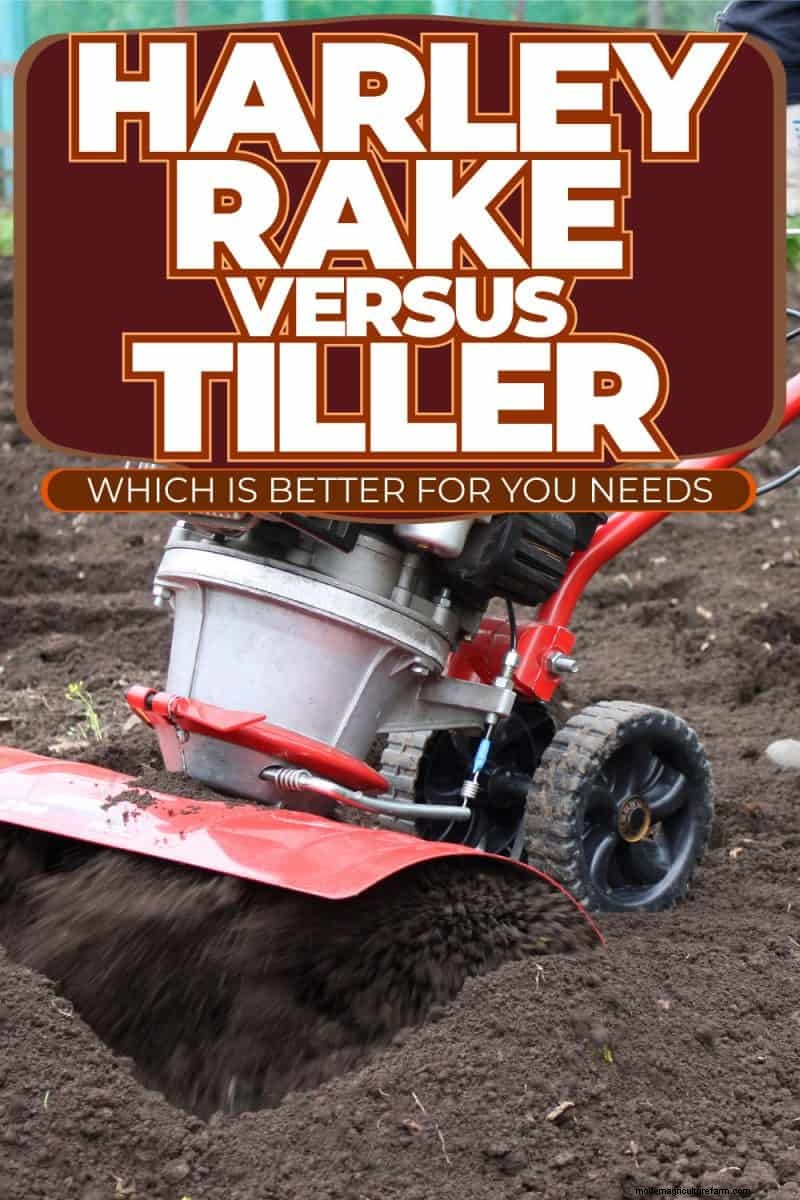
A tiller—whether electric or gas‑powered—cultivates the soil by lifting, turning, and breaking clods. Many models offer adjustable depths, making them suitable for a wide range of soil types.
The Harley rake is typically mounted on a tractor as a front‑mounted skid‑steer attachment or a pull‑behind unit. Its teeth‑like rows lift and flip soil, mimicking a box blade.
Tillers come in front‑tine, rear‑tine, and hand‑till variants. They are ideal for small to medium plots where hand‑cultivation is impractical but a tractor‑based solution is unnecessary.
Harley rakes generally boast more horsepower and are engineered for heavy‑duty tasks, making them especially effective on wet or compacted soils.
Tillers also feature robust engines—many equipped with four‑stroke powerplants for higher fuel efficiency—but they usually have lower overall output compared to a Harley rake.
Weight influences maneuverability. Harley rakes can exceed 1,050 lbs, which can limit access to tight spaces but provides stability on rough terrain.
Tillers are lighter, often under 600 lbs, offering greater agility for smaller gardens or uneven ground, though some heavy‑duty models approach the weight of a rake.
Harley rakes require routine preventive care—cleaning teeth, checking hydraulic fluid, and inspecting moving parts—yet they’re generally low‑maintenance.
Tillers demand more frequent upkeep, such as air‑filter cleaning, stabilizer checks, and oil changes, especially before winter storage.
[PIN id="324399979383552081" description="hide" size="large"]
Price varies with model and power. Harley rakes can range from $3,000 to $7,000, while tillers typically fall between $800 and $3,500.
If budget constraints are primary, a tiller offers solid performance at a lower cost. For intensive, large‑scale projects, the investment in a Harley rake pays off with greater speed and efficiency.
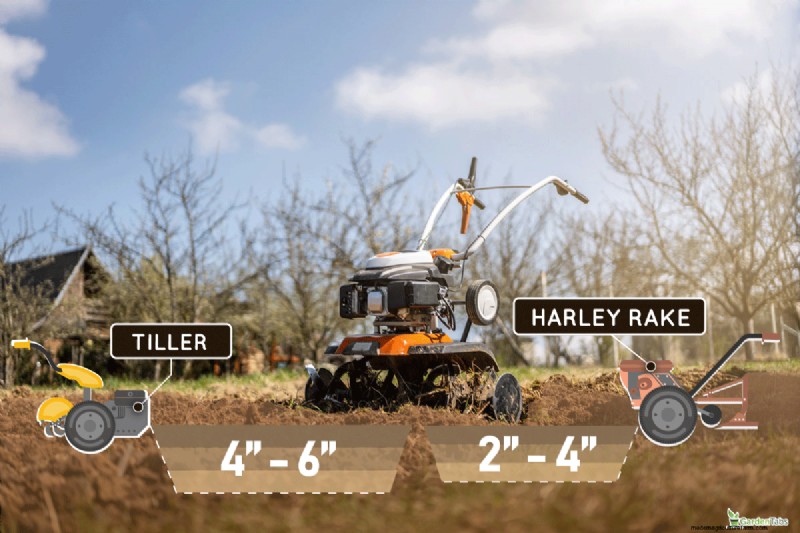
Depth determines how far into the soil the machine digs.
A Harley rake typically cuts 2–4 inches, sufficient for most seedbeds and grass installation.
A tiller can reach 4–6 inches, making it better suited for deep soil aeration and weed removal.
[PIN id="359232507789566121" description="hide" size="large"]
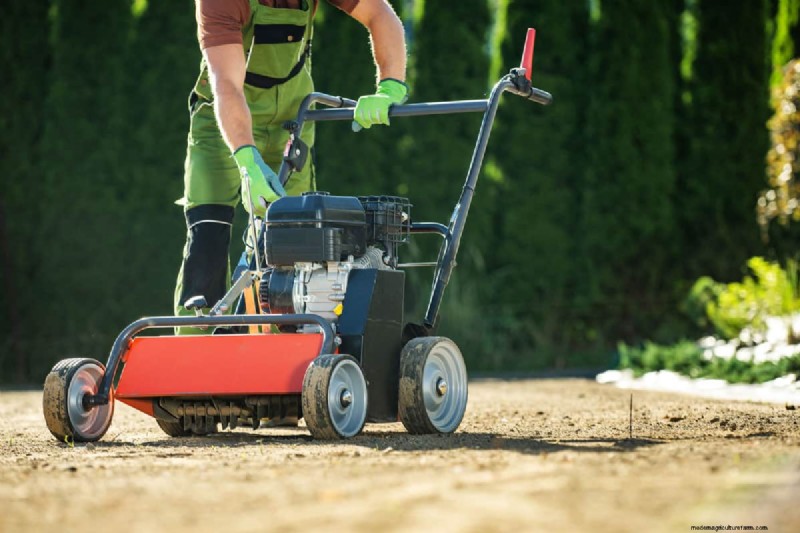
Harley rakes are not designed to break up deep roots. Before using a rake, manually cut or chop roots with a disk or hand tool. Otherwise, the rake may pull out intact roots, damaging the machine and the soil structure.
[PIN id="709387378824364730" description="hide" size="large"]
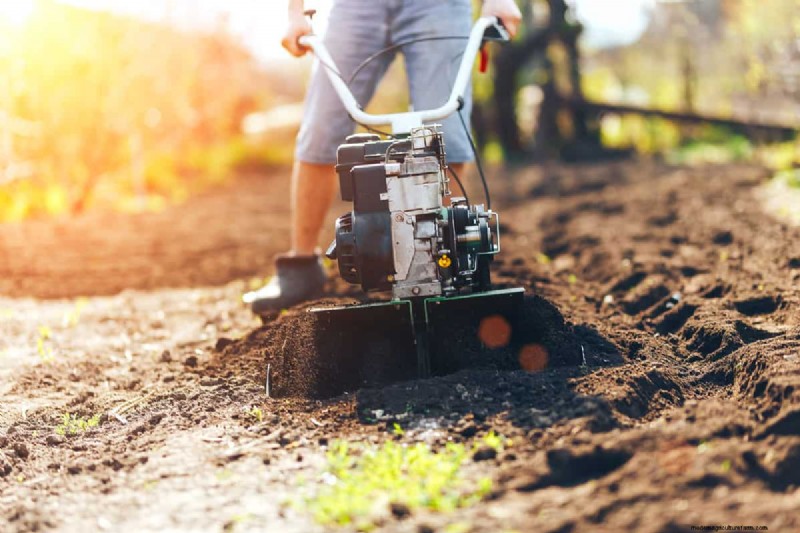
Wet soil increases the risk of equipment clogging and damage. Grass roots are more vulnerable to being pulled or torn, and wet ground can adhere to blades, reducing effectiveness.
It’s best to wait until soil moisture is moderate—roughly 20–30%—to ensure safe and efficient operation.
[PIN id="706150416604959402" description="hide" size="large"]
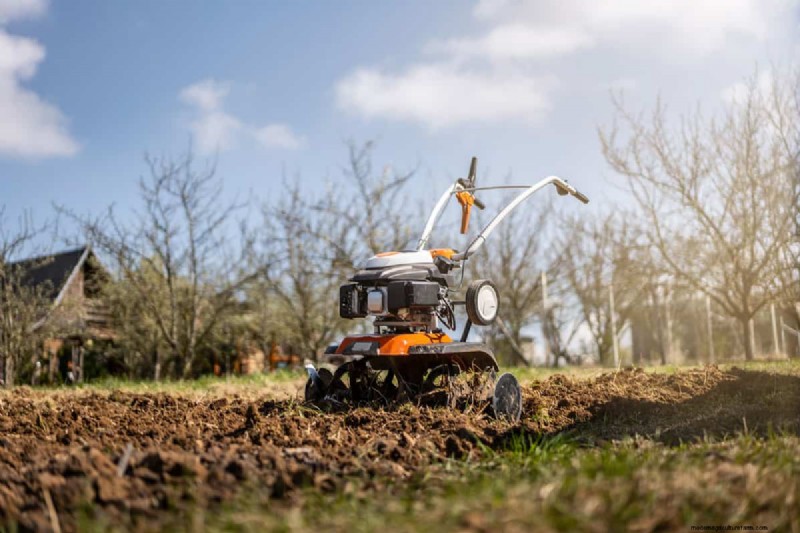
The choice between a Harley rake and a tiller hinges on your land size, budget, and the level of power you need. For heavy, large‑scale jobs, a Harley rake delivers unmatched performance. For budget‑friendly, medium‑scale projects, a tiller is a practical, efficient choice.
How to Rake Grass Seed? (Step‑by‑Step Guide)
Bow Rake vs. Leaf Rake: Pros, Cons, & Differences
How to Use a Tiller to Remove Weeds (Step‑by‑Step Guide)
Rachel Self is a gardening enthusiast and avid plant lover who loves integrating greenery into home decor. She enjoys tending her collection of houseplants and sharing practical landscaping insights.

GardenTabs content is reviewed by Steve Snedeker, a seasoned gardener with decades of hands‑on landscaping experience.