Welcome to Modern Agriculture!

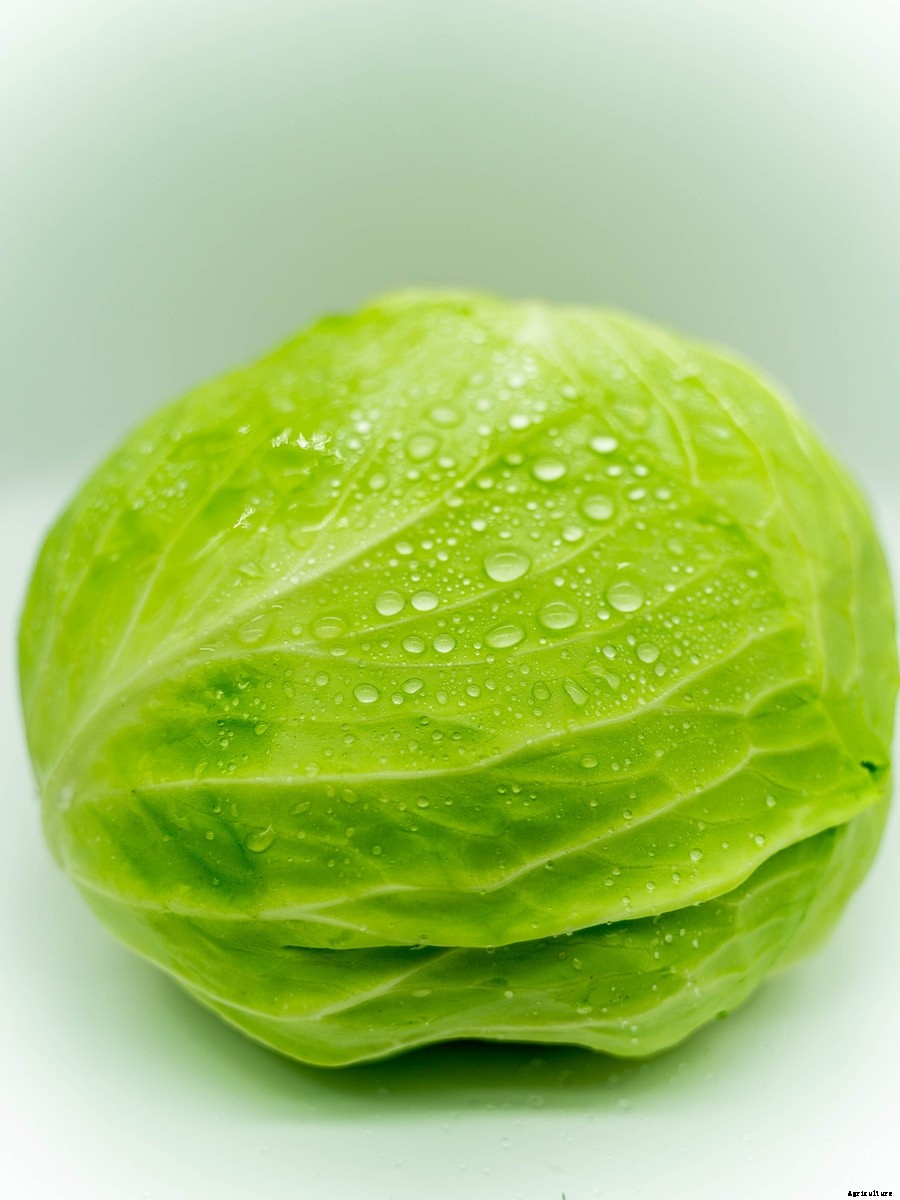
Cabbage is a rosette of green leaves with a central ball or head wrapped around a short stem. It has an adventitious root system, which means that roots grow from the stem or leaf organ rather than from the root axis.
Cabbage can be eaten either cooked or raw as a salad.
Despite the fact that cabbage may be grown in a variety of soil types, it does best in well-drained, moisture-retentive loamy soils that are rich in organic matter. On severely acidic soil, it does not grow properly. The ideal soil pH varies from 5.5 to 6,5, and it should not be permitted to dip below 4.5 in any circumstances.
Cool and humid conditions are ideal for growth of Cabbage, and in drier environments, the leaves of cabbage are more clearly petioled, and the quality of the head is reduced. Under these circumstances, the exquisite flavor is also gone. It is difficult to control insect pests in the summer, which results in low yields and poor quality. Temperatures ranging from 18°C to 20°C are ideal for growth and development.
Temperatures as low as-3°C are not likely to cause damage, and it is relatively resistant to frost. Moreover, cabbage can grow in a wide range of environmental conditions and may be harvested all year in most locations in the world.
Cabbage Cultivars are ranked according to the shape of the head and the savoy as conical or sugarloaf-headed, ball-headed or drum-headed.
The following are the seasonal selections:
Conquestador and Gladiator – Autumn and Spring
Tenacity and Conquestador – Spring and late summer
Hercules, Drumhead, and Grand Slam — late summer
Megaton – Late summer through fall
Additionally, cabbage can be classified based on its color and growth cycle. I hope the information shared here was valuable, and God bless you!