
Welcome to Modern Agriculture!

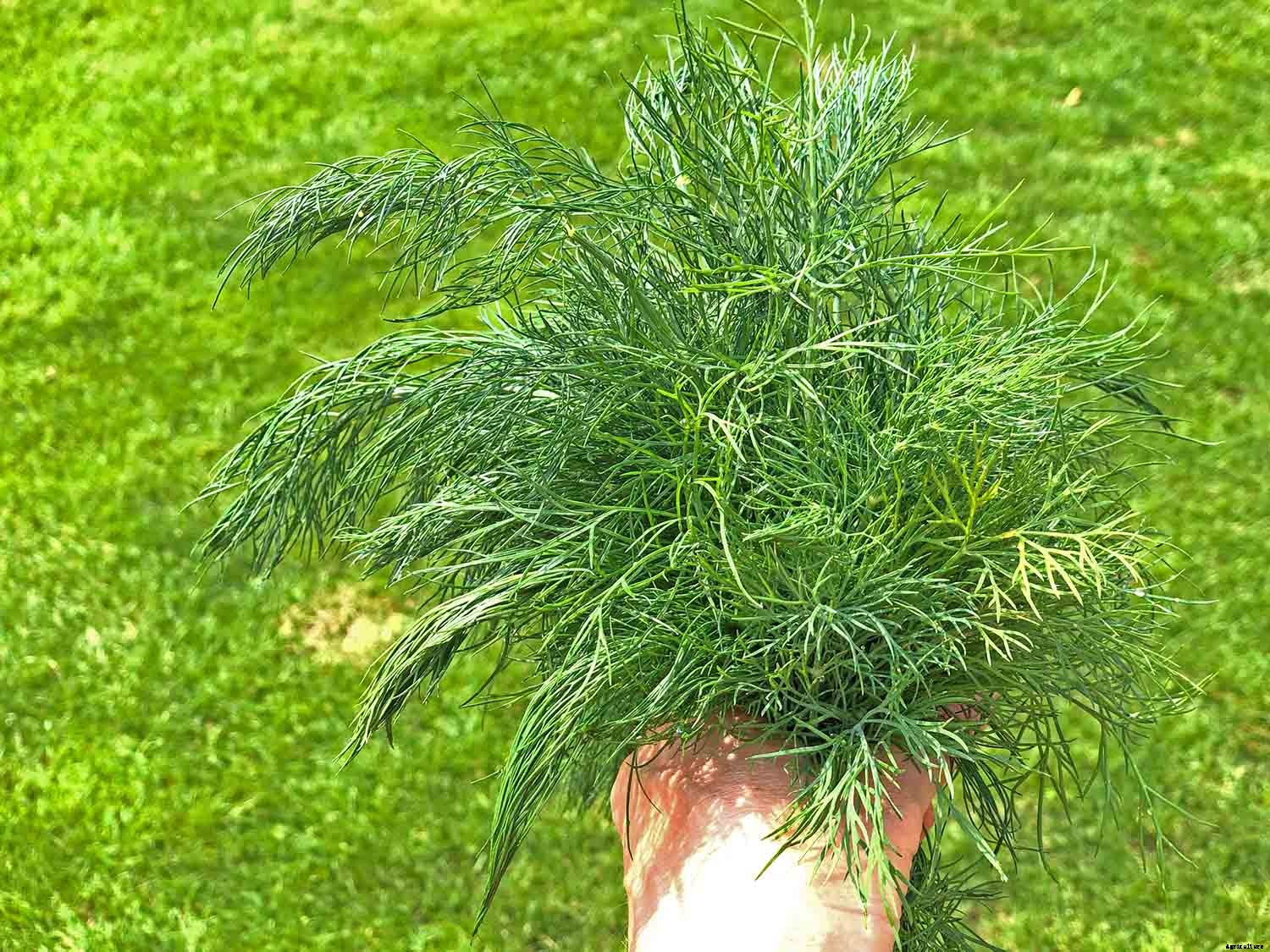
I love the aroma and feathery leaves on a dill plant (I also enjoy cooking with dill). First introduced to dill by a friend who prepared a salad and garnished the salad with fresh dill. It was such an amazing taste and became one of my favorite herbs. Keep reading to learn how to grow dill in your garden.
There are three key ways that dill can be used: dill seed, dill weed, and dill oil. Most home growers will use the dill weed and the dill seed. The most popular use of dill is making dill pickles using the dill seed and/or weed. In the ‘Harvesting and Storage’ section below, I describe my favorite uses of dill.
Dill has beautiful ferny, blue–green leaves, is an annual (sometimes biennial) and is very aromatic. It grows upright on tall hallow stems and is one of the tallest herbs in my garden, reaching ~three-five feet in height (1.2 meters). Because of its height, dill can become spindly and should be supported by a stake. At the top of the stem, dill produces umbrella-like heads of yellow flowers. It’s a good plant to grow in your garden because dill attracts beneficial insects.
Dill known as a remedy for indigestion also encourages sleep if taken at bedtime.
Nothing awakens reminiscence like an aroma.
Victor Hugo

Dill is best direct seeded outdoors in the garden. It can be started indoors from seed but can be difficult to transplant because a taproot develops that can easily be damaged. The optimal soil temperature for sowing seeds is 70°F. At a minimum, wait a week before the last frost date in your area before direct seeding. Here are the general guidelines for how to grow dill:

Dill does not have many pest problems. The striped caterpillars that become the black swallowtail butterflies love dill. If you find these caterpillars on your dill, gently remove them by hand. If you are unsure the type of pest or disease, check with your Cooperative Extension for help in identifying and determining appropriate controls.


Dill has a relatively short life span, lasting 8-10 weeks. There are two primary parts of the dill plant that can be harvested. First, there are the ferny leaves that can be used as a seasoning. Second, there are the flower heads from which the seeds will form. When the flower heads form (e.g. the plant is bolting or going to seed), the plant growth will slow and eventually leaf production will stop.
The optimum time to harvest the dill leaves is early morning when moisture content is high. Remove, at most, one-third of the foliage at any one harvest by pinching or cutting off the stems. Dill leaves have the best flavor if harvested right when the flower heads form. The leaves can be used either fresh or can be dried for use in the future. Once harvested, there are a few things you can do with the leaves:
The dill seed is harvested at the end of the plant’s life cycle. Dill seeds are commonly used in canning dill pickles. The seed harvesting process can start when the seed flower turns from yellow to a golden brown. When this happens, cut the flower stem off at the base of the plant. Then hang upside down to dry in a warm, well ventilated location for two weeks. Next, place the seed head in a brown paper bag and shake. The seeds will release from the flower head and can be collected. These seeds can be planted to grow new dill plants or can be used in making dill pickles. The seeds can be saved for three years.
Dill can be used in potato salads, egg salads, cucumber salads, garden salads, in sour cream or yogurt dips, fish, herb vinegars and butters. When cooking with dill, it is best to add the dill near the end of the cooking time to preserve the flavor Here are a few of my favorite dill recipes.

Bouquet Dill (45-50 days to maturity)
This is the most widely used dill for eating, flowers and seed. Bouquet dill is an early maturing variety used for leaves and seed heads.

Family: Apiaceae / Umbelliferae – Carrot family
Genus: Anethum L
Species: Anethum graeolens L
Herb Federation of New Zealand
Herb Society of America


