Welcome to Modern Agriculture!

For many Europeans, Amaranth is almost an unknown plant. Botanists believe it is native to South America, and the gloriously tall, red seed spikes offer ornamental gardens an absolute delight when in bloom.
It is less well-known that they also provide a nutritious and gluten-free seed that may not be popular here in the UK but is famous worldwide.
There are many varieties; from Amaranthus caudatus, known as Love-lies-bleeding or Tassel Flower in the US, to Callaloo in the Caribbean, and another is known as Pigweed for its usage in feed for pigs, cattle, and rabbits.
Amaranthus cruentus grows in both Latin America and Asia, A. hypochondriacus is found from the Americas to Asia and Amaranthus spinosus is a spiked amaranth native to South America.
Its use in religious ceremonies by the Aztecs and the Maya people proved too much for Spanish clerics in the 16th century, who banned its growth. It is also known to have been cultivated by the Inca, and ancient seeds have been found in archaeological graves in Mexico and Argentina, the oldest dating back over 7000 years ago. See more below.
Watch Our Latest YouTube Video ...
View More and Subscribe Here
If Amaranth piques your interest, read on to discover how to grow, harvest, and eat this unusual edible plant.
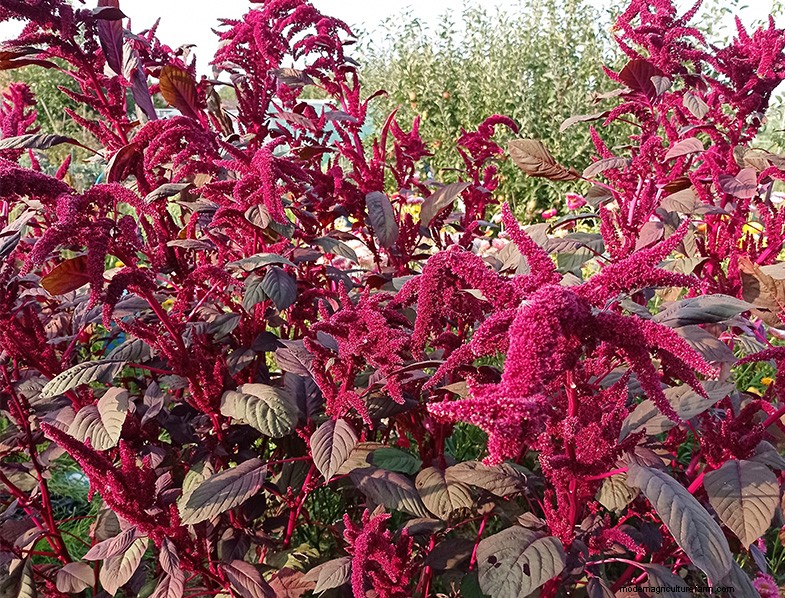 The Author’s Amaranth Plants at Home, Image © Tina Lawlor Mottram
There is a lot of debate about whether Amaranth is native to Mexico, Guatemala, and South America and whether this seed was exported to Asia or if both Asia and Latin America had different varieties that developed simultaneously.
The jury is still out on where the first cultivar grew, but archaeological evidence from tombs in Argentina show that seeds dating to 7000 years ago (the mid-Holocene era, c. 9700 BCE) show that it was grown and valued enough to be buried with important personages at this time.
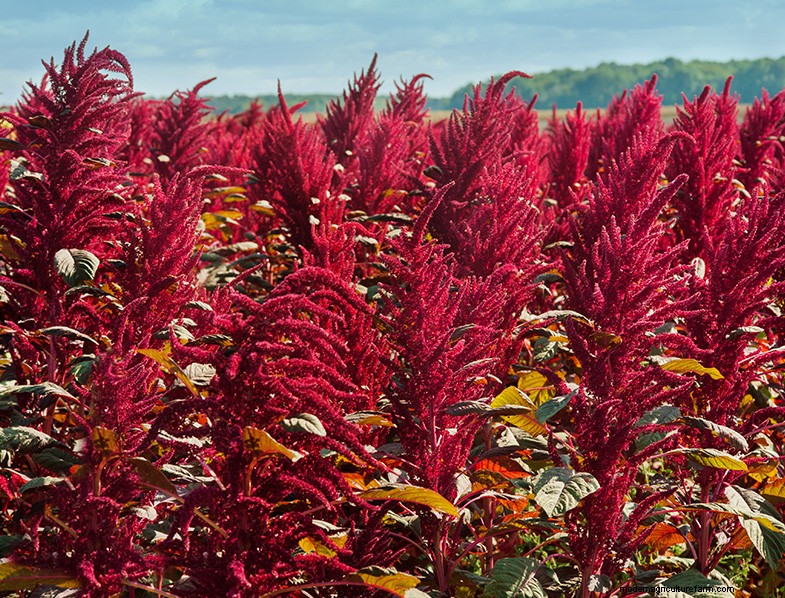 Amaranth
Amaranth is a valued grain crop in Mexico, Guatemala, and most of Latin America particularly Peru, as well as in Africa, China, Asia, the Caribbean, and the southern states of the US although trials are currently being held in more northern states too.
Its leaves are also edible so amaranth can be cultivated either for seed or for foliage. It has never been popular as a food plant in Europe but times are changing and it can be found in some allotments around the UK now too.
Nowadays, this seed has found its way onto US farms from Latin America, it is a staple food in Africa and Asia and it is becoming available in all our health food shops.
Bestseller No. 1
NOW Foods, Organic Amaranth Whole Grain, Source of Protein and Fiber, Gluten-Free, Certified Non-GMO, 16-Ounce (Packaging May Vary)
Bestseller No. 2
Sow Right Seeds - Collection of Amaranth Seeds for Planting - Non-GMO Heirloom Packets with Instructions to Grow an Outdoor Home Garden - Includes Bronze, Red & Green Garnet - Striking Cut Flowers
Bestseller No. 3
SIMPLi Regenerative Organic Certified Amaranth, 12 OZ
Last update on 2025-11-12 / Affiliate links / Images from Amazon Product Advertising API
Before you start growing it, you need to decide if it is for its leaves as valuable salad leaves from spring through to autumn or if you want to harvest seeds. Your seeds will not grow as large if you continuously pick its leaves so if you would like both, then plant two separate rows, one for foliage and the other for grain.
You can continue to harvest leaves as long as summer provides plenty of sunshine for those leaves to grow tall. The younger leaves are tastier than the older ones, so pick when fresh new growth appears.
Cut the flower heads as they appear or the whole plant will attempt to go to seed.
Some growers prefer to plant salad leaf plants closer together to avoid thinning them and the seed plants wider apart to allow them to develop into a small shrub.
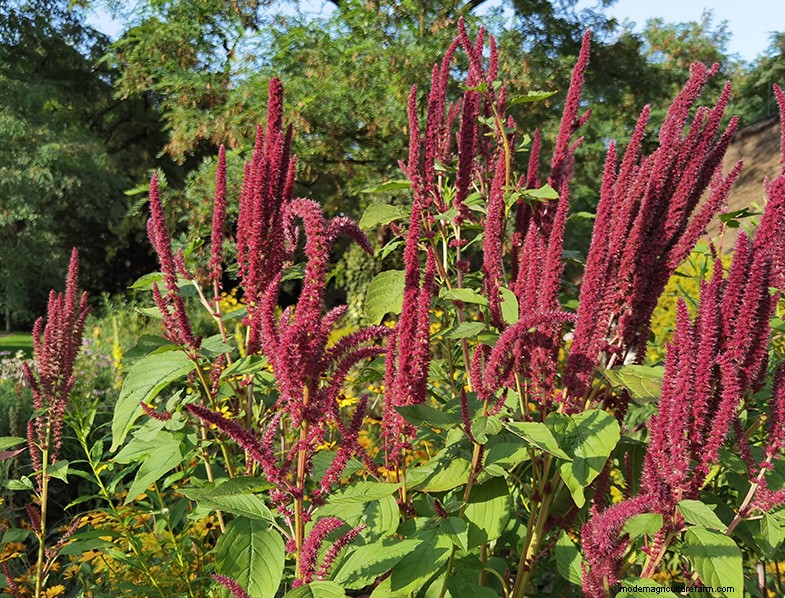 Amaranth
Amaranth leaves are packed with vitamins and minerals; A, C, and K, as well as calcium, copper, iron, magnesium, manganese, niacin, Omega 3 fatty acids, phosphorus, potassium, riboflavin, and zinc. Remember that if you keep picking the leaves, the size of the seed eventually produced will be disappointing.
Amaranth seeds are gluten-free which is a fantastic grain for those unable to eat wheat. They also contain lysine which allows the body to digest calcium easily so these are a good choice for anybody needing calcium.
The oil processed from the seeds has been shown in tests to help lower cholesterol and the seeds contain calcium, copper, magnesium, potassium, and zinc.
Leaves can be cut and added to salads eaten fresh but you can also cook them lightly like spinach to add some green veg to omelettes, or whizz it in soup or add it to stuffing.
I have seen recipes that add a dash of cinnamon to fried amaranth, adding sweetness to the leaves. The unusual leaves will be noted by any guests, and you may be saving seeds for friends to try their own.
Soak the seeds in water for an hour or so to soften them up and discard this water, which may contain small amounts of oxalic acid.
Cook 1 cup of amaranth seed to 2 cups of water and then cook it gently, on a low heat, to conserve all those minerals and nutrients. You can use this immediately, or keep half-cooked seeds in the fridge for a few days and try them in these recipes below.
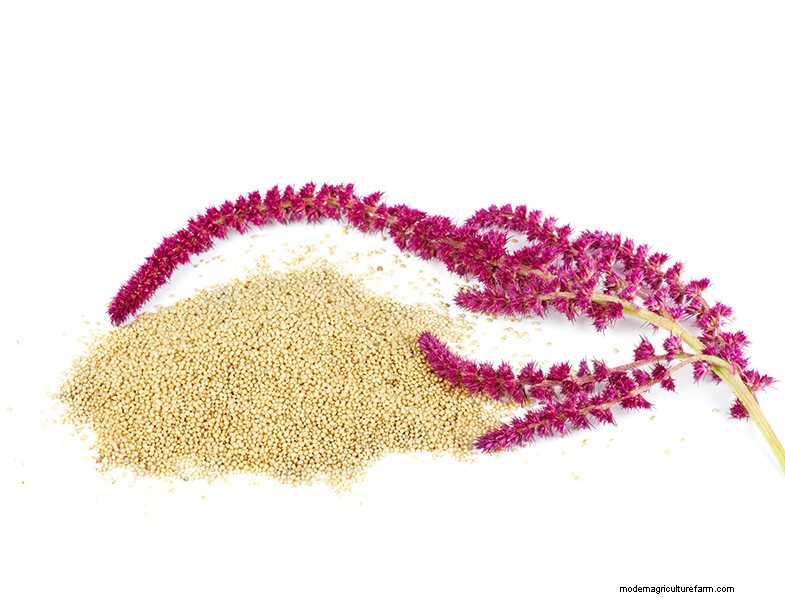 Amaranth Seeds
Make Amaranth Porridge. This can be savoury or sweet, by adding a spoonful of savoury peanut butter or chopped walnuts, or for a sweet version, use dried fruit and homemade, sweet cherry jam. For some reason, adding red jam suits the colour of the grain for me but it could be raspberry or strawberry too!
Egg and amaranth lunch complete with lightly fried amaranth, topped with herbs of your choice (lovage, parsley, coriander, or chives) and served with a poached or fried egg. This combination gives you protein, greens, and crunchy grains, which works either hot or cold in a lunchbox.
Amaranth hash browns. Half-cooked seeds can be fried lightly on both sides and top it off with an egg, some black pepper, and cubes of cheese for a delicious hash brown substitute. Fry it gently on both sides until golden brown.
If you want gluten-free flour, first you need to mill the grain. A mortar and pestle takes a very long time but if you have a grain mill, that’s perfect. Remember to remove the husk of the grain first! There may be a setting to do this.
If you have amaranth flour, you can bake biscuits or flatbread, make pancakes with your usual recipe or try amaranth cake. If you can’t be bothered to do it yourself, most health food shops sell bags of amaranth flour.
Sweet snacks made from popped amaranth seeds mixed with a binding agent (like honey) are still a popular way of consuming amaranth in Central and South America today.
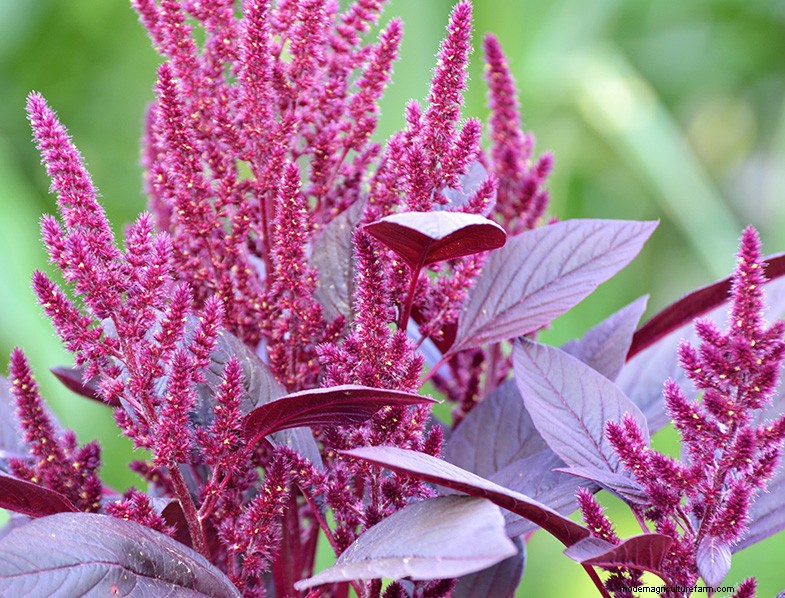 Amaranth
A: Because of this plant’s ability to hybridize with other similar plants that grow nearby, you can find a huge variety in the colour of both leaves and seeds. As an example, see the 3 pics below.
One is our common Dock leaf gone to seed, the next is a Calalloo type and the final picture shows the typical red spikes of Amaranth seed heads. They are not dissimilar in appearance, are they?
A: Yes, it is already growing in allotments and private gardens in the UK. It is unusual so you will probably need to obtain seeds from a source such as the Wholegrains Council or the London Freedom Seed Bank or reputable suppliers.
Old grain is coming back into use in Europe as the demands of climate change make us assess whether the native plants we grew were better. Millet and buckwheat are now widely grown in Europe and these used to be staple foods in the UK ,so it will be interesting to watch if they make a comeback via seed mills, allotments and citizens’ personal food choices.
All varieties of Amaranth are edible and it is one of the seed’s strengths that it can hybridize with plants in the area, so that new colours of grain are frequent. Because Amaranth is such an ancient crop, it pleases me to see it back in seed banks despite its historical prohibition!
Now you know more about the ancient history of Amaranth, maybe you will decide to try growing it in a pot on the patio or a row of plants in your allotment here in the UK. Remember to decide if it is leaves or seeds you want and plant accordingly.
It may start you on a new growth journey of planting grain crops that can be wheat substitutes and if you are coeliac, this is a gluten-free grain. Amaranth may not be the food of immortality but it is certainly worth a try either in the garden or the kitchen, or both.
112