Welcome to Modern Agriculture!

Flavorful, nutrient‑dense greens—commonly called vitamins, minerals, and antioxidants—are the building blocks of any meal. If you savor fresh or cooked greens often, growing your own on the countertop guarantees peak‑freshness, taste, and nutrition. These leafy vegetables develop quickly, offering a fast, rewarding harvest right where you cook.
Indoor salad‑green cultivation gives you a hand‑picked selection of heirloom and organic varieties. From nutrition‑rich to bright, crisp, and versatile, the assortment transforms a simple bowl into a tasty, wholesome meal. Whether you prefer sweet or savory flavors, almost any leaf‑topped vegetable can thrive indoors. Harvest young leaves early for tenderness and a rapid turnaround. Don’t forget microgreens, which provide a crisp, nutrient‑dense topping and are perfect for quick preparation.
Seeds sown indoors require a sturdy foundation of well‑draining potting mix (or a hydroponic setup) and adequate light. Lettuces and other leafy greens tolerate partial shade and need less direct sunlight. A south‑facing window offers the most light, while an east‑facing window supplies high‑quality morning sun. If natural light is limited, a grow light is an excellent alternative and fits neatly on any kitchen counter.
Choosing the right greens is fun and nutritious. Lettuces and Asian greens are favorites. Because indoor space is precious, focus on varieties you love and enjoy most. Then, enjoy year‑round, customized salads that were never shipped from a store.
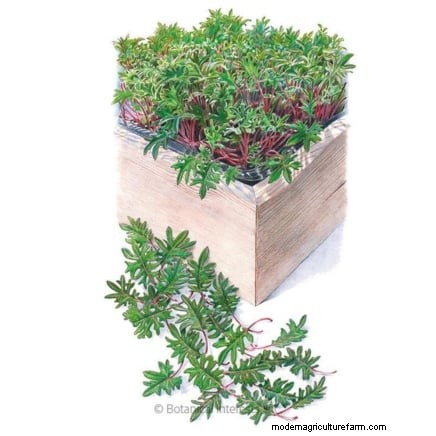
Red Russian Kale Baby Greens Seeds
Gourmet Baby Greens Mesclun Lettuce Seeds
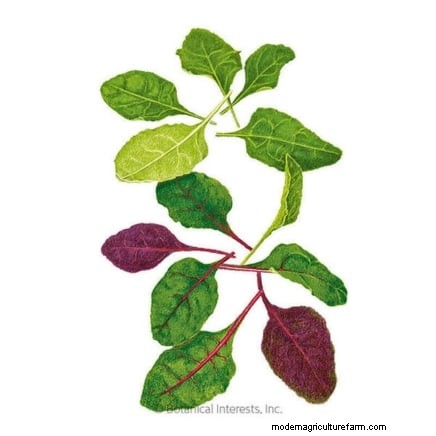
Apple Blossom Swiss Chard Blend Baby Greens Seeds
Stems are white and red, with deep red and bright green leaves.
Common name: ‘Apple Blossom Blend’ Swiss Chard
Botanical name: Beta vulgaris subsp. vulgaris
Sun requirements: Full sun
Height: Harvest at 2‑4″
Swiss chard is a soft‑leafed vegetable that adds rich color with bright stems and foliage. Raw or cooked, it has a mild flavor and is easy to incorporate from the salad bowl to stir‑fries.
‘Apple Blossom Blend’ combines baby greens for an early harvest with flat, fanning, slightly crinkled leaves. It blends the popular varieties ‘Fordhook’ and ‘Ruby Red.’ Sow seeds every two weeks for a continual supply of young leaves at two to four inches tall. Ideal indoor temperatures are 60‑75°F (16‑24°C).
Other chard varieties—such as ‘Bright Lights,’ ‘Orange Fantasia,’ ‘Magenta Sunset,’ and ‘Peppermint’—feature brightly colored stems against deep green or purple leaves. ‘Celebration’ brings bold, multicolored stems and tender green leaves in richer tones.
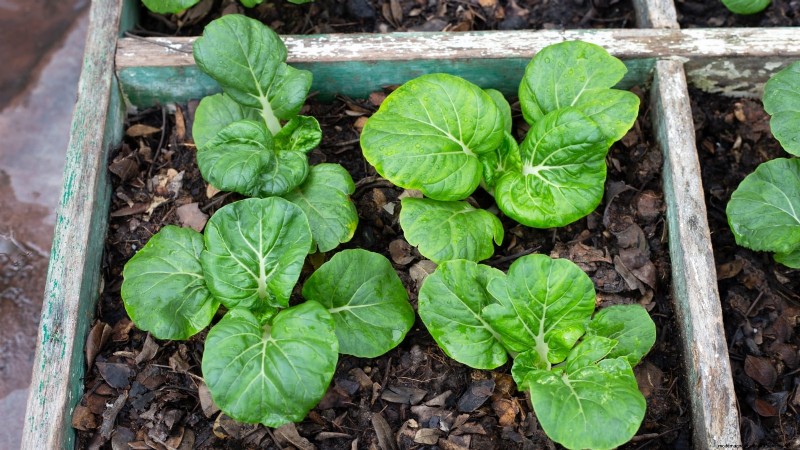
‘Baby Choi’ matures in 35 to 60 days and reaches 20 inches tall, but indoors we’ll harvest much earlier.
Common name: ‘Baby’ Bok Choy
Botanical name: Brassica rapa subsp. chinensis ‘Baby’
Sun requirements: Full sun to partial shade
Height: 5‑20″
Bok choy, or pak choi, is a mild, sweet, tender cabbage with centuries of history in Asian cuisine. It is fast‑developing and nutrient‑packed.
Dwarf cultivars boast quick growth and compact habits. ‘Baby Choi’ matures in 35‑60 days and reaches 20 inches tall, but indoors we’ll harvest far earlier. Seedlings sprout in five‑to‑ten days. Pick when small for tender growth and crisp white stems.
‘Toy Choy’ is a miniature variety that grows only five inches tall at maturity and is ready in as little as 30 days.
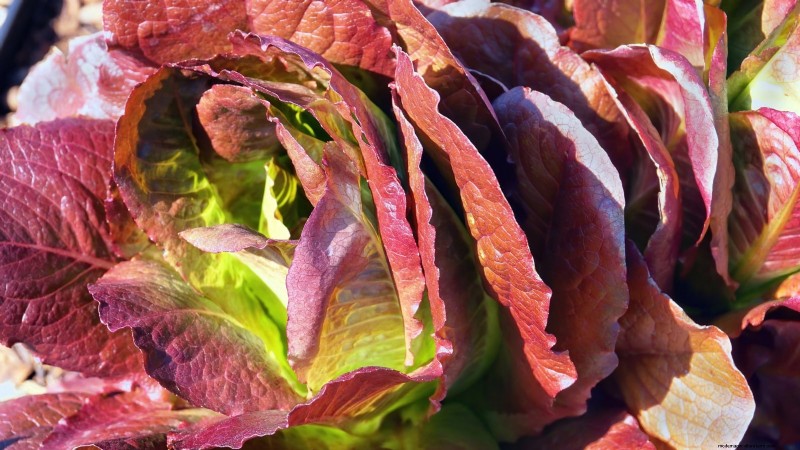
‘Truchas’ is a mini‑romaine with deep red, upright leaves that glow in the planter and on the plate.
Common name: ‘Truchas’ Mini‑Romaine Lettuce
Botanical name: Lactuca sativa
Sun requirements: Full sun to partial shade
Height: 6‑8″
Lettuce is the basis for your ready‑supply of microgreens or full‑size heads. ‘Truchas’ is a mini‑romaine with deep red, upright leaves that glow in the planter and on the plate.
Lettuce is ready to harvest quickly, with ‘Truchas’ maturing in just 21 days. Sow multiple rounds of seeds for a continual supply.
‘Black‑Seeded Simpson’ is another tasty lettuce, quick‑growing with a readiness time of three weeks. Leaves are crisp and bright green for a vibrant splash.
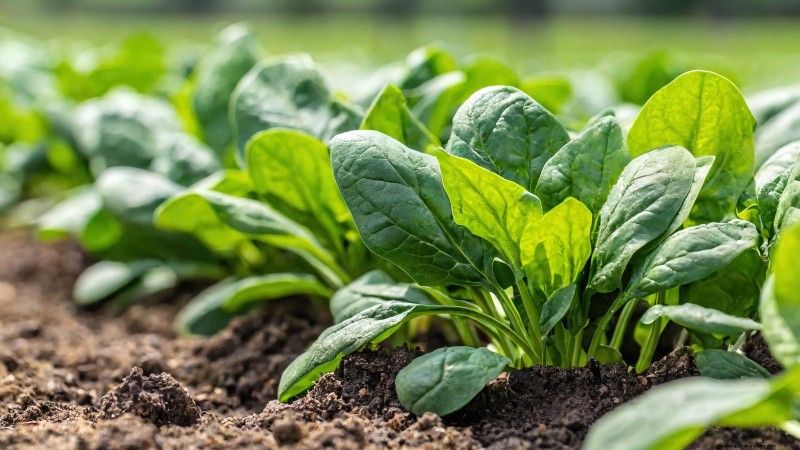
It is fast‑growing, tender, and matures at two to four inches tall in about 20‑25 days.
Common name: Spinach
Botanical name: Spinacia oleracea
Sun requirements: Full sun to partial shade
Height: 6‑8″
Spinach is a staple loaded with minerals and vitamins like A, C, and K. Sow multiple rounds every couple of weeks for continual enjoyment. Spinach is a historical green, first cultivated in Persia (Iran) 2,000 years ago and used in 6th‑century China.
Spinach is fast‑growing, tender, and matures at two to four inches tall in about 20‑25 days. Place seeds close together in containers for a high yield.
‘Oceanside’ has small, uniform leaves with good flavor and high nutrients. Outdoors, the cold‑hardy growers may overwinter in sub‑zero temperatures and are downy mildew resistant. ‘Bloomsdale’ is a reliable heirloom from the early 1800s. It has thick, crinkled leaves when mature. Pick baby leaves for a soft, mild spinach flavor.
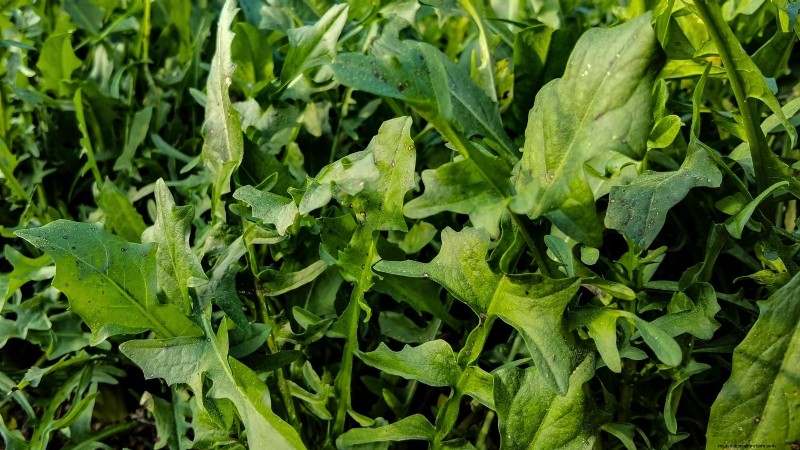
Dark green, slightly lobed leaves are ready in as little as 20 days from sowing.
Common name: ‘Rocket’ Arugula
Botanical name: Eruca vesicaria subsp. sativa
Sun requirements: Full sun to partial shade
Height: 12‑24″
Arugula adds a punch to the composition with a unique peppery flavor. Dark green, slightly lobed leaves are ready in as little as 20 days from sowing. Red tinges highlight the veins of young leaves.
With sowing every couple of weeks, you’ll have an ongoing supply of arugula. Aim for that 60‑75°F (16‑24°C) range for ideal germination.
Packed with iron, calcium, vitamins, and antioxidants, arugula matches its robust flavor in nutrient‑richness. Harvest new growth at two to four inches tall for softness with a burst of flavor among more mellow greens.
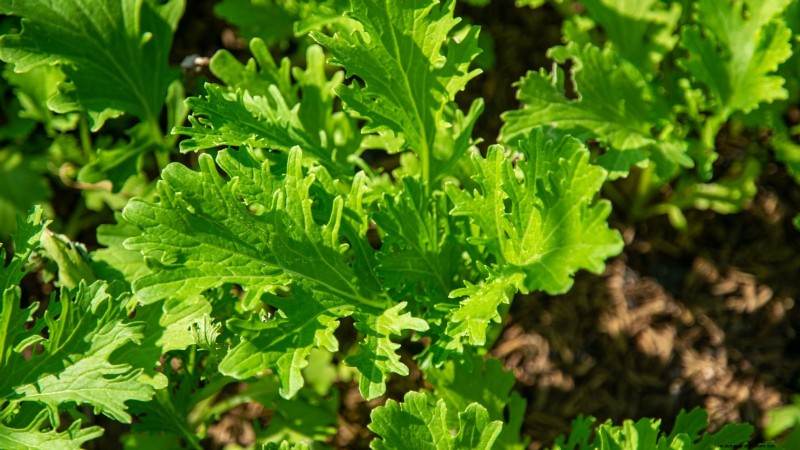
It has curled leaves, crunchy stems, and a true Chinese mustard flavor, robust and spicy.
Common name: Gai Choy Mustard
Botanical name: Brassica juncea subsp. integrifolia
Sun requirements: Full sun to partial shade
Height: 10‑12″
Gai Choy is an Asian green with curled leaves, crunchy stems, and a true Chinese mustard flavor, robust and spicy. Mature plants form a cabbage head. New, small leaves are milder for fresh eating as baby greens that warm up the arrangement. Full leaves are best in cooking, where they mellow and soften.
Like spinach, Gai Choy is high in vitamins C and A. It also contains beta‑carotene, iron, calcium, and potassium.
Young leaves are ready in as little as 40 days from seed and mature in 60. Begin the harvest as microgreens and baby leaves at two inches tall.
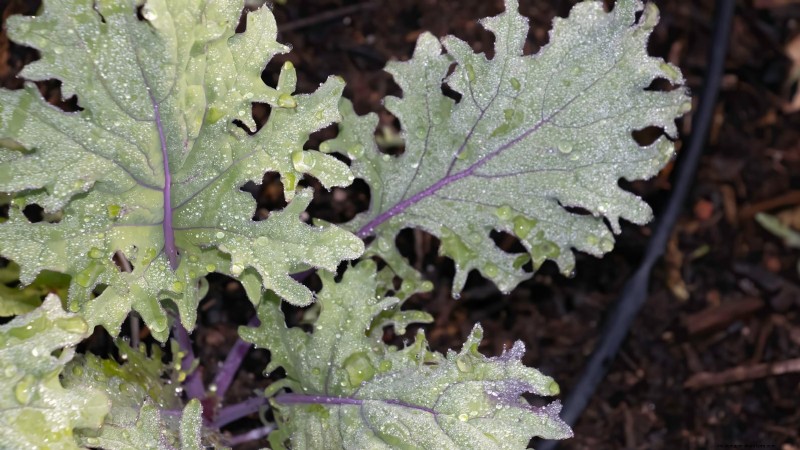
Leaves are mint green with contrasting reddish‑purple midribs and stems.
Common name: ‘Red Russian’ Kale
Botanical name: Brassica napus ‘Red Russian’
Sun requirements: Full sun to partial shade
Height: 18‑30″
‘Red Russian’ kale is as tasty as it is ornamental and useful in seasonal container displays and the kitchen. Leaves are mint green with contrasting reddish‑purple midribs and stems. The large, deeply cut foliage with wavy margins resembles feathery oak leaves.
‘Red Russian’ is sweet at any stage, with tender baby leaves perfect for fresh salads and mature ones for cooking in pasta, sautés, and stews. The 1885 heirloom is cold‑hardy and quick‑developing, with young leaves in just over 20 days.
In addition to adding flavor, kale is a good source of vitamins A and C and iron, fiber, protein, and calcium, too. Make the salad pretty and enriching with kale in the mix.
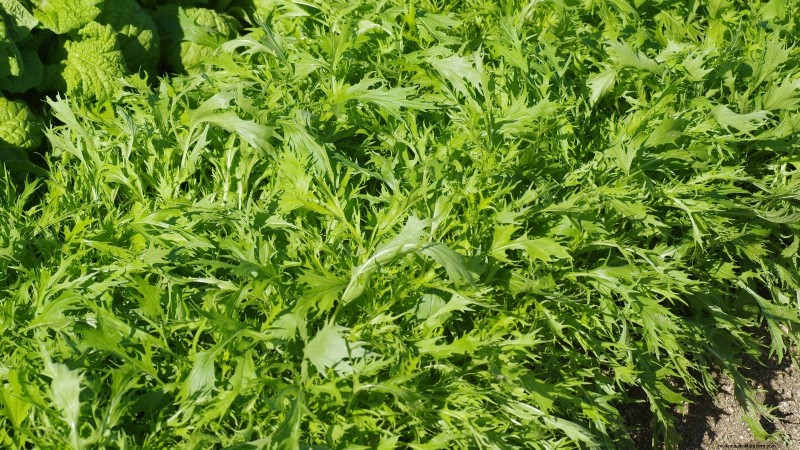
Dissected leaves are fine‑textured, and full‑sized crowns may hold 200 upright stems with delicate leaves.
Common name: Mizuna Mustard
Botanical name: Brassica rapa subsp. nipposinica
Sun requirements: Full sun to partial shade
Height: 12″
Mizuna is a Japanese mustard that is highly ornamental in addition to its culinary merits. Dissected leaves are fine‑textured, and full‑sized crowns may hold 200 upright stems with delicate leaves.
Usable at any growth stage, baby leaves are best with a mildly spicy flavor, more mellow than other mustards. They’re ready to pick a few weeks after sowing. Outdoors, Mizuna tolerates heat and frosty conditions without being quick to bolt (prematurely bloom).
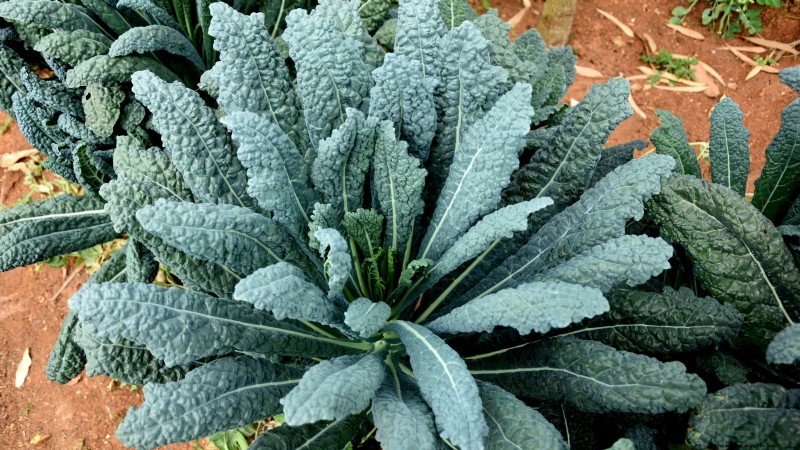
While aged leaves are leathery, broad, and heavily crinkled, young leaves are tender and tasty as fresh greens.
Common name: ‘Dinosaur’ Kale
Botanical name: Brassica oleracea var. acephala ‘Lacinato’
Sun requirements: Full sun to partial shade
Height: 2‑3’
‘Dinosaur,’ also known as black Tuscan kale or ‘Lacinato,’ is a flavorful Italian heirloom that masquerades as an ornamental. Its heavily crinkled leaves are handsome in deep blue‑green.
While aged leaves are leathery, broad, and heavily crinkled, young leaves are tender and tasty as fresh greens. Mature leaves have a sweet flavor when cooked in pastas, stews, and pestos.
A culinary favorite, the rich blue‑green leaves reach nearly black in crisp conditions but stay a dusky green indoors. Young leaves are ready 21 days from sowing.
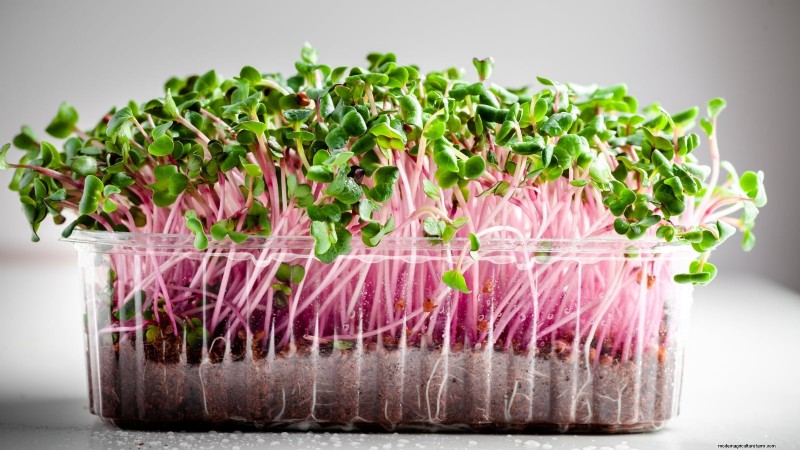
‘China Rose’ is a pretty variety with pinky‑red stems topped with little green leaves.
Common name: ‘China Rose’ Radish Sprouts
Botanical name: Raphanus sativus ‘China Rose’
Sun requirements: Full sun to partial shade
Height: 2″
Radish sprouts are popular in Chinese, Korean, and Japanese cuisine and have a spicy, peppery radish flair. ‘China Rose’ is a pretty variety with pinky‑red stems topped with little green leaves. The radish sprouts are ready in four to six days. Use them as a topper for salads and sandwiches and anything for a crisp, fresh bite. Simmer them in stews and baked dishes for extra flavor.
To add to the salad fixings, radishes (including leafy uppers) are speedy growers. While we often discard the tops, they have potential health benefits. ‘Easter Egg Blend’ combines red, white, pink, purple, and bi‑color radish globes. The colorful roots are ready to pick in as little as 30 days.
‘Cherry Belle’ is a classic bright red radish with white flesh and a crisp flavor. These Holland heirlooms won the All‑America Selections award in 1949 for their fast growth, easy care, and flavorful roots. The salad radishes are a gardener’s and chef’s favorite. Harvest the little belles when the roots are about 1’ in diameter.
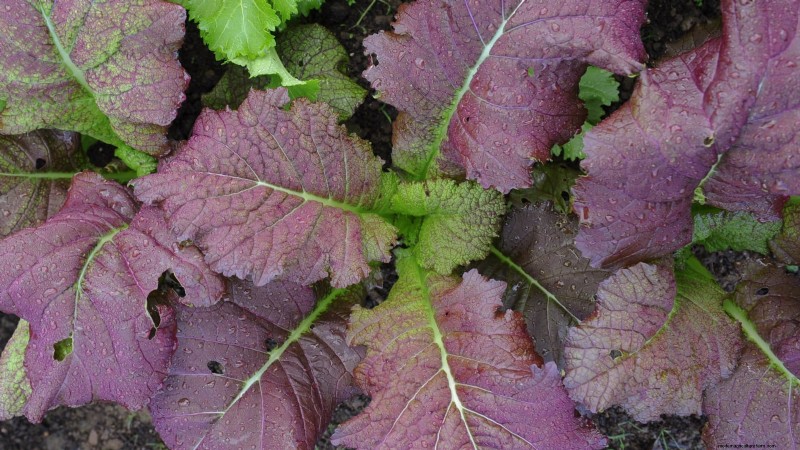
Leaves are large, purple‑red in color, with green stems and veins that form a loose rosette.
Common name: ‘Red Giant’ Mustard
Botanical name: Brassica juncea ‘Red Giant’
Sun requirements: Full sun to partial shade
Height: 12‑24″
‘Red Giant’ mustard boasts bold, purple‑red leaves. With a peppery bite, they spice up the mix. Leaves are large and dark with green stems and veins that form a loose rosette.
Pick the scarlet foliage at any growth stage – as sprouts, microgreens, baby, or full leaves. Spiciness intensifies as leaves grow larger (which can be really intense). Little ones are best for blending with other raw greens,
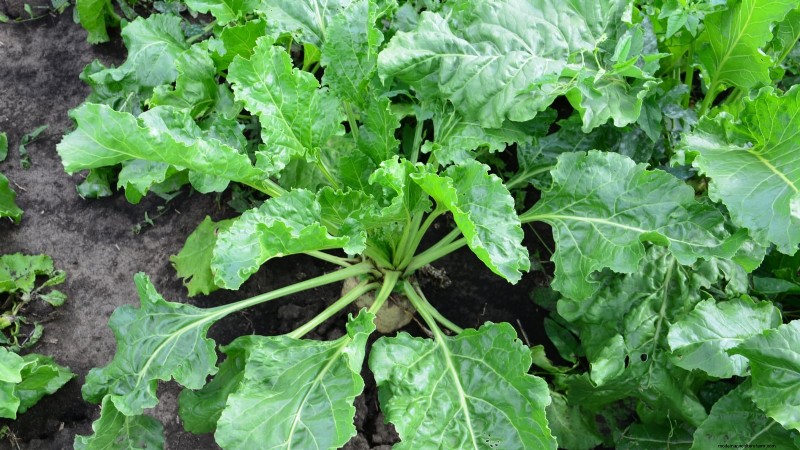
The centuries‑old root vegetable is most notable for its hearty, sweet, smooth‑fleshed roots.
Common name: Turnip Greens
Botanical name: Brassica rapa var. rapa
Sun requirements: Full sun to partial shade
Height: 12‑15″
Like radishes, the leafy tops of turnips are a powerhouse of nutrition. The centuries‑old root vegetable is most notable for its hearty, sweet, smooth‑fleshed roots, often a good stand‑in for potatoes.
For a delicacy in sweet flavor and crisp white flesh for fresh eating, opt for an Asian variety. With tender skins, the little globes are best enjoyed young and raw, grated on a salad or in a slaw. Hakurei (Japanese turnips) are petite salad turnips.
With any variety, young, soft leaves are ready quickly. When they reach four to five inches tall, the tender leaves are excellent raw or cooked. Harvest some of the leaves while allowing the root to develop if you have the room.
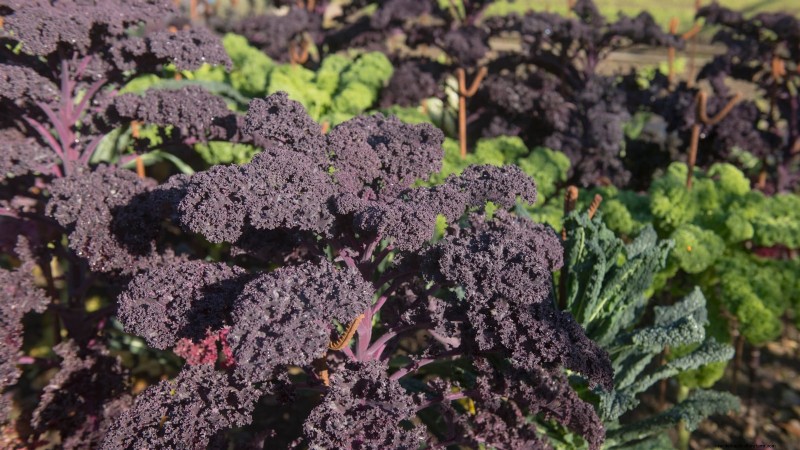
Its tall, tightly curled stems transition from dusky blue‑green to burgundy and plum in cool fall conditions.
Common name: ‘Redbor’ Kale
Botanical name: Brassica oleracea ‘Redbor’
Sun requirements: Full sun to partial shade
Height: 1‑2’
‘Redbor’ is a statuesque variety with upright, magenta‑red stems that make a showy ornamental in garden beds and containers in addition to flavorful green. Its tall, tightly curled stems transition from dusky blue‑green to burgundy and plum in cool fall conditions.
While many ornamental kales have a bitter flavor and waxy leaves, ‘Redbor’ has a mild sweetness as color intensifies in cold weather. It has a flavor similar to store‑bought kales, is versatile, and is easy to toss in any mix.
Indoors, we won’t experience the robust look of the mature plant, but little leaves are delicious. Pick them at two to three inches tall.
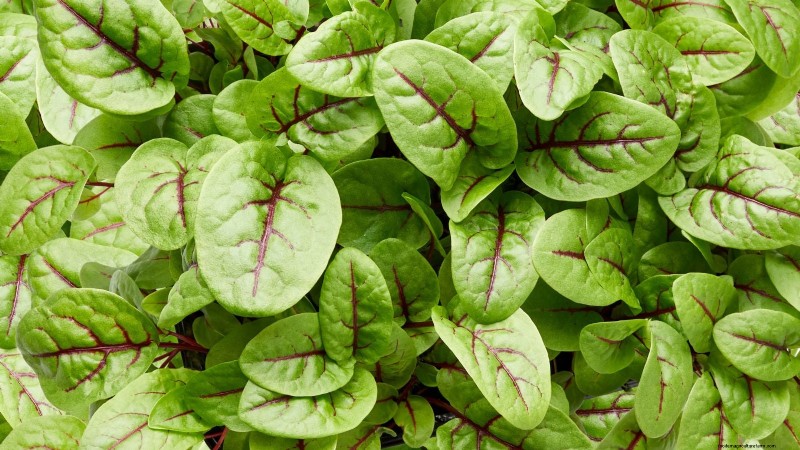
Red‑veined sorrel (Rumex sanguineus) has deeply lined green leaves with scarlet venation.
Common name: Sorrel
Botanical name: Rumex spp.
Sun requirements: Full sun
Height: 12‑18″
Sorrel (Rumex acetosa, R. scutatus) emerges early with tender, flavorful leaves. Used for centuries in Europe, young leaves are fresh green with a tart, lemony flavor, enjoyed fresh or cooked (which mellows the tartness). Sorrel is high in Vitamin C and a delicious complement to chard and spinach.
Sorrel is perennially hardy in zones 3‑7 if you opt to grow it outdoors for ongoing harvests. Pick continuously from spring until frost.
Red‑veined sorrel (Rumex sanguineus) has deeply lined green leaves with scarlet venation. New growth is soft and sharply tangy, with a hint of raspberry notes. Use the little leaves; older ones become tough and more bitter.
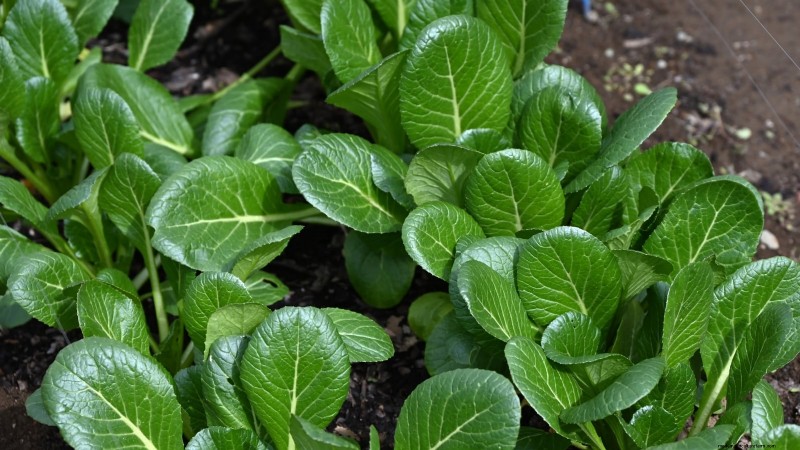
Pretty leaves are dark, glossy green with white stems and veins.
Common name: Komatsuna Japanese Spinach
Botanical name: Brassica rapa var. perviridis
Sun requirements: Full sun to partial shade
Height: 12‑18″
Komatsuna is a traditional Japanese vegetable that blends the taste of smooth spinach with mild mustard, sweet and not bitter. The nutrition profile is high in vitamins C, A, and K, with additional minerals like folate, beta‑carotene, and iron. This tender‑green mustard spinach contains more calcium than true spinach.
Komatsuna is best around 30‑40 days after sowing for tender, soft growth. Pretty leaves are dark, glossy green with white stems and veins. Seedlings emerge quickly at five to ten days after seeding.
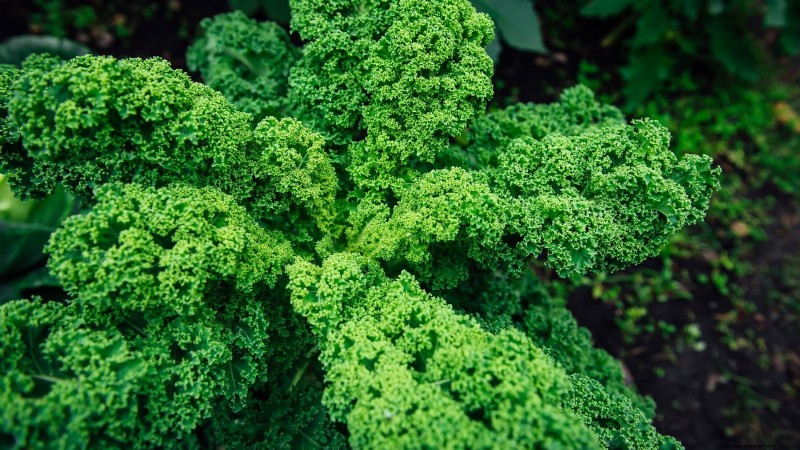
It features crinkled leaves in deep to bright green shades.
Common name: ‘Darkibor’ Kale
Botanical name: Brassica oleracea ‘Darkibor’
Sun requirements: Full sun to partial shade
Height: 2’
‘Darkibor’ kale forms a leafy pillow full of productive, crinkled leaves in deep to bright green shades. Along with ‘Redbor,’ ‘Darkibor’ is a good selection for an intense flavor without bitterness.
In the garden, kale is frost‑tolerant and thrives in cool conditions. ‘Darkibor’ also withstands warm temperatures without being quick to bolt. Gardeners in southern climates rely on these for long‑lasting interest and harvesting.
Mature leaves are crisp, sturdy, and meaty. Harvest baby and tender leaves at six inches or less. Plants continue to produce new leaves; pick outer ones first.
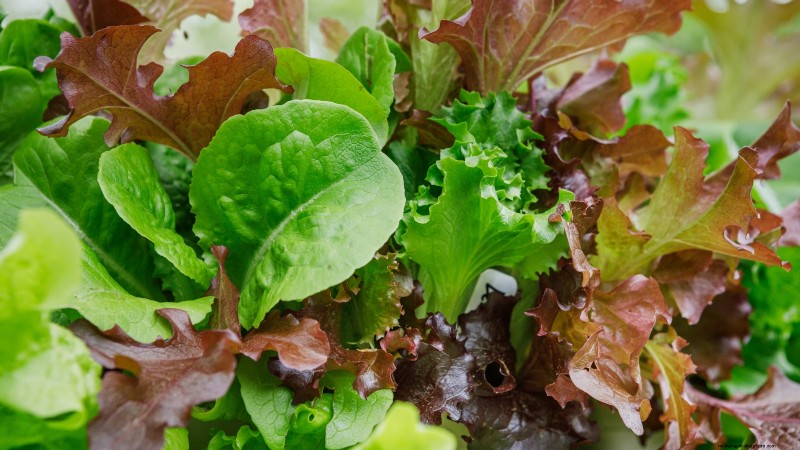
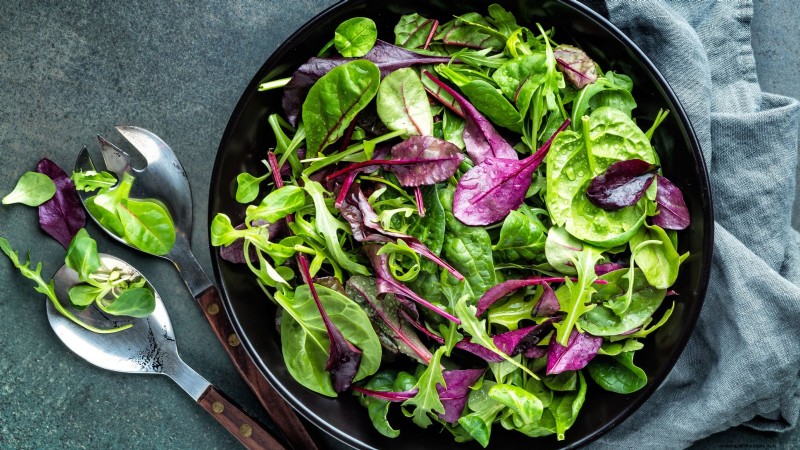
Mesclun is a combination of young lettuces, including butterhead, leaf, and romaine types.
Common name: Mesclun Mix Lettuce
Botanical name: Lactuca sativa
Sun requirements: Full sun to partial shade
Height: 6‑8″
A mesclun blend is an easy way to grow complementary lettuces with diverse flavors and textures in a ready‑to‑grow mix. Mesclun is a combination of young lettuces, including butterhead, leaf, and romaine types. All your favorites rolled into one seed packet make growing convenient, balanced, and delicious.
Varieties like ‘Black‑Seeded Simpson,’ ‘Buttercrunch,’ and ‘Red Oak Leaf,’ among others, spring up quickly for a blend of soft and curled textures with buttery and crisp flavors. Harvest new leaves at four to six inches tall for all the best mesclun qualities.