
Welcome to Modern Agriculture!

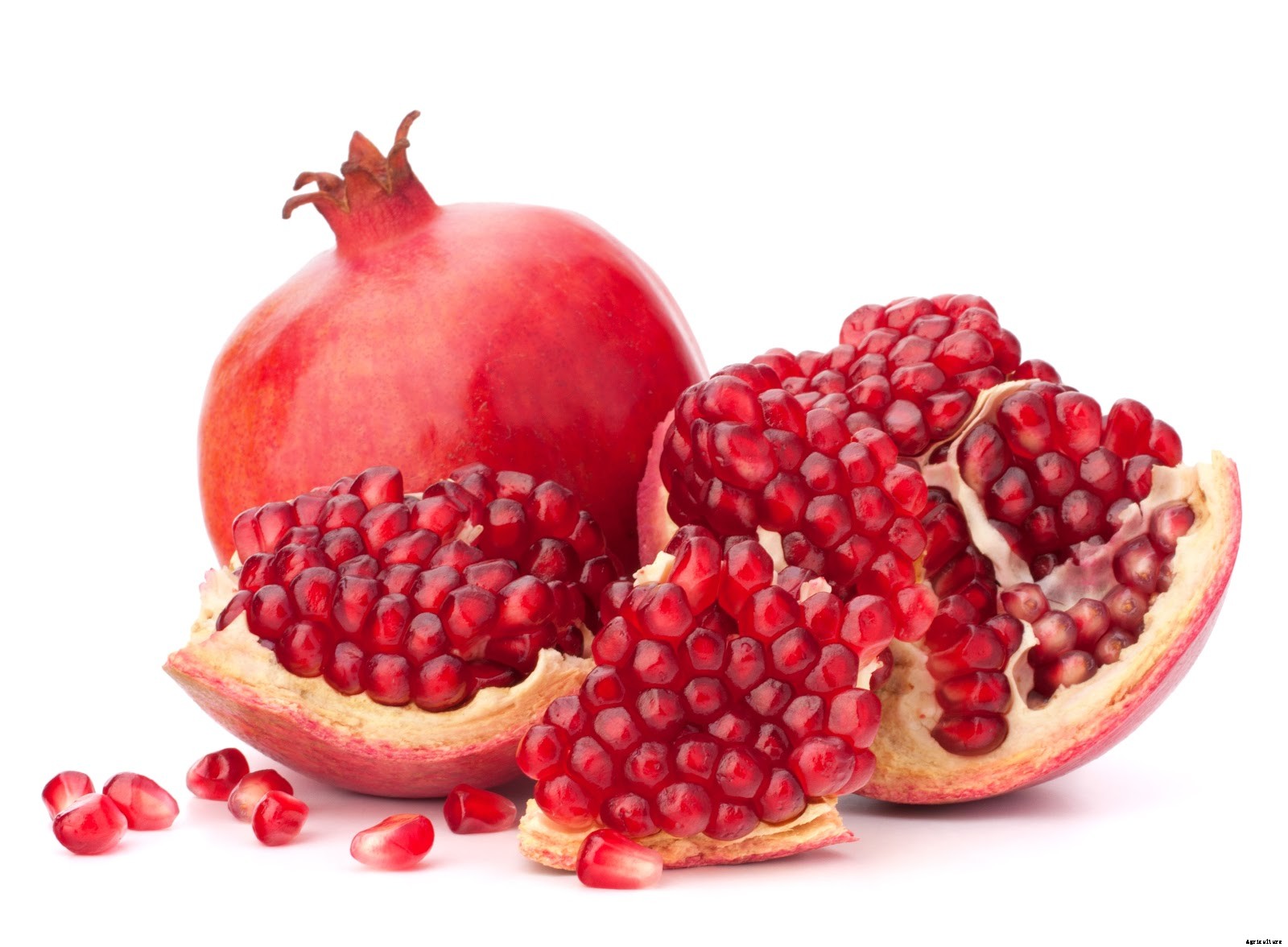
Pomegranate (Punica granatum) is one of the commercially important fruit crops..It is native to Iran (Persia). Fruit is consumed fresh or in the form of juice, jam, squash and syrup. Among all forms, canned slices and juice are in much demand, constituting about 70% of the production.
Pomegranate grows well under semi-arid conditions and can be grown upto an altitude of 500 m. above m.s.l. It thrives well under hot, dry summer and cold winter provided irrigation facilities are available. The tree requires hot and dry climate during fruit development and ripening. Pomegranate tree is deciduous in areas of low winter temperature and an evergreen or partially deciduous in tropical and sub-tropical conditions. It can tolerate frost to a considerable extent in dormant stage, but is injured at temperature below – 110 C. Well drained, sandy loan to deep loamy or alluvial soils is suitable for cultivation.
Sindhara, Badana, Alipur Gulabi, Jhalari, NARC-1, Tarnab Gulabi
Air layering is usually done during the rainy season and also in November-December. Planting is usually done in spring (February-March) and July-August in sub-tropical and tropical regions respectively.
High density planting is adopted in temperate regions. A spacing of 5-6 m. in northern India and also in the plains of Deccan plateau is usually followed. High density planting with a spacing gives 2-2.5 times more yield than that obtained when the normal planting distance of 5 X 5 m. is adopted. Farmers have adopted a spacing of 2.5 X 4.5 m. Closer spacing increases disease and pest incidence.
Square system of planting is mostly adopted. Planting distance is decided on the basis of soil type and climate. A spacing of 4-5 m. on marginal and very light soils is recommended.
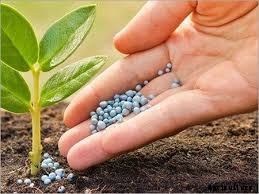
Pits of 60 X 60 X 60 cm. size are dug (at a spacing of 5 cm. in square system) about a month prior to planting and kept open under the sun for a fortnight. About 50 g. of 5% BHC or carbaryl dust is dusted on the bottom and sides of the pits as a pre-caution against termites. The pits are filled with top soil mixed with 20 kg. farmyard manure and 1 kg. super phosphate. After filling the pit, watering is done to allow soil to settle down. Cuttings/air layers are then planted and staked. Irrigation is provided immediately after planting.
The recommended fertilizer dose is 600-700 g. N, 200-250 g. P2O5 and 200-250 g. K2O /tree/year. Application of 10 kg.Farmyard manure and 75 g. ammonium sulphate to 5 year old tree annually is adequate , whereas application of 50 kg. Farmyard manure and 3.5 kg. Oil cake or 1 kg. Sulphate of ammonia prior to flowering is ideal for healthy growth and fruiting. The time of application is December/January, May/June and October/November.
The basal dose of farmyard manure @ 25-40 cart-loads /ha. besides the recommended doses of N, P and K should be applied to non-bearing trees in 3 split doses coinciding with growth of flushes during January, June and September. Fruiting should be encouraged from fourth year onwards. Nitrogenous fertilizer is applied in two split doses starting at the time of first irrigation after bahar treatment and next at 3 weeks interval, whereas full dose of P and K should be applied at one time. These should be applied in a shallow circular trench below tree canopy not beyond a depth of 8-10 cm. After application, fertilizers are covered with top soil and irrigated.
Sexually by Seeds Seeds -germinate easily without going through a rest period. Trees are not true to variety grown from seed. Asexually by means of hardwood or softwood cuttings or air-layering. Trees, grown from softwood cuttings make late in the growing season. Hardwood cuttings are the easiest and most satisfactory method of growing pomegranates Suckers from a parent plant can be taken up and transplanted. Grafting has never been successful, so no special rootstalk
If irrigation is not provided fortnightly in April- July, causes poor fruit production. During winter, monthly irrigation is enough.
The average annual water requirement through drip irrigation is 20 cm. Drip irrigation helps to save 44% on irrigation and 64% when sugarcane trash mulch is used. It also helps to increase the yield by 30-35%.
Plants are trained on a single stem or in multi-stem system. Since the crops trained on single stem training system are more susceptible to pests viz. Stem borer and shoot hole borer, the other system is more prevalent in the country.
Pruning is not much required except for removal of ground suckers , water shoots, cross branches , dead and diseased twigs and also to give shape to the tree. A little thinning and pruning of old spurs is done to encourage growth of new ones.
Inter-cropping with low growing vegetables, pulses or green manure crops is beneficial. In arid regions, inter-cropping is possible only during the rainy season, whereas winter vegetables are feasible in irrigated areas.
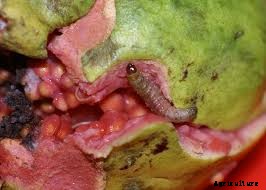
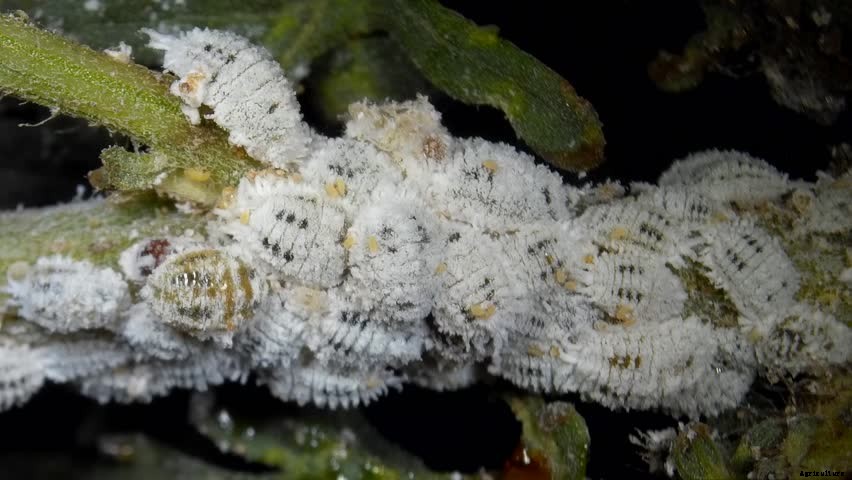
Insect pests mostly observed are fruit borer, mealy bugs, aphids, white fly and fruit sucking moths. Spraying with dimethoate , deltamethrin or malathion etc. depending upon the type of pest infestation has been found to be effective in most cases.
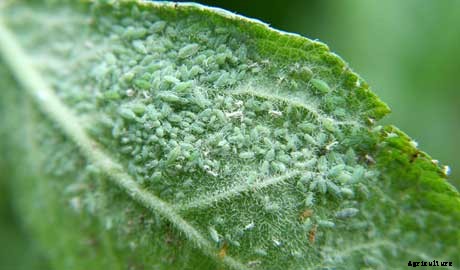
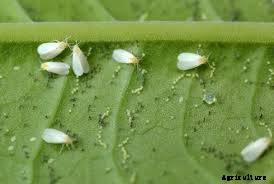
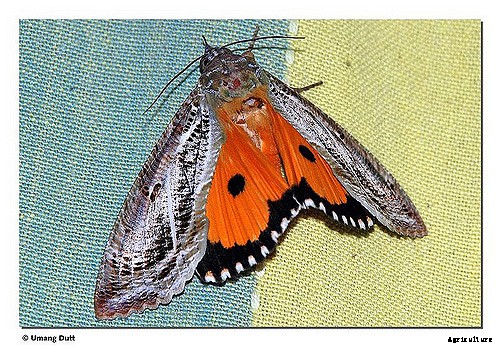
The main diseases reported are leaf spot and fruit rot. Application of Mancozeb (2g./l.) during rainy season in case of the former and application of Kavach (2g./l) and Carbendazim/Thiophanate methyl/Baycor/Benomyl (1g./l.) during September/October in case of the latter has been found to be effective in most cases.
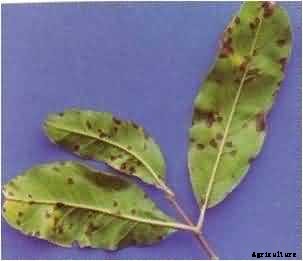
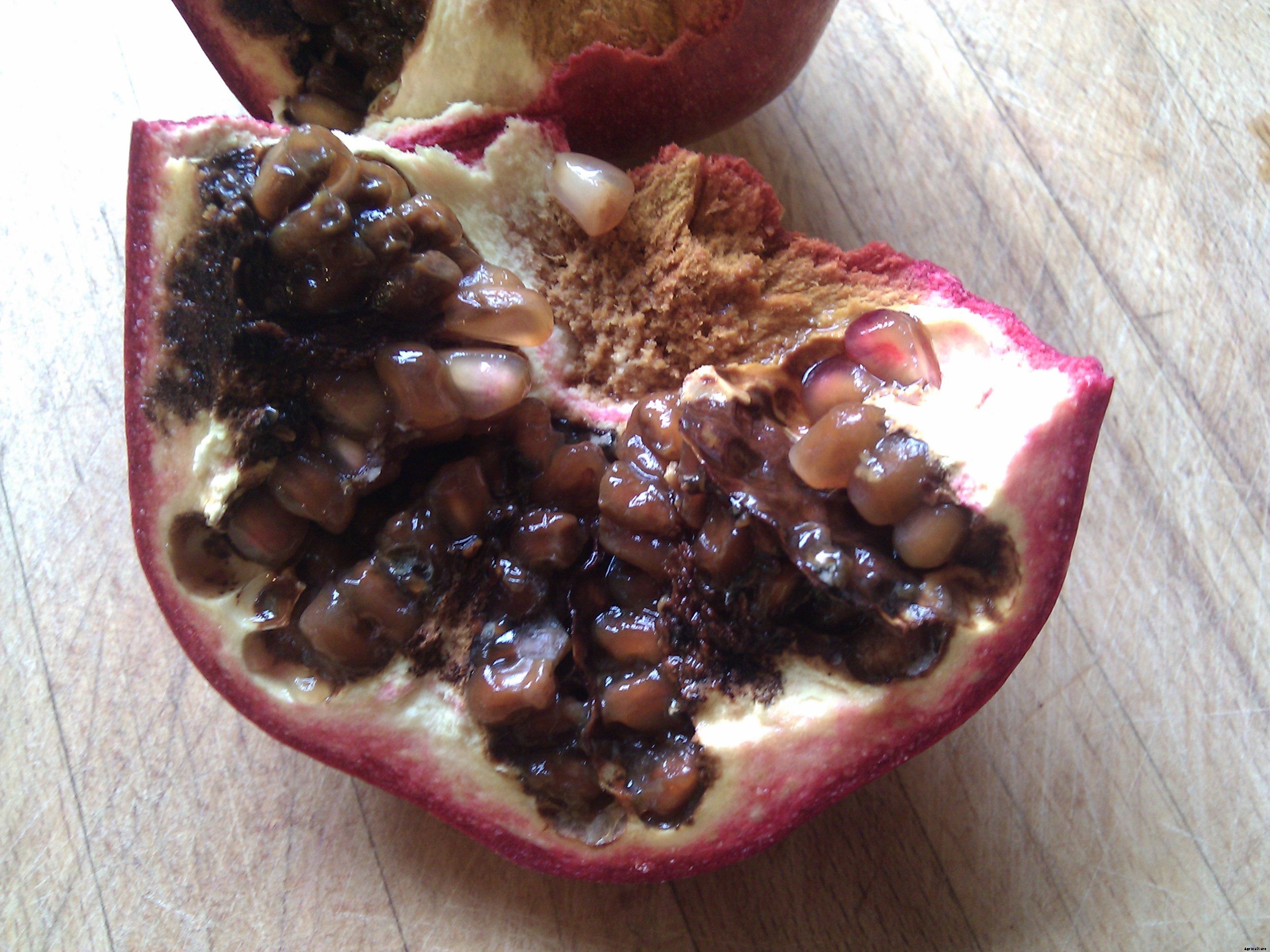
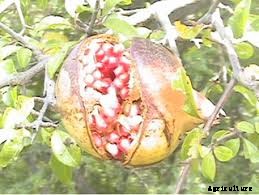
Fruit cracking is a serious disorder. This physiological disorder observed in young fruits is due to boron deficiency and that in fully grown fruits is mainly due to moisture imbalances. Tolerant may be cultivated and in other cases spraying with calcium hydroxide soon after fruit set has been found to be beneficial.
Pomegranate being a non-climacteric fruit should be picked when fully ripe. Pomegranate plants take 4-5 years to come into bearing. Harvesting of immature or over mature fruits affects the quality of the fruits. The fruits become ready for picking 120-130 days after fruit set. The calyx at the distal end of the fruit gets closed on maturity. At maturity, the fruits turn yellowish-red and get suppressed on sides.
Harvesting Picking begins in August before fruit is fully mature Average production is 5 to 6 tons per acre Fruit may split on reaching maturity on tree due to rain Harvest fruit with clippers and bags

