
Welcome to Modern Agriculture!

Growing Sage in India
Hello friends, we are here today with a new topic of growing sage in India, farming practices of Sage herb. Sage (Salvia Officinalis) is a widely cultivated herb plant and it is a member of the mint family. Sage is a low-maintenance and hardy perennial herb plant. Growing Sage in India is so economical and time-saving. Sage plants are vigorous and full perennial herb plants with woody stems and aromatic leaves that can be harvested. Sage leaves are unique and oblong and can be variegated or solid in color while producing white, purple, or red flowers. In this article we also covered the below topics about growing Sage;
Sage is a hardy perennial plant and it grows spikes of spring flowers in different colors like purple, blue, white, and pink. Also, the Sage plant has a powerful spicy and aromatic flavor. Now, let us get into the details of growing sage in India.
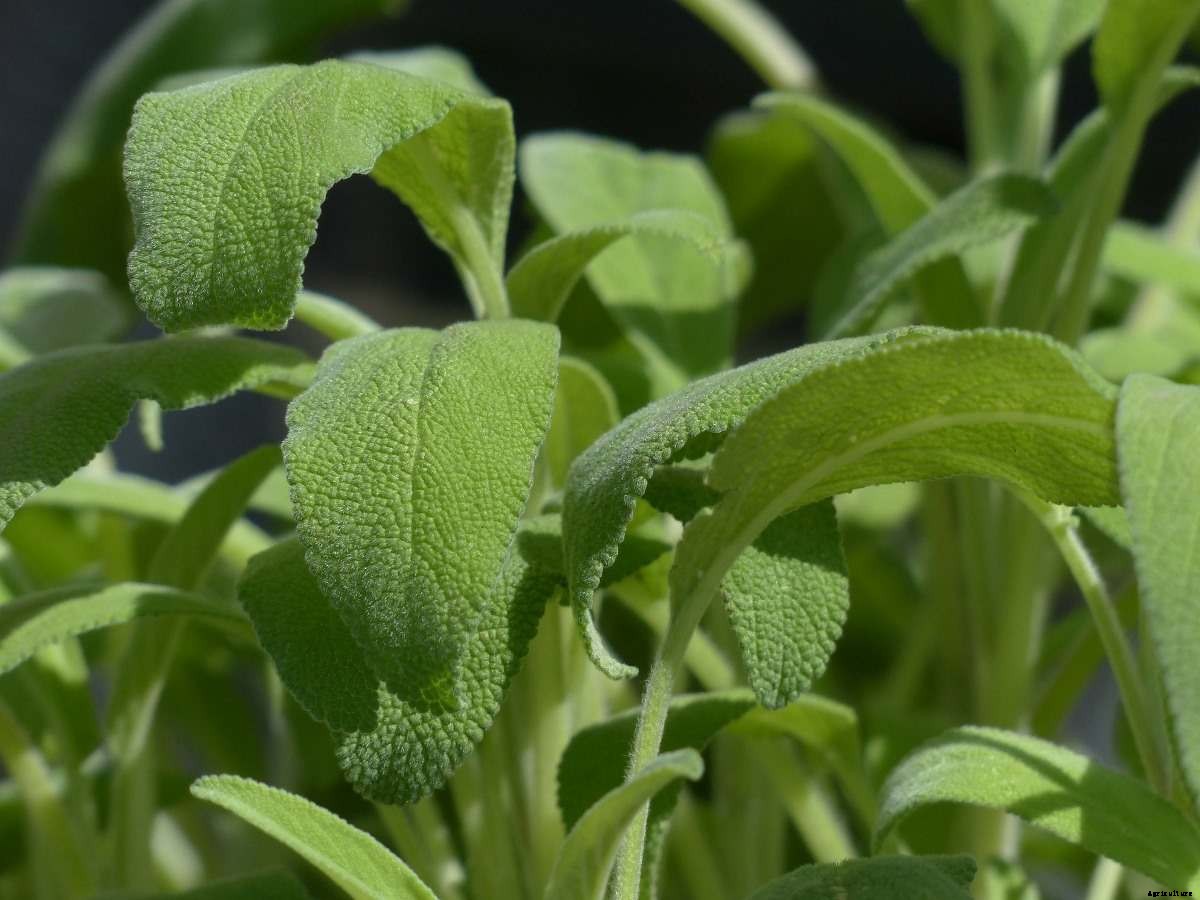
There are several types of Sage plants and not all of them are edible. When selecting a Sage plant for your herb garden, choose one such as Garden Sage, Purple Sage, Tri-color Sage, and Golden Sage.
The flavor of Sage changes greatly depending on the variety grown and the growing location. Some different types of Sage plants commonly found are;
Clary Sage – It has very large leaves often used to flavor wine. It is also good with eggs and infused in a tea.
Purple Sage – It is a small plant with purple leaves and striking bright blue flowers. Purple Sage plants have purple color leaves when young. It is also used for cooking, but unlike garden Sage, a purple Sage bush doesn’t bloom very often.
Tricolor Sage – It is a popular decorative variety that gives a lot of colors to a garden. It has a milder flavor and it is used less for cooking and more for its decorative look.
Mexican Sage – It needs a long growing season and doesn’t start blooming until late summer.
Berggarten Sage – Berggarten Sage is similar to the common garden Sage in color, look, and style of leaves, but it does not bloom.
Garden Sage – Garden Sage is one of the most well-known Sage varieties and it is also called as “common Sage.”
Golden Sage – Golden Sage is a creeping plant and has green and golden variegated plant leaves. These plants are beautiful in a garden with other plants, as the colors accentuate whatever is planted around it.
Grape Scented Sage – Grape scented Sage is one of the largest-growing plant varieties, growing up to 8 feet tall by 6 feet wide.
Mealycup Sage – Mealycup Sage grows about 2 – 3 feet and is most often an annual, depending on the region you’re growing it in. It has lovely purple, white or blue color flower spikes and it has several varieties like “Empire Purple” and “Victoria Blue.”
Mexican Bush Sage – Mexican bush Sage is drought tolerant and grows about 3 – 4 feet.
Pineapple Sage – Pineapple Sage is mainly grown as an ornamental plant but is also widely thought to have medicinal properties.
Scarlet Sage – Scarlet Sage plant is an annual that thrives in full sun, but can also withstand some partial shade as long as it’s planted in well-draining soil.
Tricolor Garden Sage – The tricolor garden Sage plant has uneven white accented leaves, giving it the perception of being “tricolored.”
White Sage – White Sage is also called bee Sage and is used for cooking. Slow growing, the white Sage plant is an evergreen perennial shrub that can take up to about 3 years to mature and grows to 2 to 3 feet tall.
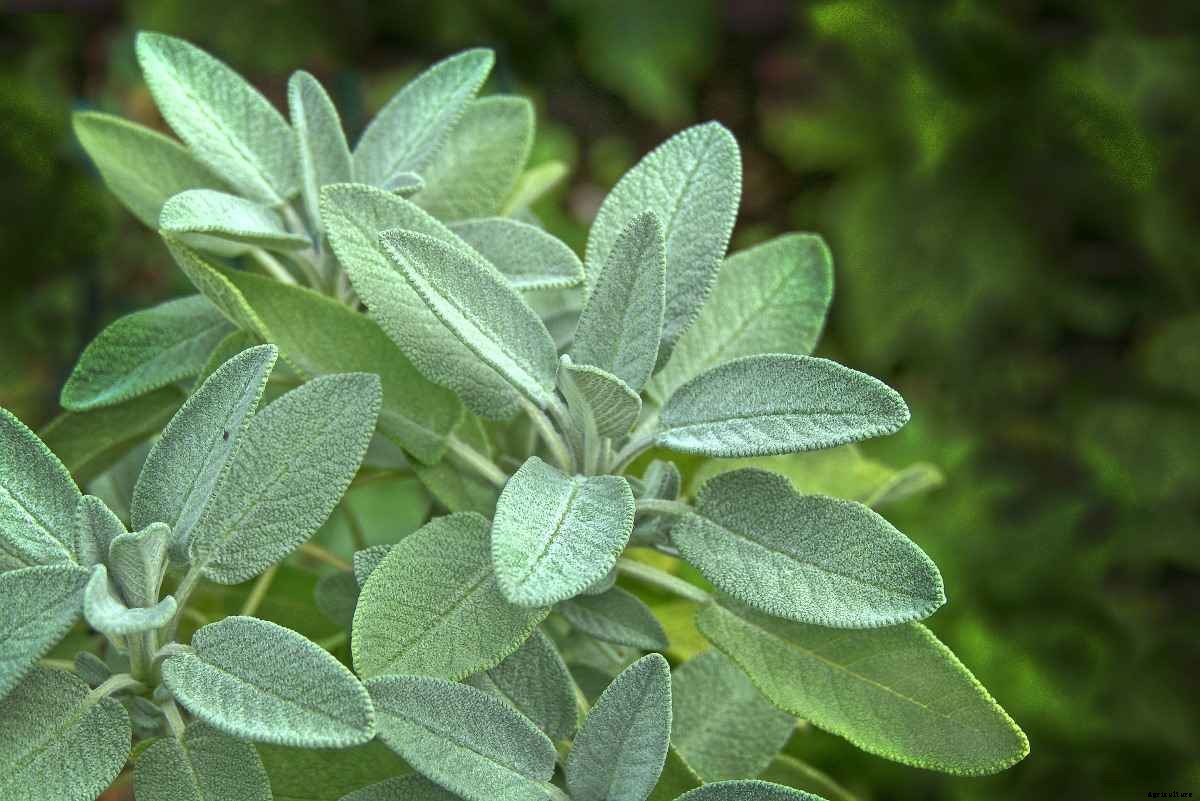
When growing Sage plants, provide them with average and well-draining soil that is sandy or loamy. Soil pH level for Sage plants should measure 6.0 to 7.0. If you are not sure of your soil’s pH level, you can obtain a simple and inexpensive soil test kit from the local garden center. Sage plant needs sandy, loamy, well-draining soil. Do not over-fertilize if you’re growing for culinary purposes while you can get faster growth, you will likely lose intensity in flavor. If you’re planting Sage in clay soil, mix in organic matter and sand to provide better drainage.
Sage plant grows well in prepared garden beds or containers and requires full sun tolerates partial shade and well-drained soil to thrive. Plant Sage in medium to full sun. If you are growing the Sage plant indoors, place your pot near a sunny window.
Sage plants grow well in flower borders and beds, patios, containers, city and courtyard gardens, cottage and informal gardens. It can be grown in containers, raised garden beds, and in-ground backyard gardens.
Sage plants growing in containers – Sage plants can be grown successfully in containers or pots. Be sure that you have a nice large pot or container with a well-draining potting mix and water intermittently. Growing Sage in pots and grow buckets offers gardeners the flexibility of moving plants to different locations as needed. Also, it allows you to have fresh herbs right outside on your porch or patio. It is best to avoid some cultivars if you are growing this plant for cooking. Sage cultivars are grown for aesthetic properties. This container Sage plant grows well in the same container with Rosemary, Carrots, and Cabbage.
Sage Growing in Raised Bed – Growing Sage in raised beds takes much of the guesswork out of supplying nutrient-rich and well-draining soil for Sage plants. You can control the garden’s soil quality in a raised garden bed, and plants and seeds will stay warmer earlier in the season than if they are planted in the ground.
Sage Growing in Backyard Garden – Sage plants can be quickly and also easily grown in a backyard garden as long as the soil is well tilled and drains well. Also, mulching helps with reduces soil erosion, regulate soil temperature levels and prevent pesky weeds from propagating in the garden.
Usually, Sage is propagated from seed, although cuttings, divisions, and air layering are also successfully practiced.
Seed – Stratify Sage seeds for several weeks then sow indoors. Seeds germinate in about 14 days.
Cuttings – Sage plant can be started from stem cuttings taken from new growth in late spring or summer or divisions in spring or fall. Use about 4 to 6-inch cuttings; dip the cut ends in a rooting hormone to help root formation.
Division – Divide older established plants in the spring or fall season with a spade.
Layering – Sage can be propagated by layering during the growing season and place soil over a herbaceous section of the branch.
You may also like this: Growing Herbs Hydroponically.
With a few basic supplies, it is easy to start growing Sage plants.
Containers – A clay pot (either glazed or unglazed) is the best choice for growing Sage plants. Clay soil allows better air movement through the walls of the container, and the growing media will dry out more quickly.
Growing Media – Commercial potting mixes and coconut coir are both excellent substrates for growing Sage in containers.
Plants – Sage can be started from seeds for propagated through stem cuttings or a technique known as the “layering” method. Many gardeners opt to propagate new plants instead of sowing Sage seeds because plants reach maturity quicker.
Sage grows in a round, bush-like fashion, and individual plants must be spaced 24 to 36 inches apart.
Growing Sage from seed can be challenging but if growing Sage from seed, here are a few important tips:
Step By Step Process to Growing Sage in India from Seeds;
Step 1) Start germinating your Sage seeds 6 weeks before you plan to plant them outdoors. Then, use a 5-inch-deep pot that has drainage holes in the bottom and fill it with a mix of equal parts peat moss and perlite.
Step 2) Set the pot on a tray and then water it thoroughly until water runs out of the bottom and into the tray. Dump out the excess water and sprinkle seeds on top of the peat moss and perlite mix. Cover the seeds with about 1/8 inch moist peat moss.
Step 3) Carefully place a clear plastic bag over the pot and tuck the open end underneath to seal in moisture. Then, leave the pot in a bright location out of direct sunlight. When the Sage seedlings emerge and have developed one set of true leaves, remove the bag.
Step 4) Thin out the seedlings so there are 4 to 5 left in each pot. When they are 3 inches tall, separate the seedlings, one to a pot, if you’re keeping them indoors.
Step 1) More commonly, Sage can be grown from cuttings. In the spring season, take softwood cuttings from a mature Sage plant. Dip the cut tip of the cutting in rooting hormone, and then insert it into potting soil. Cover with clear plastic and keep in indirect sunlight until new development appears on the cutting. At this time you can plant the Sage out into the garden.
Step 2) Taking cuttings from an existing Sage plant by using clean and sanitized handheld pruners to prevent the spread of disease. One easy method to disinfect after cleaning is to wipe the blades with a paper towel soaked in a solution containing 70 to 100% ethanol or isopropyl alcohol.
Step 3) After that, fill a 5-inch-deep pot that has drainage holes in the bottom with a mix of equal parts peat, perlite, and sand. Pour water into the pot until it drains from the bottom and then uses a finger to make a 2- to the 3-inch-deep hole in the center of the potting mix.
Step 4) Wrap the entire container in a clear plastic bag so that it doesn’t touch any of the leaves. It will stay moist this way but do add water if the soil dries out. Then, place the pot in a bright location out of direct sunlight.
Step 5) Plant Sage seedlings and cuttings outdoors when they are 3 inches tall and there’s no lingering danger of frost. Space the plants 24 to 36 inches apart in your garden and prune the top 1 inch off each branch to encourage additional branching for a bushier, more compact appearance.
Step 1) Take a long stem from an existing plant and bend it down towards the soil or potting mix, making sure you don’t snap it off the plant.
Step 2) Secure the stem to the growing media using wire or small metal stakes leaving the top about 3 to 4-inches of the stem free.
Step 3) Within a month new roots must start to form from the nodes in contact with the soil.
Step 4) Carefully cut away the newly rooted stem from the main plant and then transplant it into a container.
In case if you miss this: How To Grow Hydroponic Leeks.
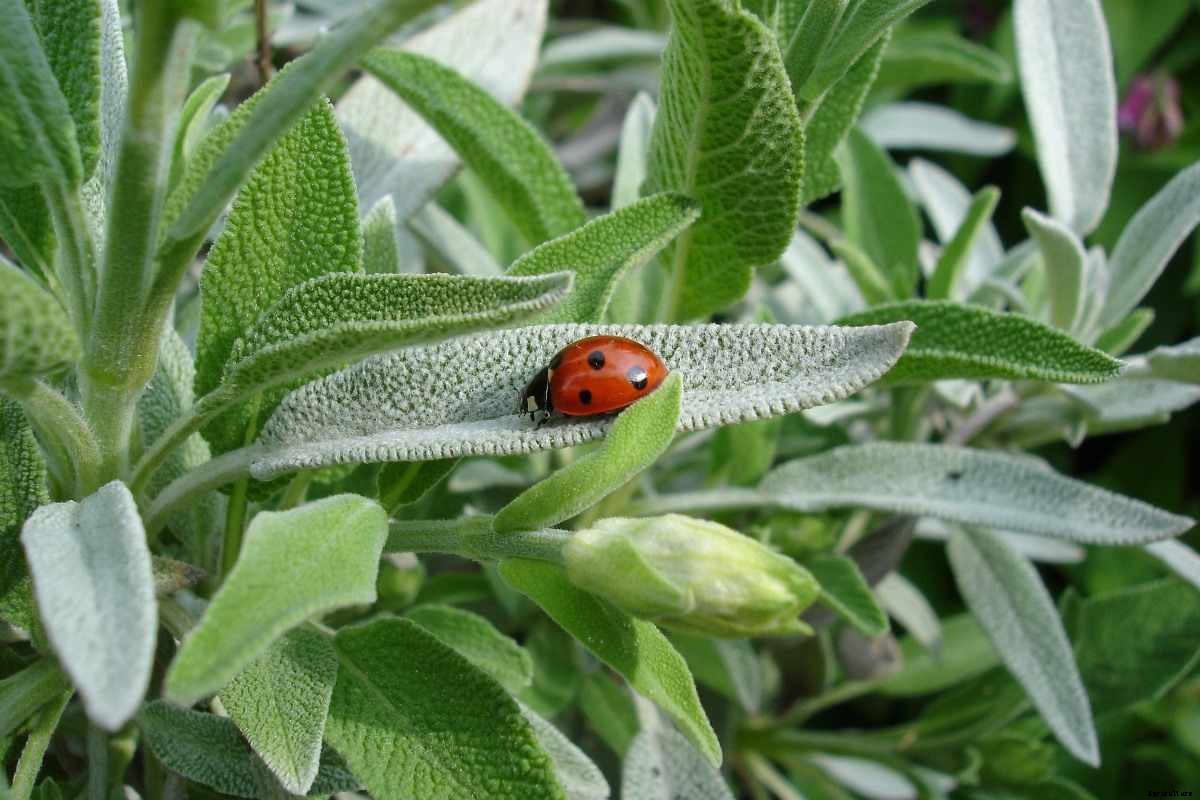
Normally, diseases and pests aren’t a big problem with Sage. In most cases, good drainage prevents root rot, a disease encouraged by too much moisture for too long around the roots. In humid conditions, poorly ventilated conditions, the Sage plant is susceptible to powdery and downy mildews. Here again, prevention is the best control for these problems; plant Sage where it gets plenty of air circulation, and leave ample space between plants. In cases where mildew does appear and use horticultural oil or sulfur spray. In some cases, spider mites, thrips, and spittlebugs are problems in Sage plants. We use organic insecticides such as pyrethrum or insecticidal soap or oil to keep these pests under control.
Bacterial Diseases
Crown gall – Only plant disease-free material; plant Sage in well-draining soils; avoid wounding the plants as much as possible
Fungal diseases
Mint rust – Infected plants and rhizomes must be removed to prevent spread; heat treatment of roots can help to control the disease; roots must be immersed in hot water at 44°C for 10 minutes, cooled using cool water and after that planted as usual.
Sage plant does well plant near Tomatoes, Cabbage, Carrots, and Strawberries. The Sage flowers are lovely and attract pollinators. It does not do well near cucumbers.
Sage planting in containers with rosemary, thyme, basil, and other Mediterranean herb plants, since these flavors are used together in recipes.
Does Sage grow back every year?
Sage plants are perennial plants that mean they come back year after year.
Can Sage grow in shade?
Plant Sage in full sun; it will tolerate partial shade but the flavor of leaves will be diminished. Grow Sage plant in well-drained soil. Sandy loam is best but it will grow in nearly poor soil as well.
Is Sage easy to grow?
A member of the mint family, the Sage plant is easy to grow and does well in containers, the ground, and indoors.
Does sage need direct sunlight?
Sage needs 6 to 8 hours of full sun daily. If your sunny window does not provide this much daily sun, use fluorescent lighting when growing Sage plant indoors.
Why is my Sage dying?
The reason for Sage plants wilting or drooping can be because of overwatering, fungal disease problems, too much fertilizer, or under-watering. The most common reason your Sage can be doing poorly is overwatering. The soil must be dry before watering to prevent mildew and yellow or brown spots.
Why is my Sage leggy?
Sage plant will grow leggy if it does not have enough sun, it requires at least 6 hours of sun per day. To encourage a bushier plant pinch Sage as it grows in the spring season.


