SRI Rice Cultivation (Paddy) – (System of Rice Intensification)
Hello farmers, we are here today with a topic of SRI paddy cultivation method and farming practices. The System of Rice Intensification (SRI) is a system of cultivation of rice. It mainly involves the application of certain management practices, which together provide a better growing condition for rice plants, mainly in the root zone, than those for plants grown under conventional practices. This SRI system seems to be promising to overcome the shortage of water in irrigated rice. At present, SRI being in practice in many countries like Cambodia, Indonesia, Laos, Myanmar, Philippines, Thailand, Vietnam, Bangladesh, China, India, Nepal, Sierra Leone, Ghana, Benin, Barbados, Brazil, Cuba, Sri Lanka, Gambia, Madagascar, Mozambique, Guyana, Peru, and the USA.
The SRI method is a farming methodology aimed at increasing the yield of rice. It can be the most suitable method of rice cultivation for poor farmers. SRI is a holistic agroecological crop management technique seeking alternatives to conventional high-input oriented agriculture, through effective crop integration, soil, water, and nutrient management. It is not technology because something still evolving and improving, season by season, as more experience is gained and as more farmers, scientists and apply their intelligence to making rice production more efficient.
SRI is initially labor intensive;
- Needs 50% more man-days for transplanting and weeding.
- Mobilizes labor to work for a profit.
- It offers an alternative to the resource-poor, who put in their family labor.
- Once the right skills are learned and implemented, the labor costs will be lesser.
SRI encourages rice plant to produce healthy with;
- Large root volume
- Profuse and strong tillers – Maximum tillering means 30 tillers per plant can occur concurrently with panicle initiation. Also, even 100 fertile tillers per plant can be achieved in excellent management due to early transplanting and the absence of the dieback of roots.
- Non-lodging
- Big panicles
- More and well-filled grain panicles and also higher grain weight
- It resists insects because rice absorb soil nutrients naturally
A step-by-step guide to SRI Rice Cultivation (Paddy)
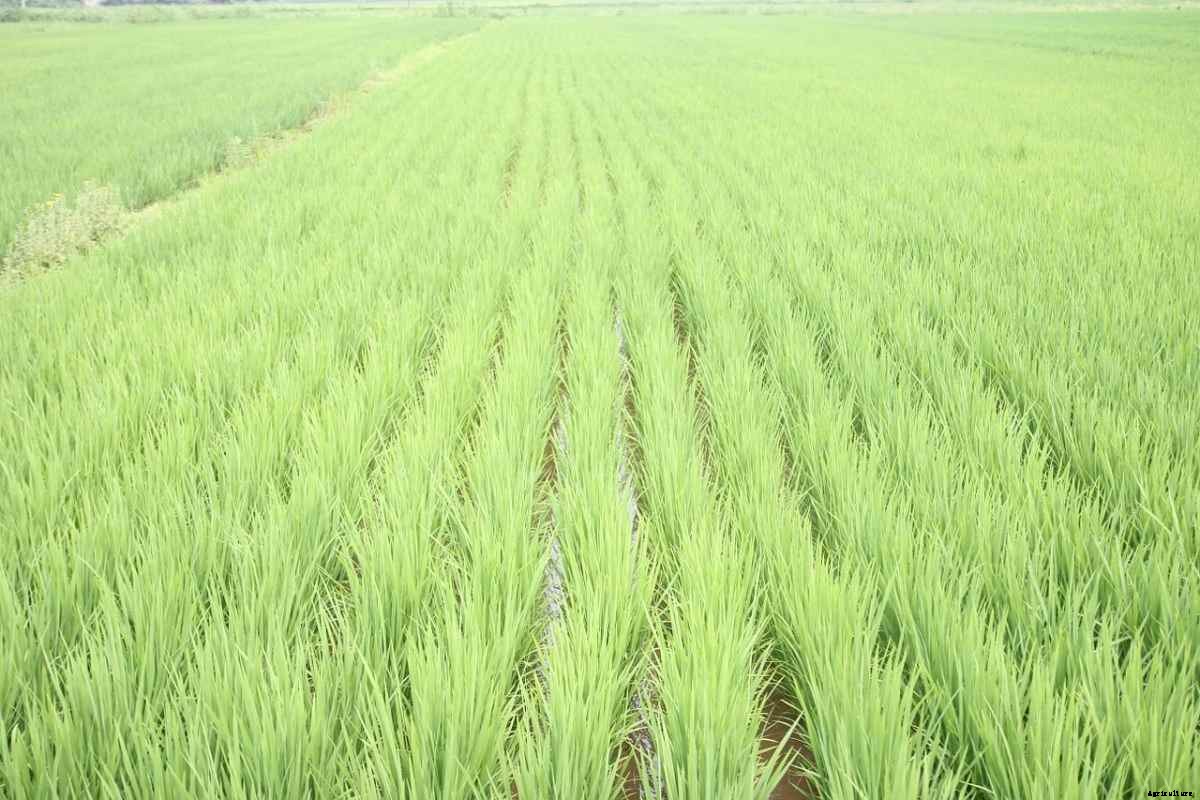 Rice Field (Image credit: pixabay)
Differences for SRI Rice Cultivation and Conventional Rice Cultivation
Generally, SRI differs from the conventional method of rice cultivation as given below.
1. Nursery Management – Initially, raised seedbed prepared by a good mixture of Farmyard Manure and soil either on polythene covers, and banana sheaths, etc., or on the soil. Then, the seed rate of 5 kg per hectare is sufficient as against 50 to 62.5 kg in the conventional method. After that, about 8 to 12 days aged seedlings transplantation with 2 small leaves and seed attached to the plant as against 25 days and above in the conventional method of rice cultivation.
2. Transplanting to the main field – Seedlings should be removed carefully from the nursery without disturbing the plant roots along with seed and a single seedling must be transplanted per spot in the main field. Water in the main field must be drained out before transplanting.
3. Wide spacing – Wider spacing of about 25 x 25 cm in the square pattern must be maintained for better aeration and easy intercultural operations due to line plantation with the help of rotavator as against 50 to 60 hills per square meter in the conventional system.
4. Weeding – Naturally, weed growth is more in SRI because there is no stagnated water. Weeding must be done with rotary weeder/cono weeder at least four times with an interval of 10 days starting from the 10th day after planting. Then, it churns the soil and the weeds are incorporated in the soil, which in turn serves as organic manure. It helps in increased soil aeration.
5. Water management – The soil must be kept moist but not to break the soil also not saturated by providing alternating wetting and drying.
6. Manure and fertilizer – Application of more organic manures i.e. 8 tonnes per hectare must be used.
A comparison of SRI and conventional method of rice cultivation is given below;
Conventional MethodSRISpacing15×10 cm25×25 cmNo of plants per sq.m6616No. of seedlings per hill3-41No. of plants per acre79200064000Seed requirement per acre20-30 kg2 kgWeedingManual weeding and application of weedicideWeeding with Cono weeder
Principles of SRI Rice Cultivation
SRI method is based on four main principles that interact with each other;
- Early, quick and healthy plant establishment
- Reduced plant density
- Soil conditions improved through enrichment with organic matter
- Reduced and controlled water application
- Young seedlings between 8 to 12 days old that means 2 to 3 leaf stage are transplanted to preserve the potential for tillering and rooting ability
- Careful planting of single seedlings rather than in clumps that are plunged in the soil
- Wider spacing at about 25 cm x 25 cm. in square planting rather than in rows
- Use of a rotary hoe or power weeder to aerate the soil as well as controlling weeds
- Alternate wetting and dry process rather than continuous flooding in the field
- Use of organic manure or vermicomposting / FYM.
Other principles of SRI can be summarized as follows;
- The plant roots should be given a favorable growing environment, with no trauma or crowding when they are getting started. This applies whether the crop is established by transplanting or by direct-seeding. Also, farmers always start with well-selected, good-quality seeds.
- Plant populations must be optimally sparse rather than being optimally dense. For the SRI method, seedlings or seeds are planted singly rather than in clumps of about 3 to 4 or more, and a square grid pattern. Then, this gives plants’ roots and canopy more room to grow freely, with unimpeded access to water, nutrients, and sunlight. Also, lower plant density eliminates conditions that allow various pests and diseases to proliferate and reduce rice production.
- Sufficient water must be provided, but no excess. Plants must be given just enough water to meet the needs of the plants and the aerobic soil organisms, from earthworms to microbes, that live around, on, and some even inside the plants. A flooded soil environment suffocates roots and then reduces the symbiotic organisms that live with them in the soil, like mycorrhizal fungi.
- The soil must be well supplied with organic matter both to provide nutrients for the plants and soil organisms and to improve the structure and functioning of the soil system itself. Though some use of inorganic fertilizers can be beneficial, they are not a good substitute for abundant organic material. Instead of feeding the plant, farmers must ‘feed the soil,’ and this will feed the plant.
- The soil’s fertility and functioning can be enhanced by active soil aeration to get more oxygen to roots and beneficial aerobic soil organisms. The latter makes the soil system better able to absorb water, thus making more water available to plants.
Nursery Area and Seed Rate of SRI Rice Cultivation
- Only 7-8 kg of seed is required to plant 1 hectare.
- The nursery area is reduced to 100m2 / ha.
- For raised beds, by 1 x 5 m and 20 beds are required for 1 hectare.
- Spread polythene sheets over the beds evenly.
- Fill the soil evenly over the Polythene sheets up to 4cm.
- Uniformly spread 375 g of seeds in each 5 square meter nursery bed.
- Watering through a rose can is advisable.
- Cover the seedbed using locally available mulching materials like coir pith/straw nursery area
Certain Practices for SRI Rice Cultivation
The Principles of SRI for rice cultivation are achieved by below certain practices;
- Transplanting of young seedlings between 8 and 15 days old to preserve the potential for tillering and rooting;
- Planting seedlings singly carefully and gently rather than in clumps of many seedlings that are often plunged in the soil, inverting root tips;
- Wider spacing at least 25 x 25 cm and also in some cases even 50 x 50 cm, and in a square pattern rather than in rows;
- Using a simple mechanical hand weeder or a rotary hoe to aerate the soil as well as to control weeds;
- Keeping the soil moist but never continuously flooded during the crop in a vegetative growth phase, up to the flowering stage and grain production.
- Organic manure or compost used to improve soil quality.
Season for SRI Rice Cultivation
- Dry season with assured irrigation management is more suitable.
- Difficulty in crop establishment can be seen in areas with a heavy downpour
Seedling age
- About 14 days old seedlings were recommended for transplanting (3 leaves stage)
- If the nursery bed is accurately prepared with sufficient organic manure, the seedling growth will be good to handle.
Varieties
Hybrids and varieties with heavy tillering.
Sowing in SRI Rice Cultivation
- Sow the pre-germinated seeds weighing about 90 to 100 g / m-2 (100g dry seed may weigh 130g after sprouting) uniformly and cover them with dry soil to a thickness of about 5 mm.
- Sprinkle water immediately using a rose can soak the bed and then remove the wooden frame
- Then, continue the process until the required area is completed.
Seed Rate and Seed Treatment in SRI Rice Cultivation
The seed rate is about 7- 8 kg/ha for a single seedling per hill required.
Seed treatment – Healthy and pure seeds are used for seed treatment. Soak the seeds for about 12 hours in water. Then, drain the water and treat the seed by using Bavistin (2 gm/kg seed) or Trychoderma (3 gm/kg seed). Thereafter transfer the treated seeds to a water-soaked gunny bag and leave it for 24 hours. Then, sprouted seeds are taken to the nursery for sowing seed. Divide the seed into 4 parts and broadcast thinly over the bed or each part at a time to ensure uniform broadcasting. Also, it is better to broadcast seeds in the evening.
Nursery Management in SRI Rice Cultivation
- Required nursery area is about 100 m2/ha (or) 2.5 cent/ha – 1cent/acre
- Usage of well decomposed good quality Farmyard Manure judiciously.
- For raised beds, by 1 x 5 m and 20 beds are required for 1 ha.
- Powdered DAP may be applied by 95g/raised bed in total 1.9 kg should be used.
- Spread polythene sheets over the beds evenly. Old poly sacks can also be used and ill the soil evenly on the Polythene sheets up to 4cm.
- Seed treatment can be done by Pseudomonas 10g/kg seed.
- 75 g Azophos bio-fertilizer/kg seed.
- Uniformly spread 375 g of seeds in each 5 square meter nursery bed.
- Watering through a rose can is advisable.
- Cover the seedbed using locally available mulching materials like coir pith/straw.
Constraints in the Adoption of SRI techniques
- Require strict water control practices
- Initially, the SRI method requires more laborers
- Requires greater skill for transplanting
- Weed menace is higher than conventional transplanting.
- As SRI is labor-intensive it is not suitable for large-scale production.
- The traditional mindset of the farmers
- Lack of awareness about the technology
- Non-availability of critical implements such as marker and weeders
- Lack of co-operation from the transplanting laborers
Main Field Preparation and Transplanting in SRI Rice Cultivation
Main field preparation
- Land preparation is not different from regular irrigated rice farming.
- Levelling must be done carefully so that water can be applied very evenly.
- Provide a canal at every 3-meter distance to facilitate drainage.
- Plough the land during the summer season to economize the water requirement for initial land preparation.
- After that, flood the field about 1 or 2 days before ploughing and allow water to soak in. Then, keep the surface of the field covered with water.
- Keep water to a depth of about 2.5cm at the time of puddling.
- Good levelling (laser levelling) of the main field is essential in the SRI method. Field drainage is an important component in SRI.
- Draw lines both ways at 25x25cm apart with the help of a marker and then transplant at the intersection.
Transplanting
- Firstly, the seedling along with the soil intact with the roots must be removed and plant immediately.
- About 14 days old seedlings were recommended for transplanting. At this phase, the seedling will have 3 leaves.
- The seedling growth will be good to handle if the nursery bed is properly prepared with sufficient organic manure. About 8-12 days old seedlings are transplanted
- Care must be taken during pulling out and transplanting of seedlings
- Then, the metal sheet is inserted about 4 to 5 inches below the seedbed and the seedlings along with soil lifted carefully without any disturbance to the root.
- Seedlings are transplanted shallow and then establish quickly. Then, single seedlings with seed and soil are transplanted with the help of the index finger and thumb and gently placing them at the intersection of markings.
- Initially requires 10 to 15 persons to transplant one acre.
Plant Spacing in SRI Rice Cultivation
- In the SRI method, square planting at 25 x 25cm ensures optimum space for efficient utilization of resources.
- Then, place a single seedling at intersecting points marked with the marker.
- Carefully place the seedling without plunging too deep into the soil.
Nutrient Management in SRI Rice Cultivation
- Apply 12.5 tonnes of FYM or compost or green leaf manure by 6.25 t/ha.
- In SRI cultivation, organic manure addition is recommended to supply essential nutrients to plants.
- Apply fertilizer nutrients according to soil test recommendations.
- Nitrogen dose may be through Leaf Color Chart (LCC).
- Phosphorus and Potassium may be through Site-Specific Nutrition Management.
- Organic manures/vermicompost are recommended in SRI farming as they give a better response and improve soil health.
- Application of FYM / compost (10-12 t/ha) before ploughing and 45 to 60 days old green manure crops are beneficial.
- Apply and incorporate about 50 % of recommended fertilizers (NPK) through in-organics that is, 50: 30: 20 kg NPK in Kharif and 60: 30: 20 kg NPK in Rabi season depending on soil test values at the time of preparation of the field.
Irrigation Requirement for SRI Rice Cultivation
In case if you miss this: Organic Moringa Farming.
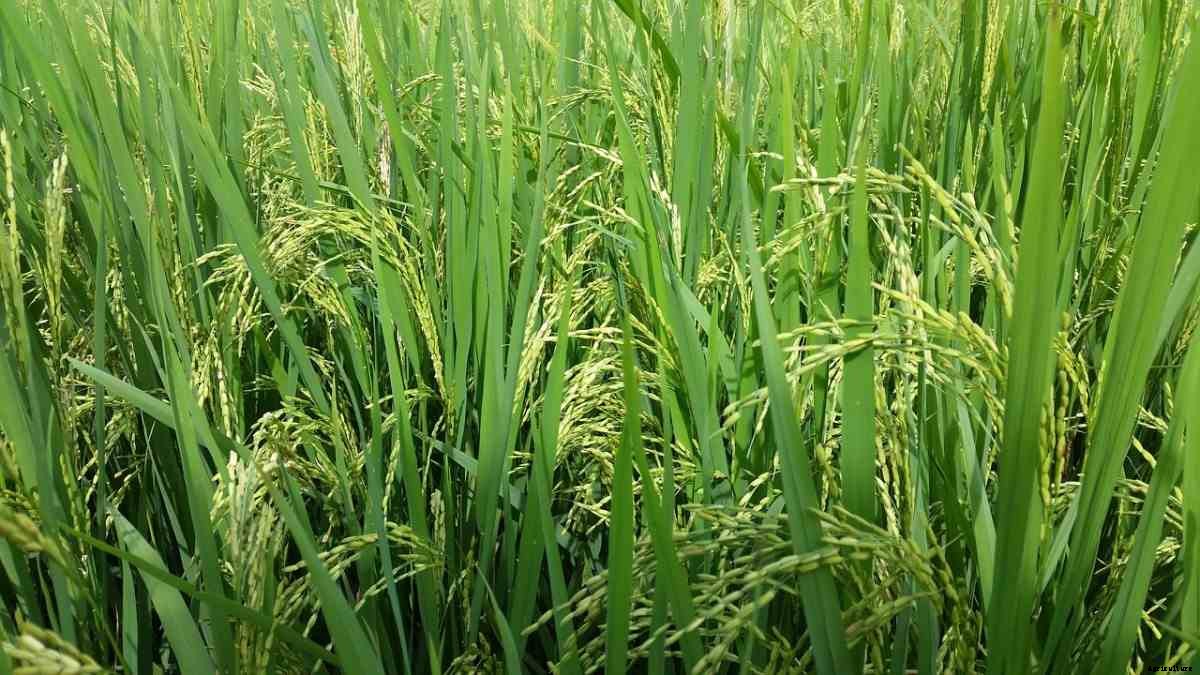 Irrigation Requirement for SRI Rice Cultivation (image source: pixabay)
- Water management is one of the critical steps in the SRI method.
- Plants with truncated roots cannot access the residual soil moisture in lower horizons that is accessible to plants that have large and functioning roots systems to keep their growth and productivity.
- Therefore, alternate wetting and drying are advocated.
- Irrigation to moist the soil in the early period of about 10 days.
- Increasing irrigation depth to about 5.0 cm after Panicle initiation one day after the disappearance of ponded water.
Weed Management in SRI Rice Cultivation
As there is no standing water in SRI Rice cultivation, weeds would be more. There are several advantages of turning the weeds into the soil by using an implement known as ‘weeder’. Use the weeder on the 10th and 20th day after the method of transplanting. Then, the weeding problem is addressed to a large extent with this effort.
Alternate wetting and drying in the SRI method result in excessive weed growth which if unchecked in time may cause an immense loss in yield. First, weeding is to be done 10 to 12 days after planting. Further weeding may be undertaken depending on the necessity at 10 to 15 days intervals until the crop reaches the panicle stage. Rotary weeding can be supplemented with 1 or 2 hand weeding’s to remove the weeds growing near the hills. The first benefit of using the weeder is the control of weeds and also adding organic matter to the soil. Then, this gives the benefits of cultivating a green manure crop. Also, the soil gets aerated and the roots are exposed to air. Then, this results in the profuse growth of diverse soil microorganisms which make nutrients available to the plant.
Controlling weeds is done through mechanical weeding. Frequent use of the mechanical weeder is ideal, up to 4 times starting at 10 days after transplanting and then repeated every 7 to 10 days until the canopy is closing. Mechanical weeding has multiple functions and benefits;
- Superficial tillage improves soil aeration
- As water, organic matter, and soils are mixed anew and then oxygenized through the weeding process, nutrients become better available to the plants. A re-greening effect of the plants can be observed 1 to 2 days after weeding.
- Redistribution of water across the plot through the weeding process. Then, eliminates water patches in lower laying areas in the field that create plants anaerobic conditions.
Pests and Diseases Management in SRI Rice Cultivation
The uniqueness of the SRI process lies in not using chemical pesticides and herbicides. Wider spacing and use of organic manures result in healthy plant growth and incidence of the pests and diseases are naturally low. The pests can be easily managed by using some organic concoctions as a preventive measure or as and when needed. Amrit Jalam is one such concoction.
Preparation of Amrit Jalam;
Required materials are
- Cow urine – One Liter
- Cow dung – One Kilo
- Jaggery (organic) – 250 grams
- Water (chlorine-free) – 10 liters
Preparation and Use – Firstly, mix all the above materials in a plastic container or an earthen pot. Let them ferment for 24 hours. Dilute this with water in the ratio of about 1:10. Filter the solution using a fine cloth. This can be used for spraying. Generally, Amrit Jalam can be stored for 30 days. Though, it has to be stirred daily. When urea is used, the plants grow succulently or easily susceptible to pests and diseases. When Amrit Jalam is sprayed, it not only gives nitrogen to the plants but also repels harmful insects and microorganisms.
Benefits of SRI in Paddy/Rice Cultivation
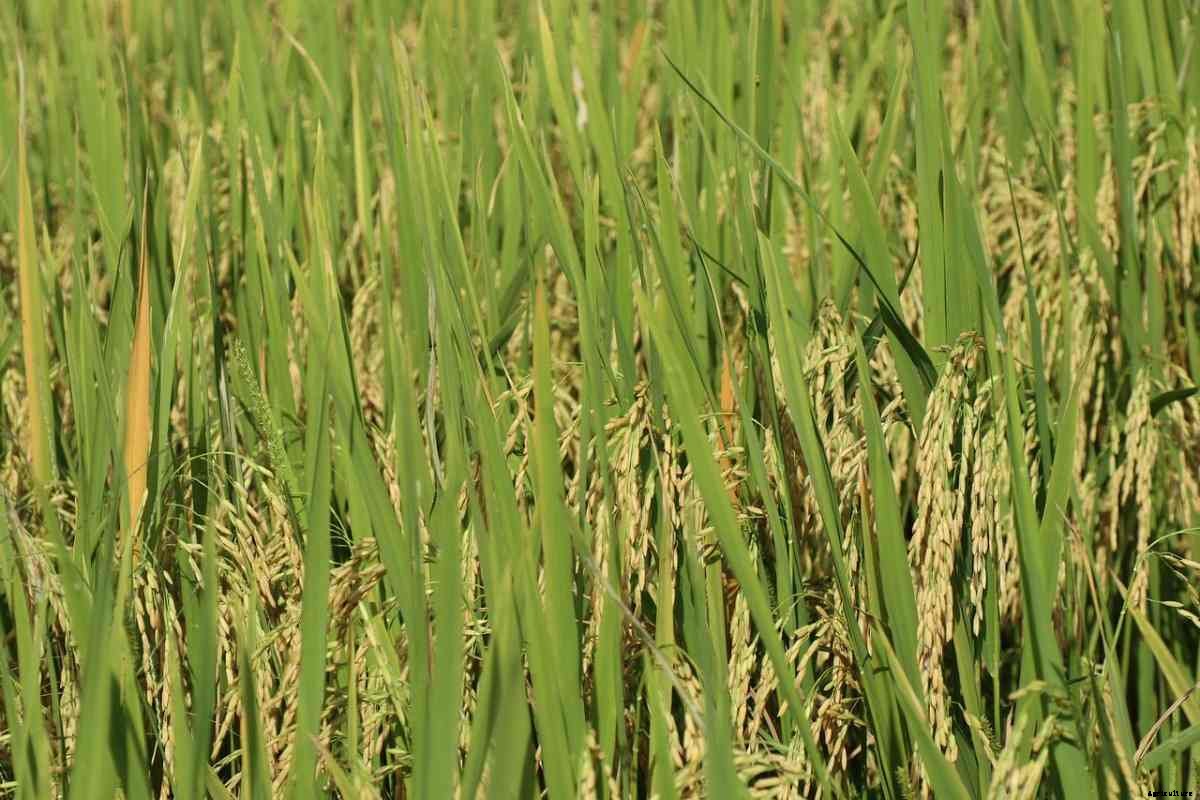 Benefits of SRI in Paddy/Rice Cultivation (pic source: pixabay)
The benefits of SRI in Rice cultivation have been demonstrated in over 60 countries. Some include 20 to 100% or more increased yields, up to a 90% reduction in required seed, and up to 50% water savings. SRI principles have been adapted for rain-fed rice with yield increases. Some of the advantages of SRI can be given below;
- Saving in Seed requirement-Single seedling is planted at wider spacing and seed requirement is only 7 to 8 kg per hectare. This is useful in the case of hybrids where seed cost is high.
- Reduction in the nursery area.
- Reduction in nursery duration.
- Less Lodging- SRI provides a good growth environment for rice plants that put forth stronger tillers and extensive root growth and is more resistant to lodging.
- Less incidence of pests and diseases – The incidence of pests and diseases is low in SRI Rice plants.
- Reduced chemicals fertilizer- Though chemical fertilizer increases the crop yield in SRI however resource-poor farmers still can apply the locally available organic manures that still maintain higher yields while reducing the cost of externally purchased inputs.
- Increase grain Yield- Higher grain yields are associated with SRI than the conventional method.
- Reduced rodent damage in the field.
- Higher net profit.
Disadvantages of SRI method of paddy cultivation
- Higher labor costs in the initial years
- Difficulties in acquiring the necessary skills
- Not suitable when no irrigation source available


