
Welcome to Modern Agriculture!

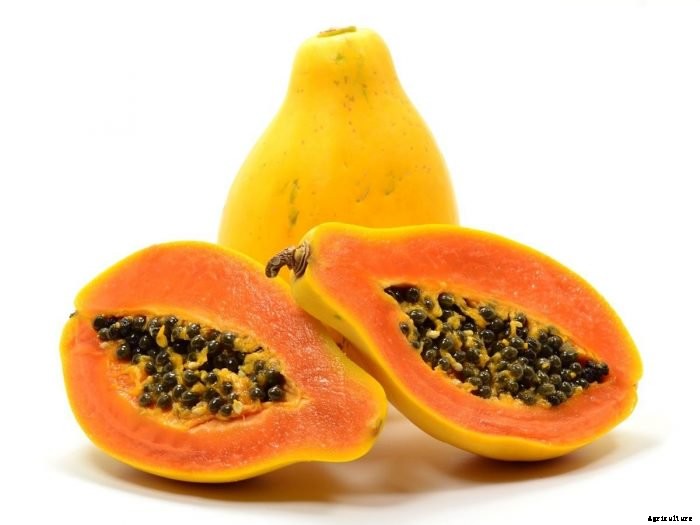
The papaya (Carica papaya) is one of the important delicious fruit crop grown in the tropical and subtropical parts of the world. It is originated in Mexico and spread to almost all the corners of the tropical world.
The papaya is highly productive and interesting crop. It is easy to grow as short duration crop. As a raw fruit, it is used in cooking and some preparations. Its latex is used as a papain in food and medicine industry. Ripe fruit is very delicious containing vitamin A and Carbohydrates.
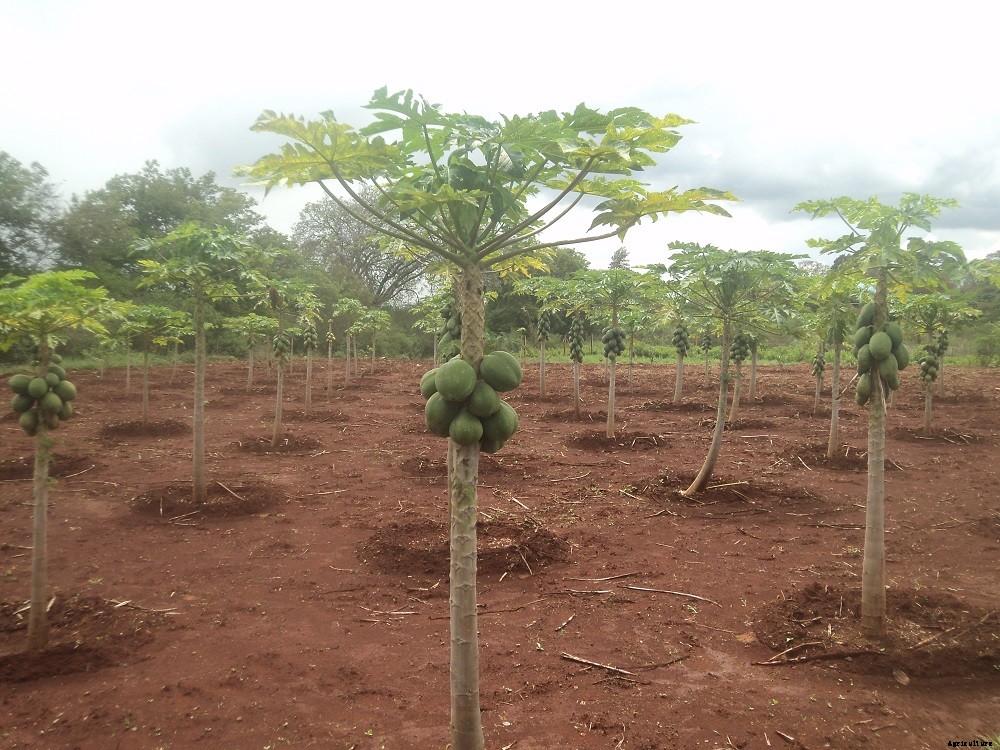
The papaya being tropical crop favours high temperature and high humidity. It is very susceptible to frost and hail storm. The long days are favourable for good quality and flavour. During flowering, high rains are injurious and cause heavy damage.
The papaya grows under wide types of soils. However, very shallow and very deep black soils are not suitable medium, fertile, well drained and lime free soils are preferred for papaya cultivation.
Commercially the papaya is propagated by seeds. The tissue culture technique is limited to research laboratories only. The seeds loose viability in a short period and therefore the seeds should not be stored for more than a season. The seedlings in polybags are prepared. Due care is taken to avoid damping off of the newly germinated and young seedlings. The seedlings become ready for transplanting within 6-8 weeks.
Planting is done during the flowering seasons:
Spring season (February-March)
Monsoon season (June-July)
Autumn season (October-November)
Heavy rains, hot air, frost, etc are considered while selecting the season for planting in a particular area. The pits of 30 x 30 x 30 are prepared in already selected and prepared field at the distance of 2.5 to 3 meters distance. The pits are fitted with well-decomposed FYM and NPK mixtures. A care is taken not to disturb the roots while transplanting the seedlings.
Interculturing is mainly done to remove the weeds during the early period of growth, weeding and hoeing in between rows also favour better aeration to root zone. Some times pre-emerging weed killer like Basalin is used. Secondly, roughing is done to remove extra plants, weak plants and affected plants. After ensuring one plant per pit, earthing up is done 30 cm in radius around the plants.
Planting of 3 to 4 seedling at one pit and then removing extra plants and keeping one plant per pit while doing so 10 percent male plants are kept in female plant population to have pollination and to improve the fruit
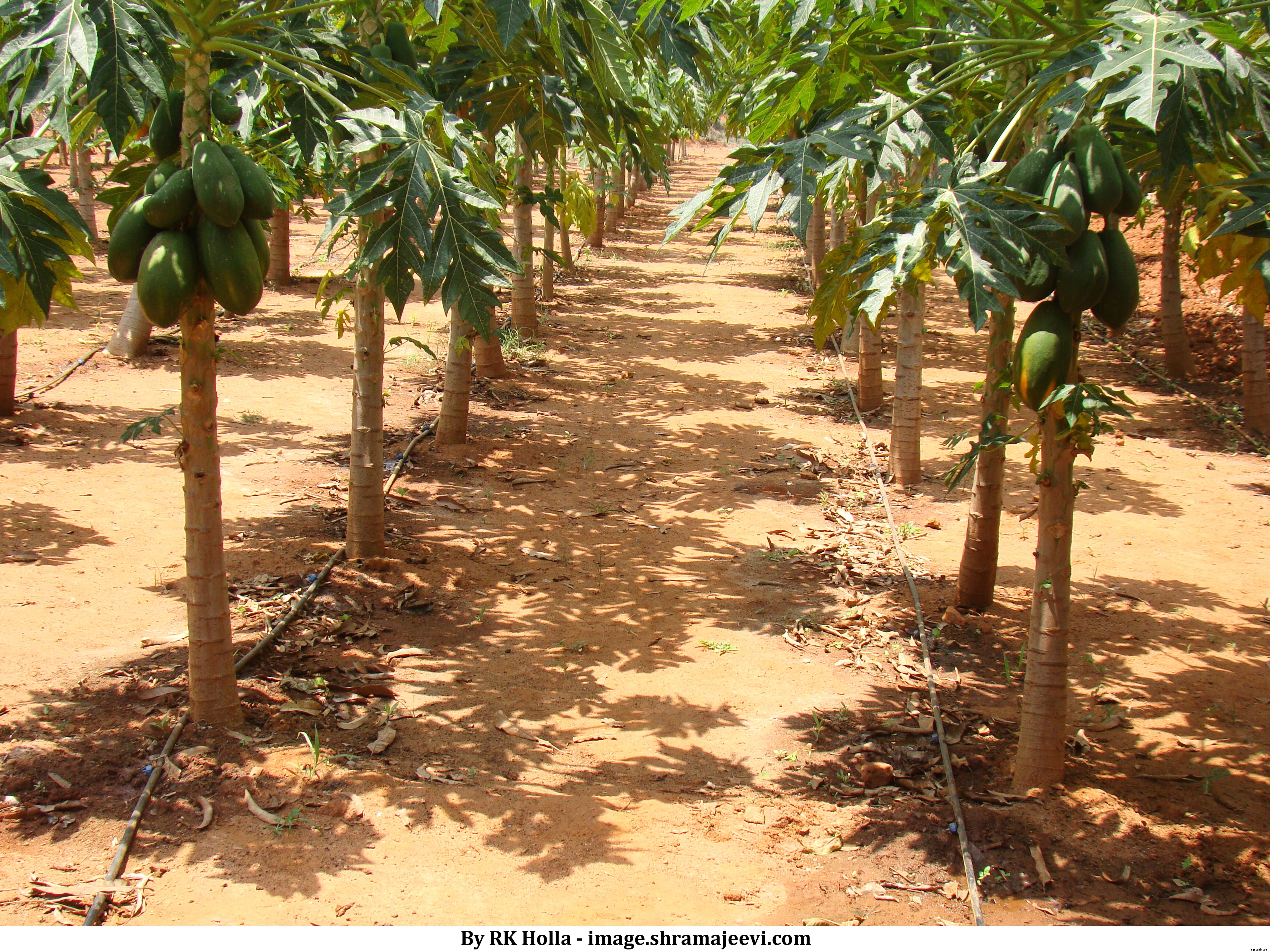
For better growth, production and quality, the optimum soil moisture is maintained by irrigating the crop judiciously. Irrigation interval well depend on season, crop growth and soil type. In no case, water should be allowed to stagnate causing root and stem rot. Drip system of irrigation is beneficial and the actual quantity of water to be given per plant per day should be worked out critically.
The papaya is a very feeder and requires the application of chemical, organic and biofertilisers. The dose of NPK @ 500 kg each per ha, along with 20-25 tonnes of FYM 50 to 100 kg of ormichemi mirconutrients and ultrazyme sea weed extract granules. 25 kg is found for a crop of about 50 tonnes within 18-20 months. Additional 60% of this dose is again applied for the second flush.
The papaya is susceptible for virus disease, which are spread through insect vector. The rouging off is strictly followed to avoid further spread of the disease, in addition the insecticidal sprays are taken against aphids, white flies and other sucking pests. Powder mildew, downy mildew and stem rot providing wind breaks, well drained conditions to soil avoiding planting papaya after papaya and following a suitable crop rotation keeping the field clean and weed free are some of the measures which will help to keep the papaya crop in good healthy condition
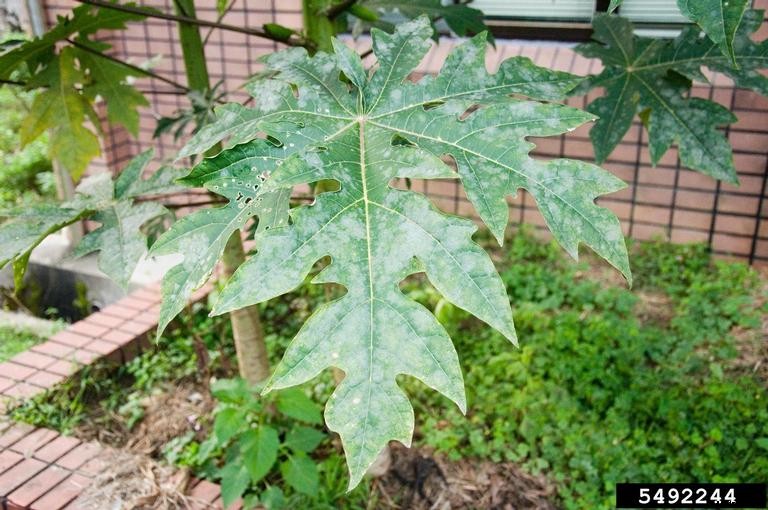
The development of powdery mildew in papaya is promoted by high humidity (80-85%) and a temperature range of 24-26 deg C. The disease appears as on the foliage and pods. Infection is first apparent on the leaves as small slightly darkened areas, which later become white powdery spots. These spots enlarge and cover the entire leaf area. Severely infected leaves may become chlorotic and distorted before falling. Affected fruits are small in size and malformed.
Control:As soon as the disease symptoms are observed dusting Sulphur (30 g/10 litres of water) or spraying Calixin 75 EC (5 ml/10 litres of water) at 15 days interval helps to control the disease.
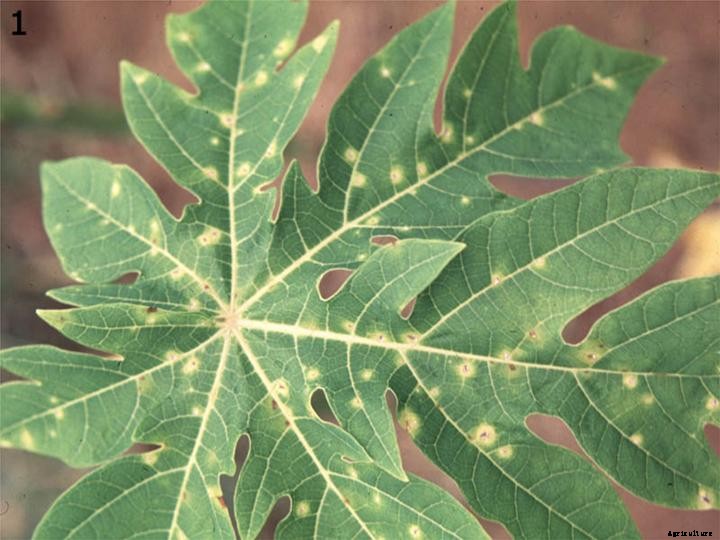
The disease causes severe damage to leaves. The disease first appears as small, discoloured lesions, which are irregularly scattered on the leaves. These spots become irregular in shape, then increase in size, and appear brown to grey in colour. A light yellow zone surrounds the spots. Several lesions coalesce to cover large areas of the leaf and in severe infections the whole leaf dies. A considerable reduction in the yield is observed.
Disease can be controlled by spraying of Dithane M-45 (0.2%) starting form the appearance of the disease symptoms.
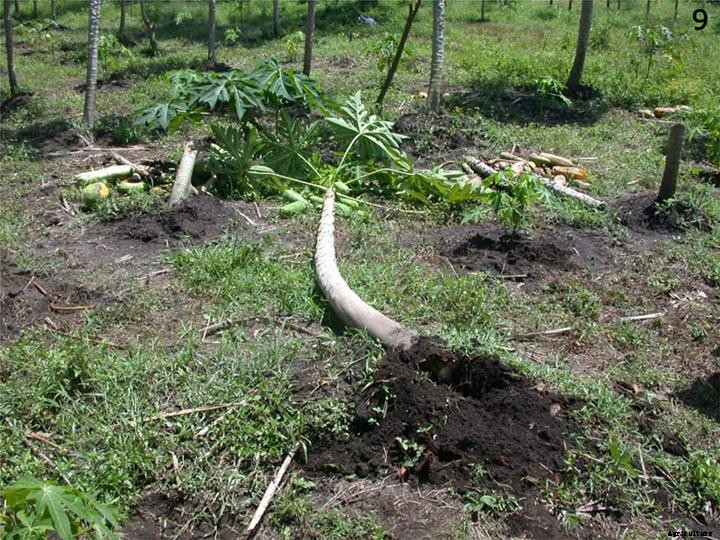
This is a disease of young seedlings. Lesions are seen on the stem at or just above soil level. The stem becomes watery and shrinks, followed by death of the plant.
Control:Well-drained soil should be used for planting and the crop should not be excessively irrigated. Before sowing the seeds should be treated with fungal culture of Trichoderma viride(3-4 g/kg of seed) or Captan (3 g/kg of seed) to protect the newly emerging seedlings.
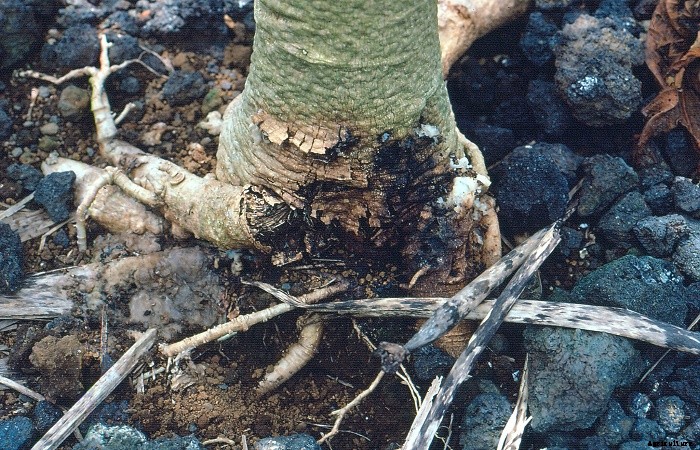
It is a severe disease of papaya. It is characterized by the appearance of water-soaked patches on the stem near the ground level. These patches enlarge rapidly and girdle the stem, causing rotting of the tissues, which then turn dark brown or black. Such affected plants withstand strong wind and topple over and die. If the disease attack is mild, only one side of the stem rots and the plants remain stunted. Fruit if formed are shriveled and malformed. Gradually the plant dies.
Control:Application of Trichoderma viride (15 g/plant) mixed in well-decomposed FYM should be applied around the root zone of the plants at the time of planting. The crop should be irrigated by adopting the ring method of irrigation so that the water does not come in direct contact with the stem. In the case of new plantings, preventing water logging of the soil may control the disease. The soil should be drenched with 2-3 litres of Copper Oxychloride (3 g per litre of water). The application should be carried out regularly at 15 days interval from the time of planting. During fruit formation, the plant should be sprayed with the same solution at the same time interval. Alternately, Mancozeb (2.5 g/ litre of water) may also be applied. In the case of disease attack in existing crops, the rotted portion of the plant should be scraped and Copper Oxychloride or Bordeaux paste should be applied. The paste can be prepared by dissolving one kg of Copper Sulphate and lime separately in ten litres of water each. The two solutions should be mixed and shaken to form a paste. The base of the plant should be drenched with three litres of Copper Oxychloride (3g/litre). The plant should be drenched during fruit formation with Copper Oxychloride or Mancozeb at the earlier mentioned concentrations twice at 15 days interval.
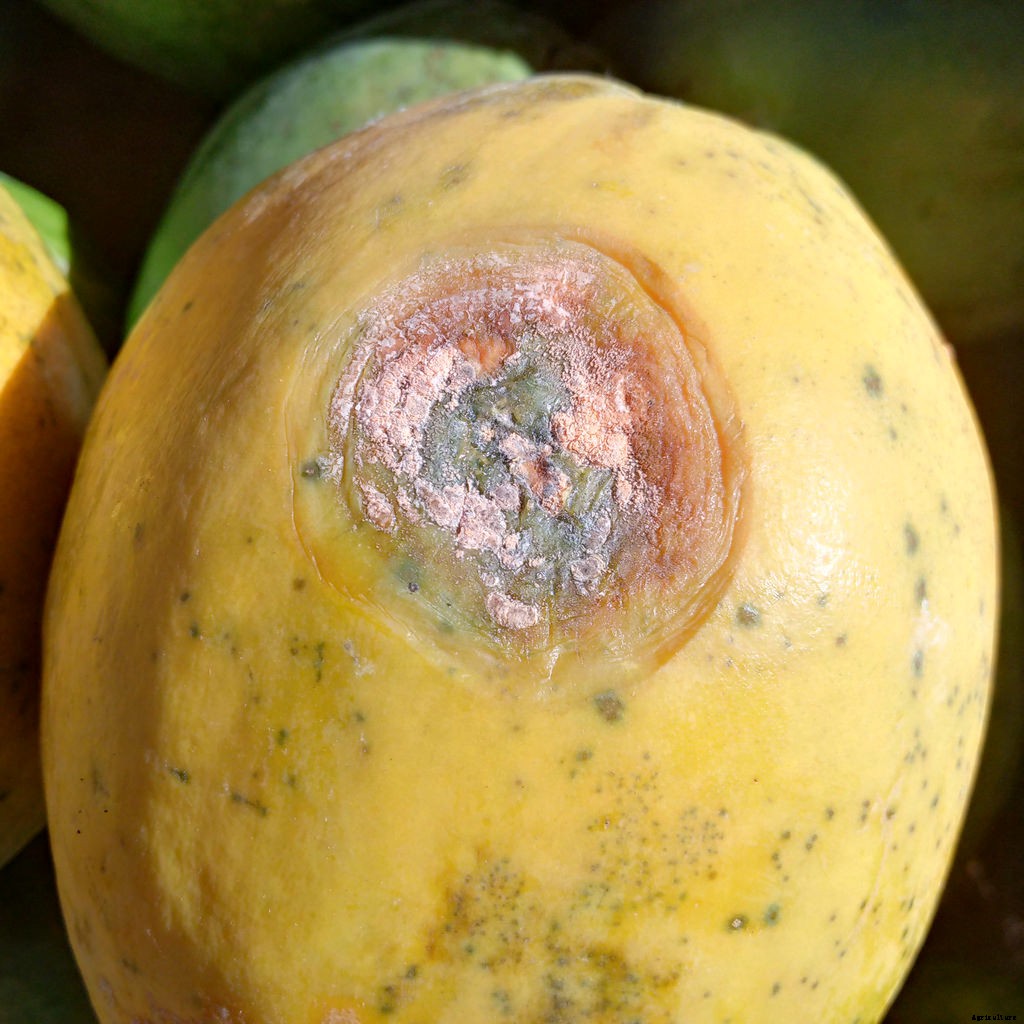
The disease prominently appears on green immature fruits. The disease symptoms are in the form of brown to black depressed spots on the fruits. The initial symptoms are water-soaked, sunken spots on the fruit. The centers of these spots later turn black and then pink when the fungus produces spores. The flesh beneath the spots becomes soft and watery, which spreads to the entire fruit. Small, irregular-shaped water-soaked spots on leaves may also be seen. These spots eventually turn brown. On the fruits, the symptoms appear only upon ripening and may not be apparent at the time of harvest. Brown sunken spots develop on the fruit surface, which later on enlarge to form water soaked lesions. The flesh beneath the affected portion becomes soft and begins to rot.
Control: The affected fruits should be remove and destroyed. The fruits should be harvested as soon as they mature. Spaying with Copper Oxychloride (3 g/litre of water) or Carbendazim (1 g/litre of water) or Thiophanate Methyl (1 g/litre of water) at 15 days interval effectively controls the disease. Fruits for exports should be subjected to hot water treatment or a fungicidal wax treatment.
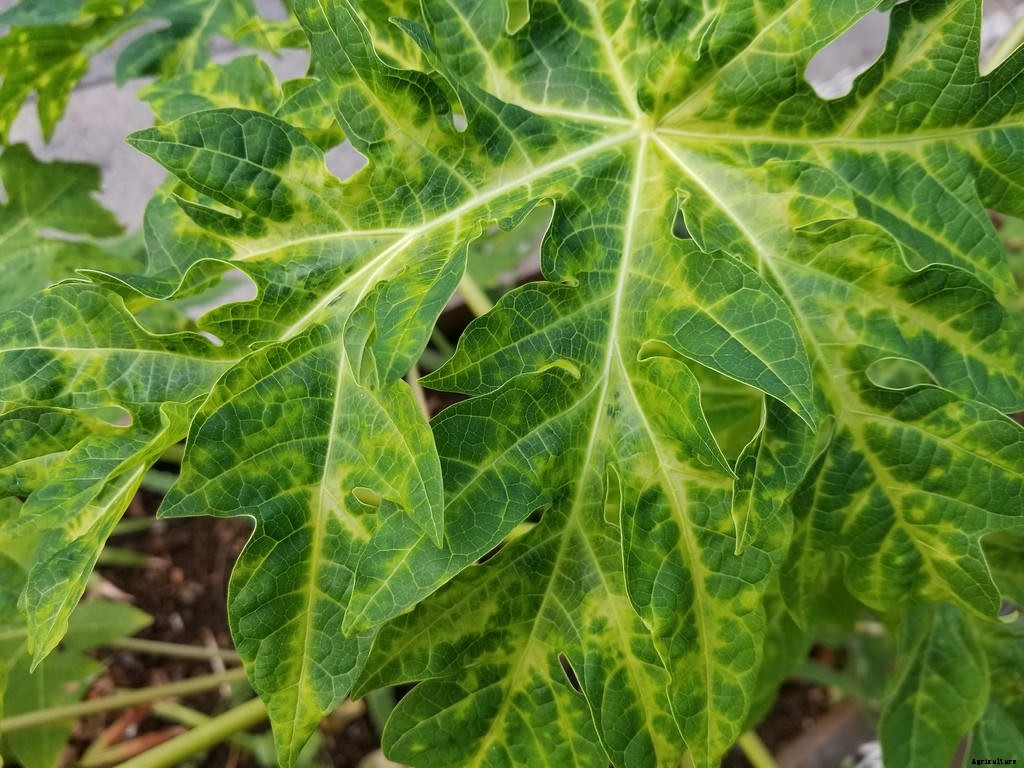
The disease attacks the papaya plants of all age groups, but is most serious on young plants. The aphids are responsible for transmitting the disease. The disease symptoms appear on the top young leaves of the plants. The leaves are reduced in size and show blister like patches of dark-green tissue, alternating with yellowish-green lamina. The leaf petiole is reduced in length and the top leaves assume an upright position. The infected plants show a marked reduction in growth. The fruits borne on disease plants develop water soaked lesions with a central solid spot. Such fruits are elongated and reduced in size.
Control:Good field sanitation such as removal and destruction of affected plant reduce the spread of the disease. Also, losses can be minimised controlling the population of aphid. Application of Carbofuran (1 kg a.i./ha) at the time of sowing seeds followed by 2-3 foliar sprays of Phosphamidon (0.05%) at an interval of 10 days starting from 15-20 days after sowing effectively checks the population of aphids.
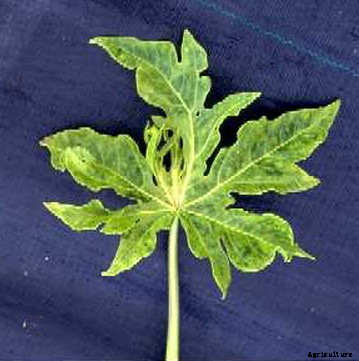
The disease is transmitted by the vector white fly (Bemisia tabaci). Severe curling, crinkling and deformation of the leaves characterize the disease. Mostly the young leaves are affected. Apart from curling the leaves also exhibit vein clearing and thickening of the veins. Sometimes the petioles are twisted. In severe cases complete defoliation of the affected plant is observed. The affected plants show a stunted growth with reduce fruit yield.
Control:Removal and destruction of the affected plants is the only control measure to reduce the spread of the disease. Checking the population of white flies also can reduce the infection severity. Soil application of Carbofuran (1 kg a.i./ha) at the time of sowing and 4-5 foliar sprays of Dimethoate (0.05%) or Metasystox (0.02%) or Nuvacron (0.05% ) at an interval of 10 days effectively controls the whitefly population.
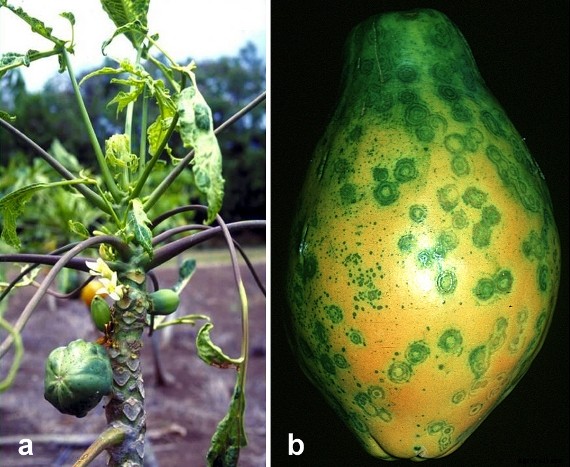
The virus is spread from plant to plant by aphids. The earliest symptoms on papaya are a yellowing and vein-clearing of the young leaves. This is followed by a very conspicuous yellow mottling of the leaves and sometimes severe blistering and leaf distortion. Dark-green streaks and rings also appear in the leafstalks and stems. The disease derives its name from the striking symptoms that develop on fruit. These consist of concentric rings and spots or C-shaped markings, a darker green than the background-green fruit colour. Symptoms persist on the ripe fruit as darker orange-brown rings. Vigour of trees and fruit set is usually reduced depending on the age of the plant when infected. Fruit quality, particularly flavour, is also adversely affected.
Control:Early detection of infected plants and prompt removal can check the spread of the disease. Aphids can be controlled by application of Carbofuran (1 kg a.i./ha) in the nursery bed at the time of sowing seeds followed by 2-3 foliar sprays of Phosphamidon (0.05%) at an interval of 10 days starting from 15-20 days after sowing.
Usually the fruits are harvested when they are full size, light green with a tinge of yellow at epical end. When the latex ceases to be milky and become watery the fruits are considered suitable for harvesting. First picking may start at 14/15 months after planting. Three to five pickings for one season are often taken fetching about 30-35 tonnes per hectare. Suitable grading must be done before packaging. Since the fruits are highly perishable, care should be taken to wrap the individual in paper and finally packed in crates.
Papain production: Crude papain in flakes or powder, crude papain white brown, spray dried crude papain are the three types of papain extracted from raw-mature papaya fruits. About 8-10gm of final produce can be obtained from a well-developed fruit weighing about 2 kg. Tapping may be done 2/3 times preferably during cool hours. The fruits after latexing can be used as a table fruit or for preparing fruity or jams etc.


