
Welcome to Modern Agriculture!

Today let us discuss Sorghum-Sudangrass cultivation for dairy animals, goats, sheep, and other livestock.
Sorghum-sudangrass is a cover crop which grows very rapidly with the help of a root system which covers a larger area making them survive hot summers. This grass masters in weed suppressing. The name of Sorghum-sudangrass is taken from a fact that it is a hybrid and also across in between sorghums which are grown for forage and sudangrass which is a particular type of grass whose native is East Africa. Sorghum-sudangrass will have good growth in the United States of America. For the growth of Sorghum-sudangrass, the temperature of soil should be 21°C for at least 60 days prior to frost. This crop is tolerant to drought in an extreme way once its establishment is done, but there is no need for rain or watering at its early stage of growth.
Sudangrass Scientific Name: Sorghum × drummondii.
The hybrids of the Sorghum-sudangrass will help in the production of forage dry matter whenever there is an emergency. These grasses are season grasses which are warm and this makes them unique in the forage species which are mostly the grasses of the cool season. The hybrid which is resulting will be advantageous to plant, so make sure to bring a discussion in your needs from the salesperson of seeds. Sorghums are well-known for their resistance to drought.
They are even more efficient in the absorption of water as they have two times as of the secondary roots for one unit of the primary root as the corn and will have only half of the area of the leaf as the corn for the purpose of evaporation. The water requirements of the hybrids of sorghum-sudangrass are similar to corn but they have the capability to be dormant at the time of the drought periods which are extended. The growth of the grass will start as soon as the rains start.
The yield of Sorghum-sudangrass is somewhat less than the corn when the harvest is done for the sake of silage, but the advantage which the sorghum-sudangrass have is that they can be harvested for at least 3 times at the time of season and they can also be stored as both the silage which is chopped and bale silage, which is wrapped. Corn silage will produce a number of tonnes for each hectare but this has to be harvested at the time of fall with the equipment which is made especially for harvesting forage. Sorghum-sudangrasse can be harvested by using a strip grazing system.
The sorghum-sudangrass are more versatile than that of corn for the sake of harvesting. In order to take a decision in between sorghum-sudangrass and the other yearly forages, you need to check with the harvesting equipment available and the immediate forage need.
There are three types of forage at present.
Forage Sorghum: The forage sorghum will have the stems which are sweet and juicy. Their production will be less than the ones of the Sudan grass and their regrowth will also be very slow. They would be selected for harvesting once. A grain sorghum hybrid has to be harvested when it is like a soft dough to get the maximum production of forage.
Sudangrass: Sudan grass is a leafy plant which has fine stems. Its regrowth will be rapid. This is mainly used for pasture or in the systems where multiple cutting is involved. In a system which involves one cut, yields will be lower than that of the Sorghum. The quality of forage will be more because of the less content of fibre if cutting is done often.
Sorghum-sudangrass: These grasses have stems which are large in size and have fewer leaves compared to Sudan grass. But as per our climatic conditions, these are best in performance.
Note:
Sorghum family will consist of dhurin which is a glucoside. The breaking down of glucoside will release hydrocyanic acid which is also called prussic acid. When there is a growth disruption which occurs suddenly in the form of drought, frost or cutting, the release of prussic acid takes place inside of the plant very quickly. If the levels of prussic acid are high, then it may be very harmful to the cattle as it may lead to death. The breakdown of prussic acid will take place once in two weeks, so the material which is made as hay can be used as it is considered safe.
These season grass which is warm have to be planted in soil which is warm, that means the planting has to be delayed till the last week of May or the first week of June. The rate of seeding of 15 kilograms per hectare needs to be planted 3 cm deep in 20 to 36 cms rows. If the seedbed seems to be dry, then packing is mandatory.
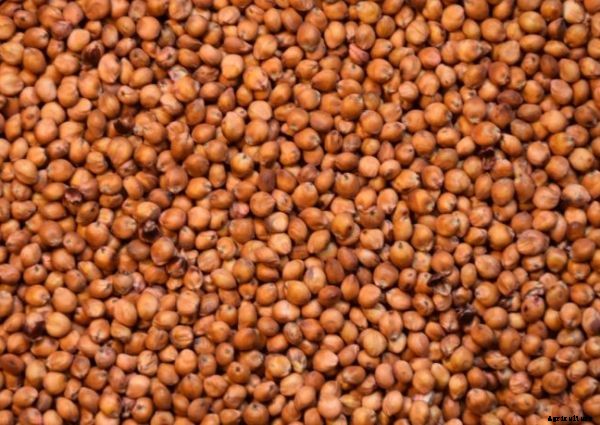
Plantation of Sorghum-sudangrass can be done with the mixtures of the cover crop like buckwheat or with legumes like sesbania, forage soybeans. These cover crops which have large seeds should be broadcasted with sorghum-sudangrass and incorporated to a depth of one inch. The Buckwheat which germinates rapidly will help in the suppression of weed in the early stages. Sorghum-sudangrass will offer support to sesbania, cowpeas.
The nutrients which are used for corn for the sake of fertilizing have to be used for sorghum family too. This includes 125 kilograms per hectare of nitrogen should be applied at the time of plantation. After each and every cut, 52 kilograms per hectare more of nitrogen has to be applied for the encouragement of growth. Sorghum-sudangrasses can also grow when the pH range is wide that is between 5.5 to 7.5 being an optimum one.
When the growing conditions are good, then the competition which arrives from the plants will check the weeds. There are no particular herbicides or fertilizers which have been officially announced for the sake of these hybrids particularly.
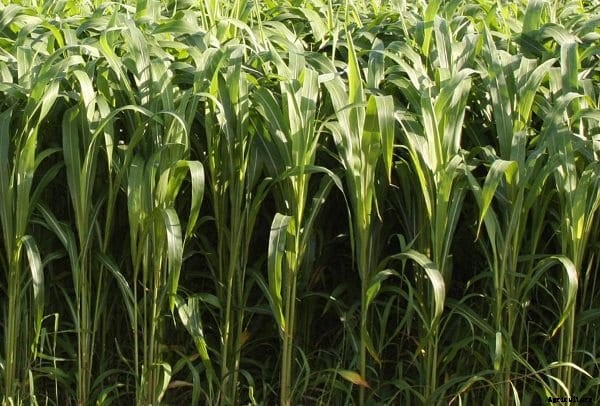
Pasteurization of sorghum-sudangrass can be done, but the livestock or cattle should not get into the place of yield before the plants reach a height of 50 cms. The damage caused due to trampling will be high unless and until a strip or a system of rotational grazing is put in use. When the plants reach a height of 50 cms by the middle of summer and become resistant to drought, this grass can be used as a feed at the time of summer.
The hybrids of sorghum-sudangrass will be fitted best in the feeling programs of summer. These have stems which are thick and are very difficult to dry for hay but these will be able to supply good yields of silage, pasture and green chop when the perennial grasses slow down or when they are becoming dormant. As soon as the sorghum-sudangrass starts heading out, the quality of the crop and the value of feeding will fall in a drastic way. It is very hard to meet the requirements of nutrients to get great production or prior lactation milking cows when Sorghum-sudangrass is a major part of the intake of forage. It is most suitable as rations for dry cows, as a replacement for heifers over 1 year of age, beef cows.
As the crop is matured, the content of protein will decrease quickly and the level of fibres will increase. This would decrease the energy value of feed and the digestibility of rumen. If the levels of NDF are high, then they will raise the feedS bulkiness and will decrease the potential to take dry matter. Sorghum-sudangrass consists of protein as of alfalfa which is mature, but the harvest should be done at a vegetative stage. The levels of energy at the vegetative stage will be the same as corn and greater than alfalfa. The forage of sorghum-sudangrass should be sampled and tests have to be undergone for the composition of feed as there would be changes in the value of nutrients.
The poisoning which is caused by prussic acid is a major concern when feeding the hybrids of sorghum, sorghum-sudangrass or sudangrass. These are the species which consists of varying quantities of cyanogenic glucosides. In the rumen, the conversion of these components into prussic acid takes place. And this would be absorbed into the blood. Due to this, there would be high levels of prussic acid in the blood and these will cause interference in the respiration. This makes the cattle die due to paralysis caused by respiration.
Horses should never graze on these plants as they have a chance of developing cystitis syndrome. This condition will seem like colic with urine which is of blood and is fatal for horses. The animals which are affected will show the symptoms of staggering and dribbling of urine. The mares which are pregnant will abort. Treatment is not available for prussic acid poisoning and there are no chances for recovery.
Few species or varieties of sorghum-sudangrass will have fewer levels of cyanogenic glucosides.
For example, you can consider Piper sudangrass.
You can follow the below practices of management to decrease the risk caused by prussic acid poisoning.
Poisoning of nitrate and then the formation of silo gas which is poisonous is a major problem with sorghum-sudangrass. The nitrate levels which are high is a problem in growing conditions which are abnormal like;
Fertilization of high nitrogen which is caused due to heavy applications of manure or fertilizers.
Under these circumstances, the plants will start accumulating very high levels of nitrates. When the animals will consume these plants, the conversion of nitrates to nitrites is done quickly which are then absorbed into the blood. The nitrite which is present in the blood will undergo alternation in the same way as the oxygen is carried by the blood. This will cause quick breathing, fast heartbeat which is weak, tremors in muscles, staggering and finally death if the steps for correction are not taken. The similar precautions for the poisoning caused by prussic acid will help in the prevention of poisoning caused by nitrate.
The levels of nitrate which are high will be present in forages cut for the sake of hay but will get decreased by half of the percentage when it is ensiled for one to two months. When the ensiling of high nitrate forage is done, nitrogen dioxide gas which is deadly will be produced in a few hours which would be a big concern for another twenty days. This is the gas which reaches the levels of lethal in the silo as soon as it gets filled. This gas is heavier when compared to air, so it gets settled in the lower points in the pack of silage and at the base of the silo in the feed rooms. The gas can be seen as a yellowish-brown haze surrounding the base of the silo and has an odour which is like bleach. If you have to enter the silo for covering silage, you need to do it as soon as you fill and leave the blower in a stage of running while checking if there is anyone in the silo.
If you have a doubt that there is a high content of nitrates in forage, you need to test it by approaching a laboratory which tests forages and doesn’t enter the silo for a minimum of 20 days after ensiling is done.
Though sorghum-sudangrass cultivation has these problems, it is a great forage in case of emergency for the climates of summer. The quality of sorghum-sudangrass is variable and depends on sudangrass cultivation practices, and its value of feeding is more suitable to the low producers, replacements of the heifer and dry cows. This will provide a source of feed which would work as an alternative in the months of summer when the current pastures produce less or this may also work as a supplement of feed which is valuable till the other forages are ready to be used as feed. Along with all the annual forages, the establishment costs of tillage, fertilizer and seed should be returned at the time of production in the first year rather than over the entire lifetime of a perennial forage. This will make the annual forages a costly source of feed than the perennial ones. They are used at the time of shortage of feed, and for other needs.
Read: Growing Pearl Millet, Cultivation Practices.


