Introduction To Drip Irrigation System
Drip Irrigation System is a type of micro-irrigation method, which allows slow application of water to the soil consistently over a longer period of time. Using this technique there is even application of water under low pressure to all the plants in the field. Also, it is worth mentioning that Drip Irrigation can be used for plants that need high or low water content. This system of irrigation is also called ‘trickle’ system of irrigation. The efficiency of the Drip Irrigation is because of two main factors; the water supplied to the roots of the plant soak into it before evaporation or run-off and also the water is supplied only to the roots rather than spraying all over the fields. This technique is used for almost all types of vegetable and horticulture crops. The modern Drip Irrigation system was developed in Germany and spread to the rest of the world. It has already been established very well in developed countries, but now it is slowly gaining importance in India. It should be clearly understood that like any other method or technique, this system too has its own advantages and disadvantages.
Advantages of Drip Irrigation system
- This system needs 30-50% less water than the original conventional form of irrigation.
- Slow, consistent and extended period of irrigation helps in improving the plant growth.
- Since water is supplied only to the roots, it discourages the growth of weeds around the plants.
- A timer set on the Drip Irrigation system can save time from irrigating the plants manually because the timer automatically triggers watering and indicates when done.
- Due to sufficient watering, too much water in the farmland can be avoided thereby controlling the spread of diseases from the wet foliage.
- The system is very flexible and can be modified according to the need of the farm.
- When deployed in the farm, this system requires less labour for irrigation, weeding and other activities.
- Loss of fertilizers is minimized.
- The salinity of water is reduced due to a constant supply of water.
- The systems are generally gravity operated and require less energy for operation.
- Pressure required to supply water through drippers is not very high.
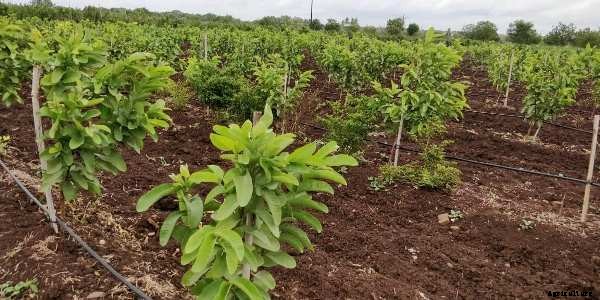 Drip Irrigation In Guava Plantation.
Need for Drip Irrigation
The main purpose of Drip Irrigation systems is to use water as efficiently as possible. It is believed that a properly designed Drip Irrigation system doesn’t allow loss of water due to run-off, evaporation or deep percolation in sandy soils. As it is known very clearly that the availability of water resources is decreasing each day due to industrialization and less rainfall, the need to increase alternate sources of irrigation has become highly essential. The micro-irrigation methods have helped farmers cultivate crops in areas of less rainfall and low water availability. This is important to maintain self-sufficiency in the food produce. The network of pipes and tubes supply water to the essential parts of the plant, thereby helping in higher yield from plants, which is very important for higher productivity and income generation.
Considerations for the design of Drip Irrigation system
In designing an effective and efficient Drip Irrigation system, the following factors have to be carefully considered.
- Availability of resources
- Weather of the location
- Type of crop and management practices
- Soil characteristics
- Quality of water
- Capacity of the Drip Irrigation system
- The rate of water supply needed for the plants
- Interval between irrigation cycles
- Emitter selection
- Laterals design
- Mainline design
- Selection of pump and power unit
- Other general factors
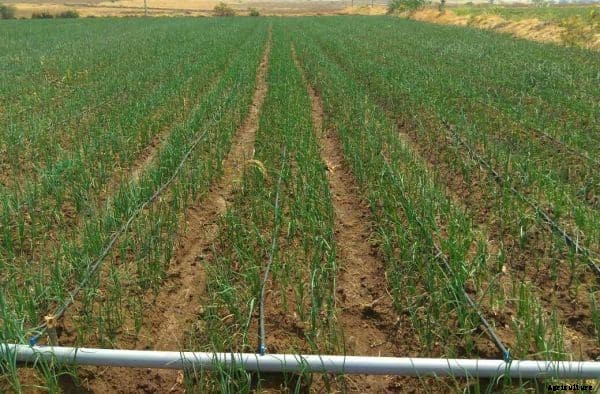 Drip Irrigation for Onion crop.
Components of a Drip Irrigation system
Many parts integrated together form the entire Drip Irrigation system. Additional components can be added or excluded depending on the need of the farmer. A basic Drip Irrigation system consists of a water supply unit, pumping unit, mainline, laterals and emitters. Other secondary components used to design the system are filters, pressure regulators, valves, Fertigation unit, etc. The main unit, also called the head control unit has a pumping unit, filtration unit, fertilizer unit, gate valve, bypass assembly, pressure gauges and air release valves. All these are housed together into a single concrete structure. The pipes used in the main control unit are made of Galvanized Iron. The purpose of each component is described below:
Filters
A filter should be chosen depending on the flow path in the emitter, quality of water and flow in the main line. Generally for large requirements a combination of filters connected in parallel could also be used. There are mainly four types of filters available in different sizes for filtration process:
- Screen filter– it is either made of plastic or metal; flow rates may vary from 1 to 40 m³/ hr. This is used for water with light, inorganic impurities. This is also called surface filter.
- Sand filter – it is made of M.S metal and is similar to screen filter. It is generally used for water, which has suspended particles and organic impurities. The media used in the filter is either sand or gravel and sometimes it is referred to as depth filter.
- Disc filter – made of plastic having round discs with micro water paths. The filter is a combination of surface and depth filters.
- Hydro cyclone filter – the filter is made of metal and has a conical shaped cylinder producing centrifugal action to remove settled impurities. Generally used to filter sandy water.
Main lines
- They carry water from the filtration system to the submain.
- Generally made of rigid PVC pipes.
- They are placed 60 cm below the ground to prevent damage due to intercultural activities.
- The diameter of the pipe is determined by the flow capacity of the system.
- Installation is done in such a way that pipe with larger diameter is connected first, followed by pipes with smaller diameter.
Submain
- Supplies water from the main line to the laterals.
- These are also buried 45 to 60 cm below the ground.
- They are made of PVC material.
- These pipes have a smaller diameter than the main line.
- Depending on the plot size and crop type, there is a possibility to have many submain pipes.
Laterals
- They supply water to the emitter.
- These pipes are smaller in diameter, flexible and made of low density polyethylene.
- The normal diameter of the pipes is around 12-16 mm.
- Pipes can withstand a pressure of 4 kg cm².
- The laterals are connected to the submain at a calculated distance.
- The ends of the laterals should not have a pressure difference of more than 20% and a discharge difference of more than 10%.
Emitters or drippers
- This device carries water to the root of the plants.
- The size depends on the type and condition of operation.
- Made of plastic (polyethylene or polypropylene).
- The average discharge range is in between 1 to 16 l/hr.
- There are two types of drippers such as pressure compensating and non-pressure compensating.
- These are fitted in the laterals or connected externally to the laterals.
Control valves
- Control the flow of water through the submain pipes.
- Installed on the filtration system, mainline or submains.
- Made of PVC, cast iron or gun metal.
- The minimum size of the valve ranges around 20 mm.
Flush valve
- Provided at the end of submain to remove water and dirt.
Air release valve
- Removes entrapped air during the start of the system and also breaks the vacuum during shut off.
- It is connected at a higher point in the mainline.
Non-return valve
- It is used to stop the back flow of water from the main line.
Pressure gauge
- Indicates the pressure of the operating system.
- They are installed at the inlet and outlet of the screen filters.
Grommet
- Connect the laterals to the submain.
- A hole is made in the submain and grommet is fixed into it.
- This actually acts as a seal between the laterals and submains.
- The average size of the grommet is suited for 12 or 16 mm laterals.
End cap
- Used to close the ends of mainline, submain, laterals.
- The end caps are fitted with flush valve for main line and submain pipes.
Tube fittings
- Generally in the form of ‘T’, couplings and adapters.
- They are made of plastic.
- They are used to connect the drip tube with other tubes.
- Holes made by mistake are rectified using goof plugs.
- The fittings of the barb type fit into the drip tube, but wear off too early due to sunlight.
Fertilizer system
- This system is used to mix fertilizers, pesticides, manure, etc. in Fertigation process.
- This system should be carefully designed to prevent backflow of water otherwise, these chemicals may travel back to the source.
- The choice of fertilizers should be made wisely otherwise they may block the emitters and other parts very frequently.
Pump station
- Takes the water from the source and distributes it to the mainline at a proper pressure.
Double check system
- Checks for leaks, flow direction and flooding into the system.
Types of Drip Irrigation system
The type of drip system depends on the amount of water that has to be discharged to the plants. There is a possibility of having small sprinkler parts or flexible tubes to drip water into the plant base. Some types of systems are:
Porous soaker hose systems
- Generally used for hedges, rows of shrubs and garden beds.
- Made of recycled automobile tyres having numerous tiny holes.
- Very durable in nature.
- They sweat water along the entire length.
Emitter drip systems
- Contains no. of hoses throughout the farm.
- Each hose has many emitters with a spacing of 15 inches.
- They are good for farms with shrubs.
- They tend to clog easily.
- To protect the hose, it should be stored inside during winter season.
Watermatic drip system
- One of the most important types of Drip Irrigation system.
- Minimizes evaporation and achieves water conservation; so used in areas with less water availability.
- Uses micro spray heads.
- Generally used for trees and flower beds.
Micro misting sprinklers
- Generally used for vineyards and orchards.
- Supplies water directly to the roots and keeps them cool; also refreshes the produce from the plants.
- Not used when herbicides are to be used in the sprinkler system.
- They are inexpensive to install.
Common mistakes while installing the Drip Irrigation system
Some mistakes happen while installing the system such as:
- Not installing enough drippers
- Not installing at least 2 drippers per plant
- Spacing between drippers being large around 18’’
- Placing emitters very close or increasing the rate of the emitter
- Providing large trees with less drippers
- Not monitoring the leaks or flooding within the farm
Disinfecting or cleaning the Drip Irrigation system
The Drip Irrigation system is a mechanical assembly of many parts, which needs proper maintenance on a regular basis to have a long performance life. Due to variations in the water content or dissolved fertilizers there could be blocks in the system on a long run, which adversely affect the system functioning. There are some general cleaning and maintenance methods followed to help the drip irrigators function efficiently.
Acid treatment
When the system is clogged with low soluble salts like calcium carbonate, then acid is injected into the system to reduce clogging. Acids like hydrochloric acid (33%) or phosphoric acid (95%) are used to declog the systems. Steps involved in the process are:
- When the discharge of the Drip Irrigation system drops to 5% of the original rate then this treatment should be carried out.
- The submains and the laterals should be thoroughly flushed before this treatment.
- Keep a record of the discharge rate before the treatment so that it can be compared with the discharge rate after the treatment.
- The solution should be prepared such that acid is added to water and not vice versa.
- The quantity of the solution being prepared should be determined on the basis of capacity and type of the system.
- The quantity of the solution should be one quarter of the hourly discharge from the system so that it can last for 15 min.
- It should be started only after the system is filled with water and the drippers are emitting.
- Check the pH of the residual acid at the last lateral and apply the solution a second time if no residual acid is found.
- To completely flush the system, this treatment should last for 30-60 minutes.
- At the end check the discharge rate of the system.
Lateral flushing
The debris within the drip lines is cleaned using this method otherwise it would clog the inlet and labyrinth. Flushing should be done at least once in 2 or 3 weeks. To do this the end of the lateral is opened and water is flushed for some time until the outgoing water is clear. The water is flushed with a flushing submain to reduce manual labour and maintain frequent flushing.
Chlorination
Chlorine is used to kill microorganisms, bacteria and algae. Injection of chlorine into the Drip Irrigation lines keeps them clog free. This treatment is mostly preferred by systems that use organic materials as fertilizers. The compound of chlorine that is used for this treatment is sodium hypochlorite (12%). The treatment process should be as follows:
- The required dose, frequency and duration should be known before the treatment process.
- The pH of water should be around 6.5 to get effective chlorine treatment; pH of water beyond 7.5 can reduce its effectiveness.
- Minimum time of the treatment should be around 30 minutes.
- The active free chlorine concentration or residual chlorine is to be measured.
- The laterals and submains are flushed initially before the treatment
- The amount of chlorine to be injected and the solution concentration are to be determined properly.
- Active chlorine is very dangerous, so manufacturer’s instruction should be followed carefully.
- The chemical or compound used for the treatment should be stored in a dark clean place free from other fertilizers otherwise it would degrade over time.
Filter cleaning
Efficiency of the Drip Irrigation system also depends on the working of the filters. There are three main types of filters used in the system; maintenance of these filters is given below:
Hydrocyclone filters
- Easiest to maintain by cleaning the dirt inside the flow chamber.
- Can be cleaned on a daily basis.
- Cleaning is done by opening the cap of the main valve and flushing the chamber.
- Care should be taken to operate the filter at a nominal pressure.
- Too much pressure or uncleaned chamber can cause erosion of the walls
Sand or media filters
- This filter is used to clean the organic and inorganic contaminants.
- These contaminants can clog the pore space of the filter.
- It is cleaned by backwashing regularly.
- A process of reversing the water flow direction due to which the sand bed gets lifted and expands to release the collected dirt is called backwashing.
- A backwash valve removes the dirt.
- The rate of backwash flow should be adjusted carefully otherwise it may lead to sand removal or inefficient cleaning.
- The lid of the sand filter is opened, backwash operation is performed, hand is inserted into the filter and sand is stirred thoroughly to remove the dirt with water through the main hole and finally the lid is closed.
Screen filters
- These filters are also to be cleaned regularly.
- If the pressure of water decreases below 0.5 kg/cm², then flushing the screen filter becomes necessary.
- The difference in pressure is checked using a 3 way control valve.
- Flushing is done by opening the drain valve to remove the dirt through it.
- The lid is opened and the screen is removed for cleaning by putting it under flowing water and rubbing it with cloth or soft nylon brush.
- The metal parts of the filter should be protected from scratches, chlorine, fertilizer spillage etc.
Types of plants suited for Drip Irrigation system
Not all plants survive with the Drip Irrigation system. So, it is important to understand what plants are suitable for these types of irrigation systems.
Forest crops – teak wood, bamboo, etc.
Oil crops – sunflower, palm, and groundnut, etc.
Spice crops – turmeric, cloves, and mint, etc.
Plantation crops – tea, rubber, coffee, and coconut, etc.
Flower crops – rose, carnation, marigold, and jasmine, etc.
Cash crops – sugarcane, cotton, and Areca nut, etc.
Vegetable crops – tomato, capsicum, cabbage, peas, spinach, okra, and brinjal, etc.
Orchard crops – banana, orange, lemon, papaya, litchi, and muskmelon etc.
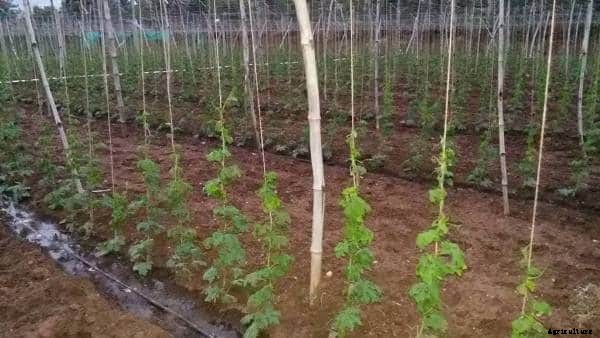 Drip System for Bitter Gourd crop.
Conserving water through the Drip Irrigation system
The Drip Irrigation system has many functions, but the main task of these systems is to conserve water and how it does this is discussed below:
- Provides water uniformly to the farms almost around 90%.
- Since water is applied close to the roots, there is less loss of water due to evaporation and wind.
- Helps to supply water adequately to the crops depending on their requirement on a regular and timely basis. Heavily watering the young plants is not a necessity and most of the water gets wasted when other irrigation methods are used. So a drip provided in the farm reduces the wastage of water.
- The low water application helps in less runoff from heavy soil and hilly areas.
- The extra areas of the farm land like the furrows; pathways etc. are not watered using Drip Irrigation.
- These systems can supply water to odd-shaped farms which are difficult to irrigate using other methods of irrigation.
- It provides seeds with required water content and eliminates unnecessary waste of water.
Assistance for deploying Drip Irrigation system
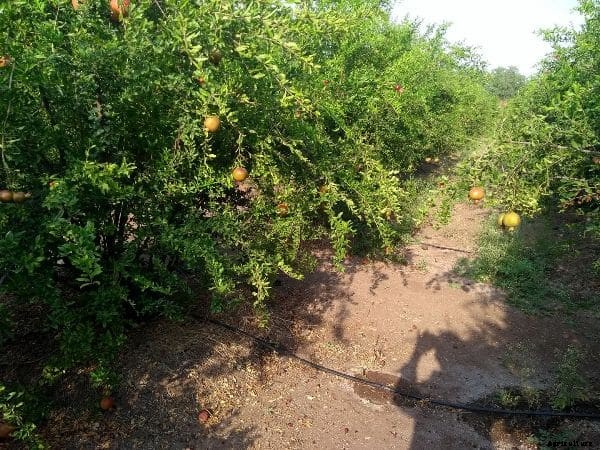 Drip Irrigation In Pomegrante Orchard.
The minimum cost of deploying a Drip Irrigation system in 1 acre of land is estimated to be around 60,000 to 75,000 rupees. To encourage farmers deploy this system of irrigation into their farms and reduce the consumption of water, Department of Agriculture and Cooperation, Ministry of Agriculture is working under the Government of India has organized a centrally sponsored scheme called the Pradhan Mantri Krishi Sinchayi Yojana (PMKSY). A part of the scheme is to promote appropriate technologies for saving water and is called the National Mission on Micro Irrigation (NMMI). The subsidies for installing the Drip Irrigation system in different states depend on their location and availability of the materials. States which have increased used of this technique are provided with a lesser subsidy whereas states where the technology has not penetrated enough are provided with higher subsidies. Similarly, hilly states are providing even more subsidies due to unavailability of Drip Irrigation material and the transport costs involved in it. The subsidy or assistance provided by the government also depends on the spacing between the plants in a farm area. All these details have been clearly mentioned in the PMKSY website.


