Welcome to Modern Agriculture!

While a patio may shine in daylight, the moment the sun sets many backyards feel cramped and unwelcoming. The culprit isn’t usually the fixtures themselves but where they’re positioned.
Below are common habits that silently sabotage even the best-lit gardens. A quick review will reveal gaps in your setup—and each fix is cheaper and simpler than adding more lights.
Two foundational mistakes drive most lighting problems: spending the entire budget on the front of the house and skipping a layout sketch.
It’s tempting to pour the entire budget into curb appeal—floods on the eaves, door sconces, a few stake lights along the driveway. Yet the backyard, where you truly live, often receives no attention.
Guests only glance at the front yard for a few seconds. Treat the backyard as the priority zone, not the leftover. Map the seating area, grill, planter beds, and pathways. Assign fixtures to each before adding another porch sconce.
Sketching the yard on paper takes about 20 minutes and can save you hundreds. Without it, fixtures pile up wherever they fit, resulting in bright spots that look random and dark areas that feel abandoned.
Lighting designers cite this as the single most expensive mistake homeowners make: overbuying the wrong fixtures and still leaving the patio dim.
Draw a simple diagram of the patio, paths, trees, beds, and seating zones. Mark features that deserve emphasis and routes that need safety lighting. Count the fixtures you’ll need, then shop accordingly.
Save this article & instantly unlock today’s gardening deals!
Even a thoughtful layout can fail if the fixtures and bulb color temperatures clash with the planting. These two mistakes are easy to correct once you know what to avoid.
A single 100‑watt floodlight is a classic shortcut. It projects a harsh cone over half the lawn, leaving everything else in deep shadow. Your eyes adjust to the bright spot, and the rest of the yard feels like a black hole.
The solution is the opposite: more fixtures with lower output. Six well‑placed 2‑watt fixtures will illuminate a yard better than one giant flood. Spreading light softens contrast and opens up the space.
Bulb aisles are flooded with “daylight” options at 5000K and above. They look crisp on the package but make greens flat and skin tones washed out. The yard feels like a parking lot.
Designers agree that warm light makes outdoor spaces inviting rather than industrial. Color temperature matters more than wattage.
Stick to 2700K or 3000K for almost every outdoor application. Reserve cooler options for security spotlights and work lights, never for ambient garden zones. The yard should feel like candle glow, not a gas station.
| Color Temperature | Effect in the Garden | Best Use |
|---|---|---|
| 2700K | Warm amber glow, candle‑like | Patios, seating areas, dining |
| 3000K | Soft warm white, still inviting | Path lights, accent uplights |
| 4000K | Neutral, slightly clinical outdoors | Work lights only |
| 5000K+ | Cold, blue‑leaning, harsh | Security floods only, never ambient |
The two most common mid‑garden failures are path lights that look like runway markers and patio tables left in the dark. Both are easy to fix once you focus on the people using the space.
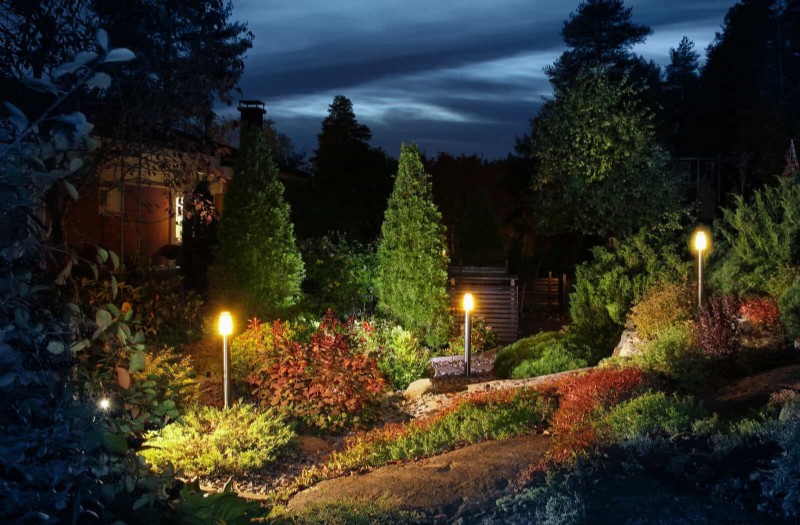
Evenly spaced lights in a straight line give a sterile, institutional look—like an airport tarmac. Natural paths should have natural lighting.
Stagger the fixtures on alternating sides at irregular intervals. Aim for overlapping pools of light rather than a straight line of dots. The walk becomes a moonlit garden stroll instead of an airfield approach.
Solid brass low‑voltage pathway lights, such as the Gardencoin Solid Brass Low Voltage Pathway Lights, are weather‑resistant and maintain a refined look over time. The taller stake allows flexible placement around mature beds. (Amazon)
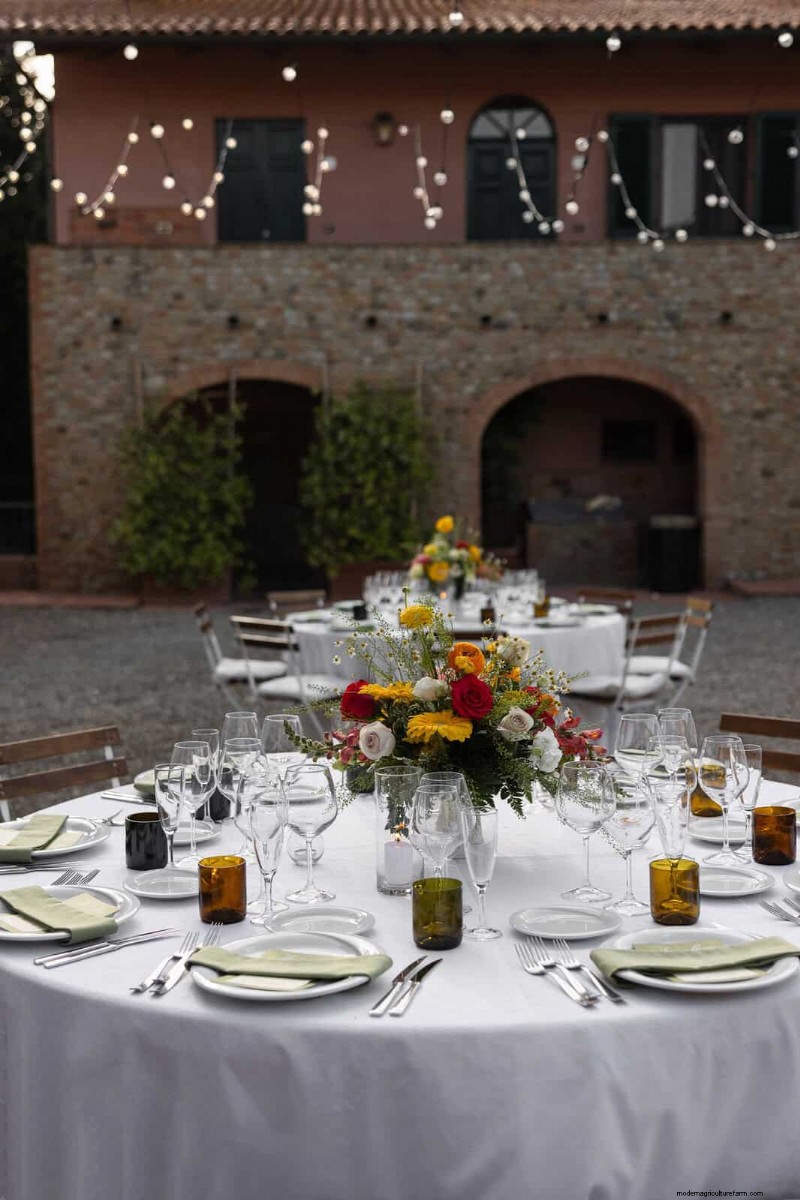
While the pergola, fence, and lawn may feature rope lights, uplights, and stake lights, the patio table where guests dine often sits in a dim gray pool.
Guests can’t see each other’s faces, food looks washed out, and people start using their phone flashlights within minutes.
Add a soft overhead source above the table: a string‑light canopy, a tree‑mounted downlight, or a low‑hanging pendant under a covered area. Layer a small accent light on a side surface for warmth. Faces should read clearly without squinting.
For a refreshed patio layout, see our guide to 27 Stunning Garden Bench and Seating Ideas.
Moonlighting from tree canopies and washing light across fences and walls are high‑impact techniques that many homeowners overlook.
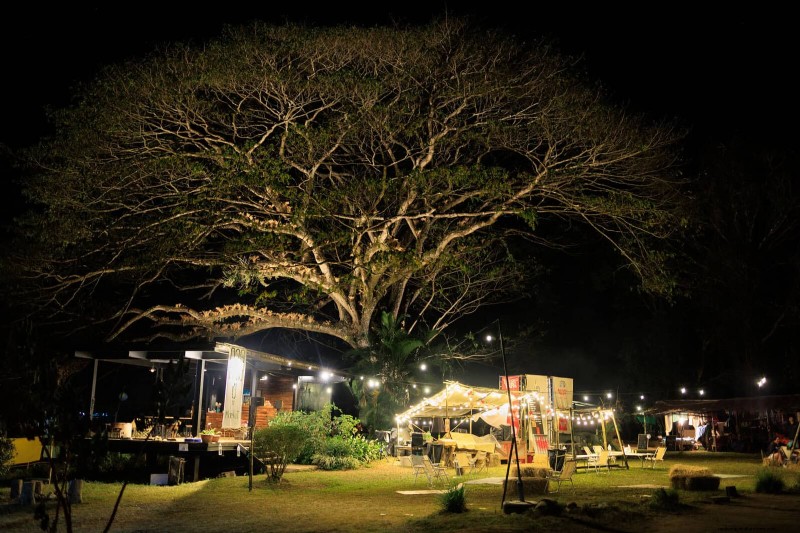
Moonlighting is simple: a low‑voltage downlight tucked high in a tree casts a soft dappled pattern across the lawn below, mimicking real moonlight filtering through branches.
Without canopy light, a backyard feels flat. The eye has nowhere to travel upward. If your trees sit near covered structures, our roundup of shade structure ideas—including pergolas, gazebos, and canopies—offers mounting points beyond the tree itself.
Mount a low‑voltage downlight as high as safely possible in a mature tree. Use a 2700K or 3000K bulb at low output—never a bright spotlight. The leaf shadow pattern is the effect you want.
Pro Tip: Run the wire along the branch using cable clips, not staples. Bark grows around staples and damages the tree over seasons. Loose clips slide as the limb thickens.
A yard feels dark when its edges are dark. Fences, retaining walls, garage walls, and tall hedges all act as backdrops, and an unlit backdrop pulls ambient light out of the space. Lighted boundaries feel twice as bright.
Place small wash lights along the base of any vertical surface, aimed up across the wall. A wood fence picks up grain shadows, a stucco wall glows warmly, and a hedge gains depth and texture. The yard suddenly feels enclosed in a good way, not boxed in.
See more: Garden Fence Ideas That Define Your Space Beautifully
Three issues quietly erode a garden lighting scheme over time: unlit elevation changes that become trip hazards, fixtures aimed at nothing, and plants that swallow the uplights they once surrounded.
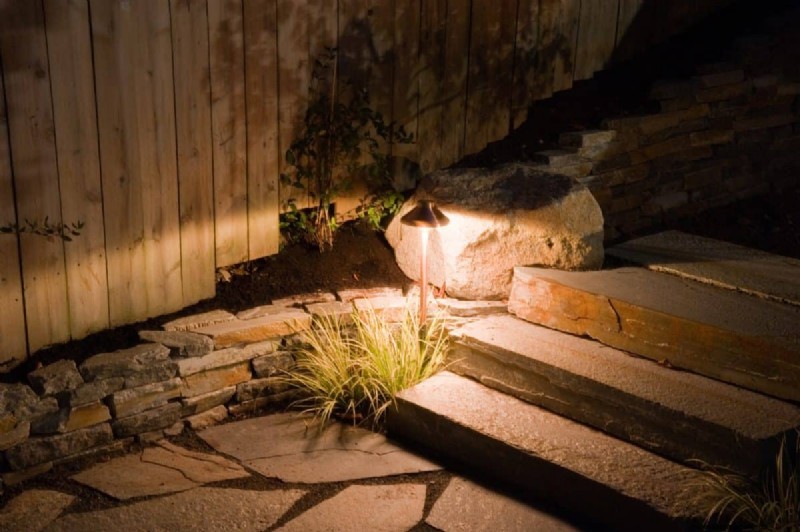
A single bright fixture at the top of a stair leaves lower treads in shadow. That’s how people roll ankles and why the lower garden disappears from view.
Any elevation change deserves dedicated light. Stairs, retaining walls, sloped paths, and patio edges all qualify.
Install small step lights on individual risers or low fixtures aimed across each tread. The light should fall on the walking surface, never into the eyes of someone descending. Faces stay safe and the descent feels intentional.
Recessed deck and stair lights like the Low Voltage Deck Light 6‑Pack in 2700K sit flush in the riser and throw light across the tread without glare. Stainless steel holds up outdoors for years. (Amazon)
Walk into your yard at night with the lights on and notice where the beams actually point. Many fixtures likely send light up into the sky or sideways at nothing useful.
The fixture you bought is fine. Its aim is the problem.
Stand at the spot a viewer would normally look from—usually the patio or back door. Adjust each fixture until its beam lands on a feature, plant, or surface that feels intentional. Anything still shining at empty grass or open sky gets retargeted.
The lighting plan that was perfect three summers ago can become gloomy as plants grow. A boxwood can fill an uplight’s focus, or a hydrangea can double and block a beam. Reposition or trim as needed.
Walk the yard each spring with the lights on at dusk. Reposition any fixture blocked by new growth, trim the worst offenders, and add a stake where coverage shrank. The yard returns to its original glow in less than an hour of work.
Relying entirely on solar stake lights is the final and most common reason a yard stays dim after dark. The fix is not more solar; it’s knowing exactly where solar fits into a wired scheme.
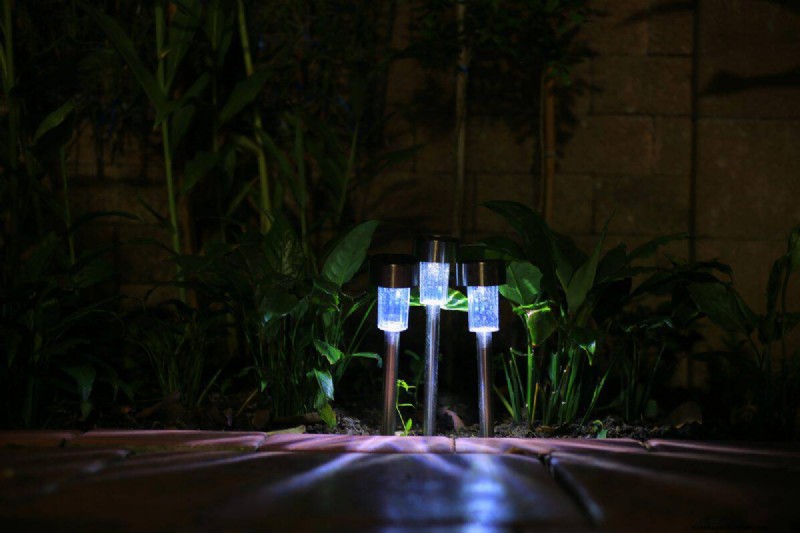
Solar path lights look great on the package. Two weeks later, half blink weakly, and by November they are basically off. They were never designed to be your only lighting source—just an accent layer.
A yard built entirely on five‑dollar solar stakes will feel dim by definition. Solar technology hasn’t caught up to that ambition yet.
Wire the main scheme with low‑voltage landscape lighting on a transformer. Reserve solar stakes for spots where wiring is impractical, like the far end of a long bed or a remote garden corner. The hybrid setup looks clean and runs reliably.
Quick Fix Checklist
A great backyard at night doesn’t need more lumens. It needs intention. Fix two or three of these issues and the whole space starts to feel inhabited again, even at midnight.
Take a notepad outside after dark this week and walk every zone. Mark what stayed bright, what disappeared, and where the eye wants to travel. The rest is rearrangement.
Written by
Anne Moss
Anne Moss is the founder of GardenTabs and principal of Moss Digital Publishing, where she’s spent over a decade building practical, reader‑first content. She guides the site’s editorial direction and contributes guides that help everyday gardeners find clear, usable answers.
Meet the GardenTabs team →

Editorial oversight
GardenTabs content is reviewed by Steve Snedeker, a seasoned gardener with decades of hands‑on landscaping experience.