
Welcome to Modern Agriculture!

Introduction to okra planting frequently asked questions (FAQs) – Hello everyone, we are back with some frequently asked questions about okra planting. Do you want to plant an okra plant and do you have some questions about planting okra? Well and then you will need to follow this article.
Okra or Okro, Abelmoschus esculentus, are frequently known in many English-speaking countries as ladies fingers or ochro. It is a flowering plant and belongs to the mallow family. It is usually valued for its edible green seed pods. It is a very good source of minerals, vitamins, antioxidants, and even fiber.
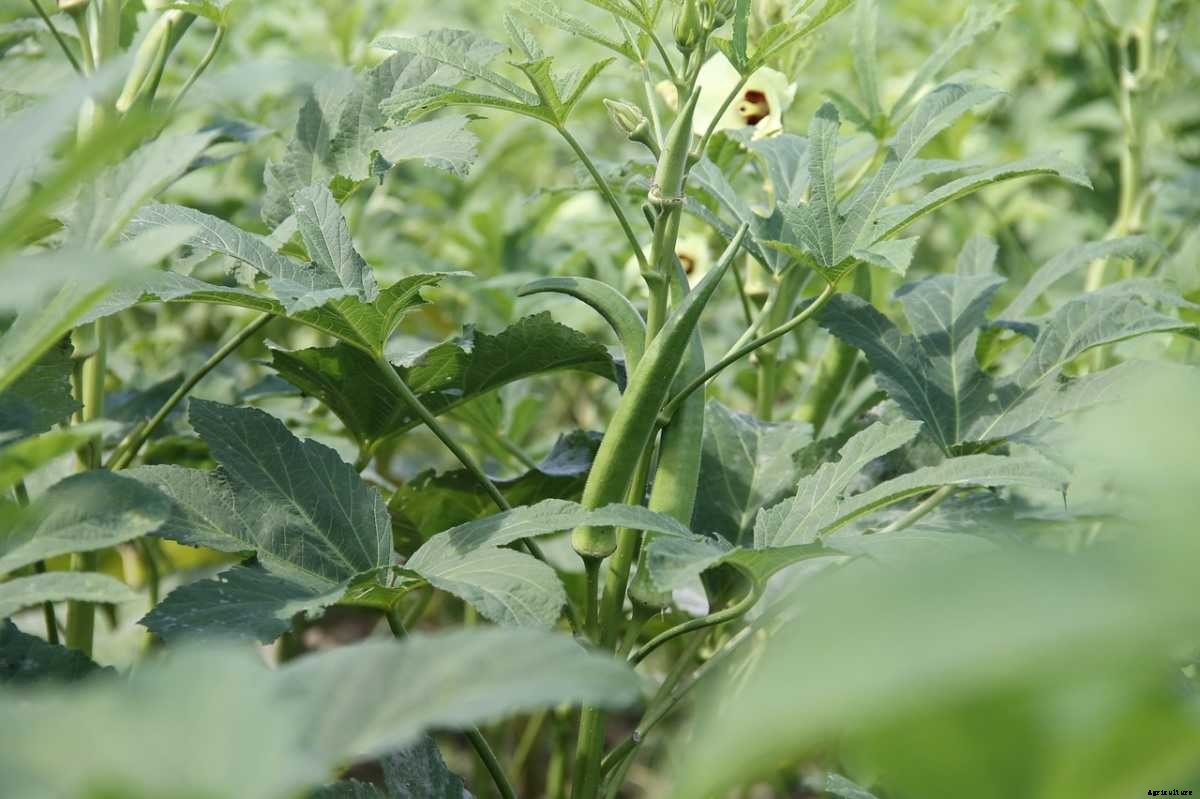
Okra is very easy to grow and it uses and looks lovely throughout the complete growing season due to its very beautiful flowers. It’s also rich and high in vitamin A and very low in calories, which makes it a very great addition to your diet.
Now, let us discuss some frequently asked questions about okra planting
It takes around 50 to 65 days to grow the okra plant. Okra reaches maturity in 50 to 65 days. The plants can easily produce for ten to twelve weeks. It grows and bears seed pods until frost, which very quickly turns them black and then kills them.
For the best yields, you need to plant okra within the spring for two to three weeks in any case danger of frost has passed. For an honest fall plant, you need to plant a minimum of 3 months before the primary fall frost.
Don’t plant too close, as Cucumbers also need an outsized amount of sun to ripen. Pepper plants will repel Cabbage worms, which may be a destructive nuisance to okra plants. Melons are often an honest okra companion
As a warm-weather plant, okra appreciates full sun. Okra is easily adaptable and can grow in most soils, though it performs best in well-drained soil that’s rich in organic matter. Soil should ideally get on the acidic side, with a pH between 5.8 and 7.0.
Nitrate is the best fertilizer for the okra plant. Okra needs to be side-dressed with three to six pounds of nitrate per 1,000 square feet or 1 to 2 pounds per 100 feet of row. Side dressing should occur at 3 to 4 weeks after planting and again at 6 to eight weeks after planting.
Okra is an angiosperm that is usually grown as an annual in most regions, though the species is a perennial plant within the dry tropical regions where it’s native. However, it’s usually grown as a vegetable plant for its seed pods that appear after the flowers bloom.
While gardeners traditionally grow this heat-loving plant within the ground, pots make it possible to grow okra on balconies and patios and extend the season for cooler climates. Select a pot for the okra that’s a minimum of 10 inches in diameter.
Space okra plants 10 inches apart in a very sunny area that has fertile and well-drained soil with a neutral pH of 6.5 to 7.0. Improve native soil by mixing in several inches of aged compost or other rich organic matter.
Okra plants need to be planted ½ inch deep. Sow okra seeds ½ inch deep. When direct-sowing okra, you need to space seeds 2 inches apart and thin to a final spacing of 12 to 18 inches apart.
Another plant you’ll need to grow alongside okra is tomatoes. When companion planted, tomatoes act as a trap plant, luring stink bugs far away from okra plants. Beyond fruits and vegetables to pair with okra plants, flowers are often an excellent choice to increase pollination within the area.
If soil isn’t warm enough for germination plant will not grow. Soil temperature must be a minimum of 21°C for okra to germinate. You need to pre-soak seeds in water for twenty-four hours before sowing. Flowers and buds drop before pods set.
Okra is a heat-loving plant and it’s going to bloom except for us it’ll not set fruit unless it’s hot that why you ought to prune your okra tree. Pruning you okra trees will ready to concentrate nutrients to the fruit and obtain more heat enters.
Okra flowers usually bloom for fewer than each day before dropping off the plant, leaving a little green nub that will form into the okra pod and be able to harvest in only a couple of days.
Coffee grounds are an appropriate organic amendment for growing okra plants when used directly on the soil or in composted materials.
The temperature needs to be between 21°C and 29°C. For the best chance of success, plant okra when the air temperature is probably going to stay between 21°C and 29°C. Okra seedlings can handle heat better than cold, so in frost-prone areas, wait until all danger of frost has passed and therefore the temperature reaches 21°C or higher.
Plants like Kale, Broccoli, Cauliflower, Brussels sprouts, Swiss chard, and other Brassica relations plant well with okra. They add nutrients to the soil which helps to improve the health of your okra plants.
Sunflowers – These flowers act as a companion plant to draw in pollinators, allowing your okra pods to bloom.
Okra will not grow in cold temperatures and they wish warm air and soil temperatures to germinate and thrive.
Yes, okra can grow perfectly in a 5-gallon bucket. It is common for gardeners to plant this plant within the ground thanks to its affinity to heat and containers make it feasible to plant okra on balconies and verandas, thereby providing an extension of the season for temperate
You can put or plant 3 plants in a 5-gallon bucket and more than 3 will be pushing in my opinion.
The okra plant needs 8 hours of sunlight to grow and survive well. Okras require full sun that means at least 8 hours a day and prefer soil that is loose, fertile, and slightly alkaline. If the soil is more acidic, then work some lime into the bed a few months before planting. Enrich the soil with compost, turning it into the bed with a rake.
Okra leaves fading from green to yellow sometimes indicate root disease. Okra plants turning yellow signal potentially disastrous problems. Yellowed leaves lack chlorophyll, the catalyst that converts sunlight to food for the plant. As the plant starves okra’s natural resistance to insects and disease declines.
Okra needs full sun. It will grow in ordinary garden soil but do best in fertile loam, particularly where a nitrogen-fixing plant — such as early peas — grew previously. In the South, plant the first plant in the early spring and the second plant in June.
The primary reason for curling pods is sap-sucking insects like the leaf-footed bug and the stink bug. Stink bugs measure ½ inch to ¾ inch in length, and their shield-shaped bodies are either brown or green.
Okra grows very fast and therefore, it must be harvested every few days. You should not allow pods to mature on the plant because this will slow production and cause tough, fibrous pods.
While okra loves well-composted soil, it will even tolerate clay soil. Seeds need to be kept uniformly moist, not wet, until germination. Once established, okra is moderately drought-resistant. But, it will produce good and best with regular water.
In case if you miss this: Greenhouse Gardening For Beginners.
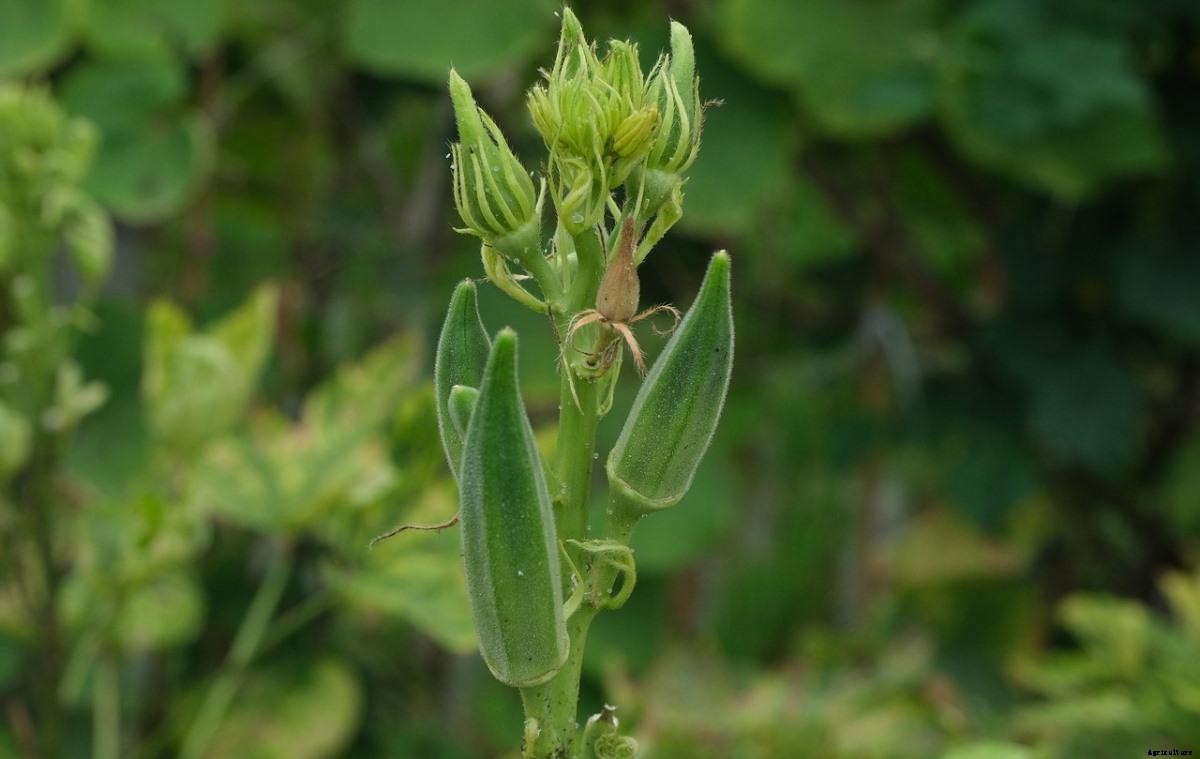
Okra performs best in well-drained and fertile soils in full sun. Avoid wet and poorly drained sites. Soil pH is generally not a problem as okra grows well in soils that are slightly acidic to slightly alkaline which is pH 6.5 to 7.5.
Dwarf okra grows around 3 inches tall. Dwarf long pod okra is quite a popular okra variety in the South. It is a heavy bearer of beautiful long green pods that can range up to 6 inches. The plant itself is quite sturdy but only reaches around 3 inches tall. Plants will mature around 50 days or so.
Okra is a tropical plant requiring warm growing conditions. Commercial production is recommended only in the warmest portions of the state. Night temperatures should be above 13°C for good growth. The minimum soil temperature for germination is 16°C.
Fertilization should start before planting this plant; add 10-10-10 mix fertilizer to the soil. When placing it, you need to make it to a depth of about 4 inches, with a dose of 3 ounces per 100 square feet.
You may also check this: Pumpkin Seed Germination.
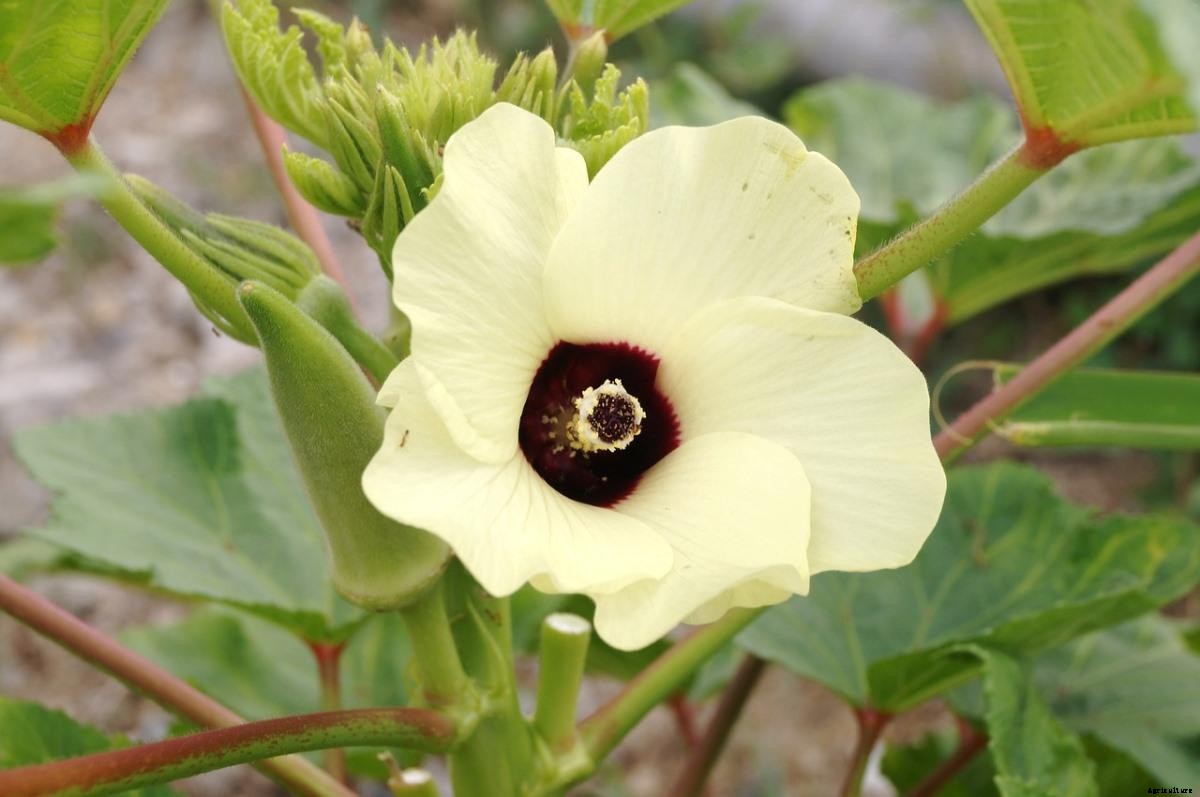
They may not bloom due to too much nitrogen, not enough phosphorus. Okra plants are heavy feeders. And they’re picky, too. They usually need nitrogen for their foliage, but too much nitrogen can impede flower production. Phosphorous, on the other hand, is the green light that tells the plant to produce more flowers.
Okra does best with about 1/2-inch of water per week, depending on rainfall amounts in your local area. The great thing about growing okra is you can go without watering them for a month and the plants will keep on stepping. Some okra plants may need support if they begin to lean over.
Insecticidal soap is a natural insecticide that will kill many of the pests on your okra. You can easily buy insecticidal soaps and horticultural oils at garden centers. Neem oil is another readily available choice.
There are many organic controls and they are:
When aphid infestations are high, a more aggressive treatment than water spray can be used. Insecticidal soap works well on soft-bodied insects, such as aphids. This fatty acid soap is sold under many different trade names. Check labels for safety on okra and follow the manufacturer’s instructions.
Improve native soil by mixing in several inches of aged compost or other rich organic matter. Okra likes the heat and they can withstand a dry spell, but do your best to give plants 1 inch of water every week. You need to harvest okra pods when they are 2 to 4 inches long.
No fungicides are available or even required for these diseases. The best way to control okra with leaf spots caused by these organisms is to practice plant rotation and utilize a consistent fertilization program. These are not the only pathogens that may be responsible for okra with leaf spots, however.
Okra flowers and fruits turn very soft on the plants and they develop a fuzzy appearance. This usually means that they have been infected with fungal okra blossom and even fruit blight. Okra blossom and fruit blight strike whenever there is enough heat and moisture to support the growth of the fungus.


