
Welcome to Modern Agriculture!

Introduction to carrot planting frequently asked questions – The carrot is a vegetable, most ordinarily observed as orange in color, though purple, black, red, white, and yellow planters exist, all of which are domesticated sorts of the Queen Anne’s lace, wild carrot, native to Europe and Southwestern Asia.
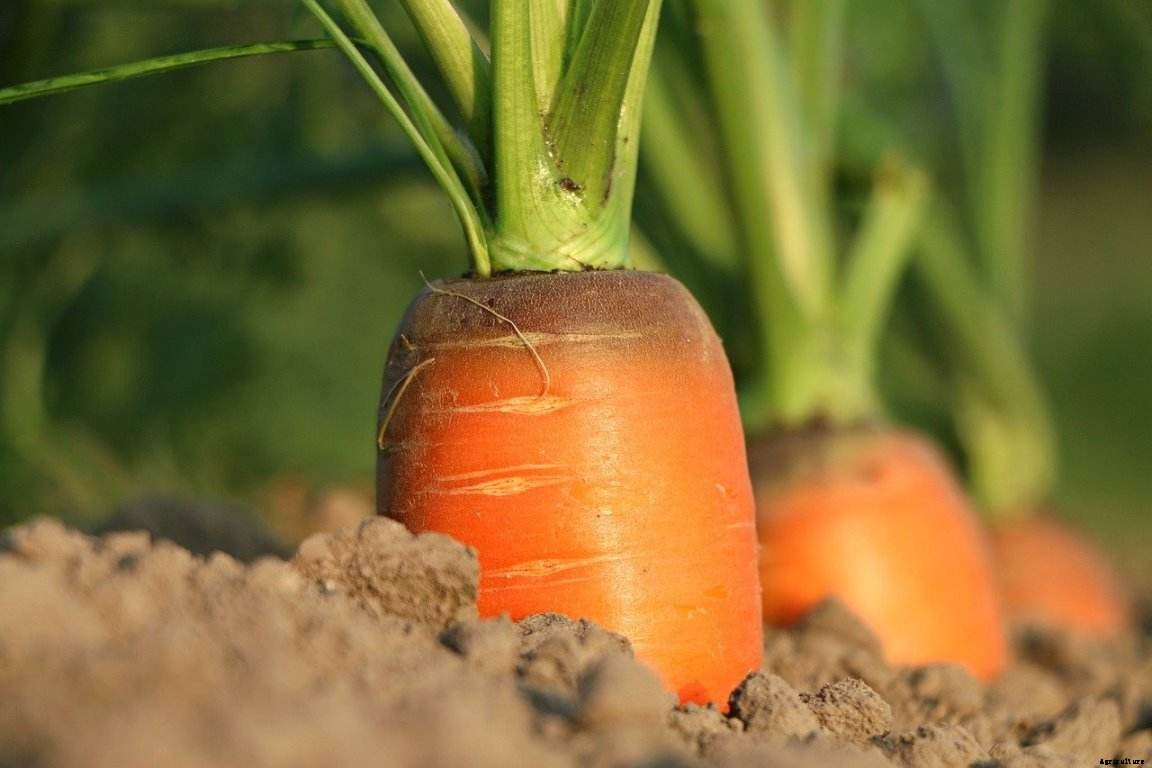
Carrots are very easy to grow as long as they’re planted in loose and sandy soil in the cooler periods of the growing season—spring and fall (carrots can tolerate frost). Counting on the variability and native growing conditions, carrots will take anywhere from 2 to 4 months to mature. Plant them within the spring and summer for endless harvest through fall.
Now, allow us to discuss some commonly asked questions (FAQs).
Spring. Carrots will grow well and best in the cool temperatures of early spring and late fall. Night temperatures of 13°C and day temperatures of 24°C are ideal for carrots.
Carrots usually prefer well-drained, deeply-worked soil. That is preferable to an 18inches depth for the longer varieties, though a shallower depth may suffice for shorter varieties. Heavier soils are okay for half-long or round types.
Better plant Carrots with Beans, Brassicas, Chives, Leeks, Lettuce, Onions, Peas, Peppers, Pole Beans, Radish, Rosemary, Sage, and Tomatoes. Avoid planting with Dill, Parsnips, and Potatoes. Generally speaking, it is a very good idea to stay some space between root plants so that they don’t compete for available phosphorus.
Carrots are often easy to grow, or they will offer you endless grief. Some issues are easy to require care of, like green tops or soil that’s too hard for the small seedlings to erupt. The seed never germinates: Carrots will not break through encrusted soil. Keep the soil moist but not soaking wet.
In case if you miss this: How To Grow Organic Spinach.
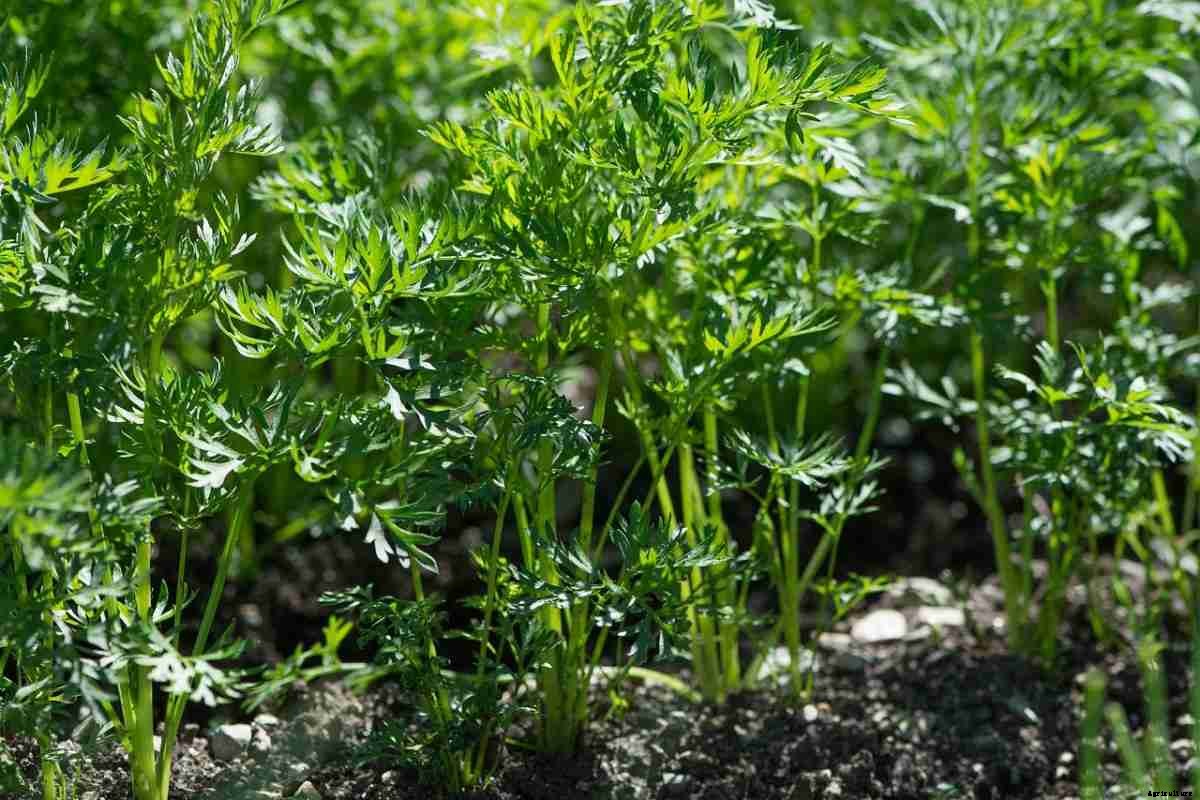
Start sowing this cool-weather plant 3 weeks before the last expected frost and then plant again every two to three weeks then. Most planters take 70 to 80 days to mature, so sow your last planting two to three months before the primarily expected fall frost.
Carrot seeds are often sown any time from spring through early autumn, as long as you get them within the ground by 10 to 12 weeks before the primary fall frost.
Carrots need a location that receives full sunlight, though they will tolerate partial shade, too. As discussed above, the soil must be loose, sandy or loamy, and airy so that carrot roots can easily down through the soil.
Carrots need to be fertilized when the tops of them have reached 3 inches tall. A granular type fertilizer will work well if utilized in moderation. You need to choose a fertilizer that has little nitrogen and more potassium and phosphate 0-10-10 or 5-15-15 will work well.
Carrots, being a plant, simply won’t develop properly in heavy clay or stony soils. For best appearance and a sweet flavor, they have soil that’s friable, well-drained, neutral to alkaline, and not too rich in nitrogen.
Carrots are heat sensitive that is why they will go well with tomato plants which will provide them a touch of shade. Tomatoes also are known to supply solanine, which is a natural insecticide that targets pests affecting carrot plants. Tomatoes enjoy carrots, too.
Carrots get on well with a good sort of vegetables like Peas, Lettuce, Rosemary, Onions, Sage, and Tomatoes. Just keep them far away from Dill. Celery is additionally a really accepting vegetable, liking Onions, the Cabbage family, Tomatoes, and Bush Beans.
Prepare the seedbed. Clear the way for your carrots to succeed in their roots deep and grow to their full potential by planting them in loose and loamy soil. Make certain to clear the bed of rocks and other debris, and then mix in a generous helping of organic matter.
They will germinate around 21°C. Carrots usually need warm temperatures for the seeds to germinate—around 21°C or warmer. That’s why carrots are very slow to germinate in cooler spring temperatures. However, carrots need cool temperatures for developing sweet, fat roots—around 4°C.
Carrots are very slow to germinate, but they’re even slower and sometimes won’t sprout in the least if the soil temperatures are too low. Since the small seeds are sown only ½ inch deep, it’s essential to stay the soil moist through the long germination period. They’re going to die if the highest layer dries out or crusts over.
Carrot seeds are often sown from early spring throughout to late August and harvested almost year-round. Most varieties are sown outdoors between April and July. For a spring harvest, you’ll need to grow carrots in a greenhouse throughout the winter.
Carrots, too, tolerate shade. Harvest this easy-to-grow root veggie when the tops begin of the soil. Like Beets, Carrot greens are edible.
Transplanting carrot seedlings allows you to plant carrots at the simplest temperature for optimal growth and space them to offer them the space they have. You’ll also need to transplant the carrot tops that you simply have started in either soil or water. You’ll need to double your yield easily with plants that you simply harvested from your garden.
Carrots are often grown in any sort of container, but you would need to pick pots that are deep enough to accommodate the roots of your chosen variety.
Carrots and other root vegetables love coffee grounds very much. You can work your coffee grounds into the soil where you propose to plant your carrots, giving them a pleasant place to germinate.
Carrots hate competition, and that they will suffer from any crowding. Don’t use manure or fertilizers on your carrots – they do not need it. Fresh manure or rotted manure can cause your carrots to grow ‘legs’ or hand over in two. The manure causes the carrots to send outside roots, leading to a forked appearance.
Like most vegetables, growing carrots also need a minimum of 1 inch of water. Once when you water your Carrots, confirm to soak the soil completely. If you simply wet the soil’s surface, the roots won’t grow as deeply. If your soil is especially sandy, you’ll need to water your plants more often.
Fill the container with organically rich potting soil. A purchased product specifically for vegetables will have an honest combination of ingredients like sphagnum, sand, and vermiculite. Carrots do best in soil with a high potassium content which inspires root growth.
Make sure the soil is tilled up to melt and aerate the bottom to form it easier to grow carrots long and straight. Fertilize the soil with one cup of 10-20-10 for every 10 feet of the row you plant. You’ll also need to use a rake to combine the soil and fertilizer.
Carrot seeds are naturally slow germination, but you’ll need to speed things up a touch by priming the seeds indoors. Starting three to four days before you propose to sow them, soak carrot seeds in water for an hour, and then transfer them to a humid towel. Fold to surround the seeds, and then put them inside an airtight container.
A more likely cause for carrots not forming well or even growing is heavy soil. Heavy, clay soils don’t allow good-sized roots to make or end in the twisted formation of roots. Difficulty getting carrot plants to make roots may additionally be the result of overcrowding. Carrots got to be thinned early.
You may also check this: Potato Seed Germination.
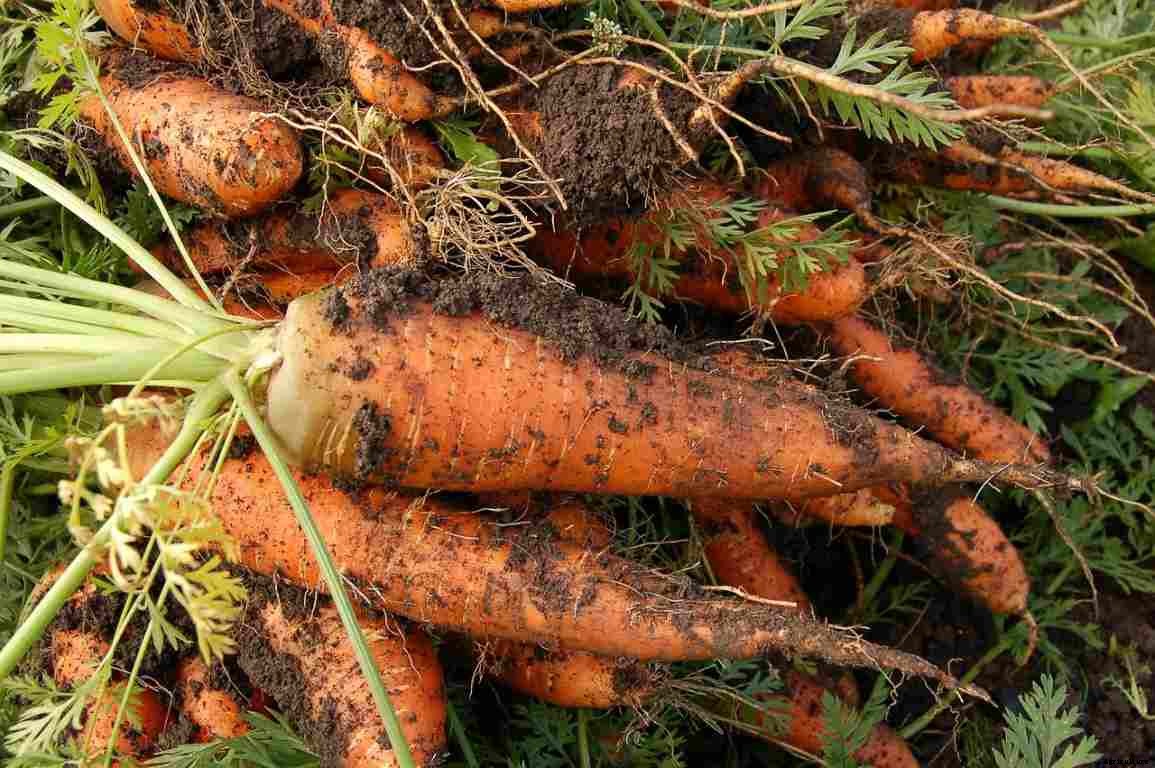
Carrots should be ready for harvest about 60 to 80 days after sowing seeds, counting on the variability. The tops of the carrot roots are going to be about 3/4 to 1 inch in diameter and a certain beginning to begin of the soil, though not necessarily. They’re going to even be vibrant in color.
Because they’ll take as long as three weeks to germinate, this will be challenging, especially in weather or in exposed, windy gardens. The thanks to achieving this is often to water very deeply before planting, then either water very regularly or employ another means to scale back evaporation.
To plant an entire carrot within the ground to grow a carrot plant, just place the carrot into the soil about 1/2 inches below the surface. Plant in full sun in light and well-draining soil. You need water to stay the soil moist, but not soggy. Within a couple of weeks, green sprouts will appear, followed by flower stalks.
Slimy carrots are typical results of an excessive amount of moisture and being exposed to the present humid environment past their maturity. So there are two main solutions for reducing the humidity and keeping the carrots from being too wet. Both solutions are equally as easy to repair, so don’t be concerned.
Mix your favorite multi-purpose compost alongside the sharp sand at a 50-50 ratio that means half compost and half sand. Add this mixture to the flower bucket leaving 4 inches approximately from the highest. The sand not only helps with drainage but also makes the soil nice and lightweight so your carrots can grow straight.
To make sandy soil for carrots you need to prepare the soil by adding varying amounts of coarse builder’s sand. Mix the sand well through the soil by double digging with a spade or fork, or by employing a tiller. This could be done if growing on the bottom, making a raised bed, or growing your carrots in containers.
It’s because carrot seeds are very small and it is easy to accidentally plant them too thickly when sowing the small seeds. If carrots are spaced too approximate, there’s no enough room to develop large healthy roots, and that they may become stunted or misshapen.
It is important to thin carrots; they’re going to not grow to maturity unless they need space to try to do so. Thinning carrots is once you remove a number of the baby plants in a row to release space for the remainder so that they will grow to full size. Thin the plants to a few thumb’s-widths apart.
Ball or Mini – This grouping includes carrot varieties that are shaped like radishes or miniature compared to Chantenay. Again they work extremely well for those gardening in containers thanks to their short taproot and required growing area.
Every one to three days. Well, the seeds are germinating it’s important to water them every one to three days counting on the weather outdoors – watering less if rainy and more if hot. The soil should be kept moist at the least times but not soggy. If planting one container with carrots, repeat an equivalent process.
To satisfy plant demand, supplementation of soil nutrient supply is important for carrot root and seed production. The first nutrient applied for both root and seed production is only nitrogen with relatively routine phosphorus and potassium application for root production.
Feed the carrots and other veggies every three or four weeks with organic – currently a fish emulsion and seaweed blend, and that will spray them with an answer of Epsom salts and water that is 1 teaspoon Epsom salts to 4 cups warm water.
12 inches. Check the precise depth requirements consistent with the variability of carrots you’re growing. Most carrot varieties require a minimum container depth of 12 inches, with 1.5 to 2 cm of spacing available between seedlings and therefore the container edge. Very good spacing and even depth will allow carrots to grow well and fully develop.
Remember that carrots usually need heat and water to sprout. If the soil is cold seeds will take longer to sprout. Once when seeds are up, and then thin them out so that they are two inches apart.
Plant carrot seeds ¼ inch deep and 1 inch apart. Later within the spring, you need to thin carrot plants to 2 to 3 inches apart in rows 16 to 24 inches apart.
Set your pieces of carrot tops on the paper, and in a few days, you will see the roots spread. Keep the paper wet. Once the new plants have rooted well, your kids can plant them in soil. The new plants should show growth pretty quickly and you’re lucky, little gardeners are going to be delighted with their reward.
Carrots are one of the foremost widely used and important root vegetables in the world because they grow relatively easily. The hydroponic system may be a method of growing plants without the utilization of soil. A medium culture hydroponics system is required for Carrots, as they’re root vegetables.
The optimum soil for carrots is loose, free from debris and clods, and either loamy or sandy. Plant seeds early in spring to avoid the summer heat, which can turn the roots hard and bitter. Prepare your seedbed as soon because the soil is soft enough to figure, by tilling and adding organic amendments.
The best carrot varieties to grow are given below:


